








It’s clear to see that someone has aspirations to push AI into everyday consumer life.
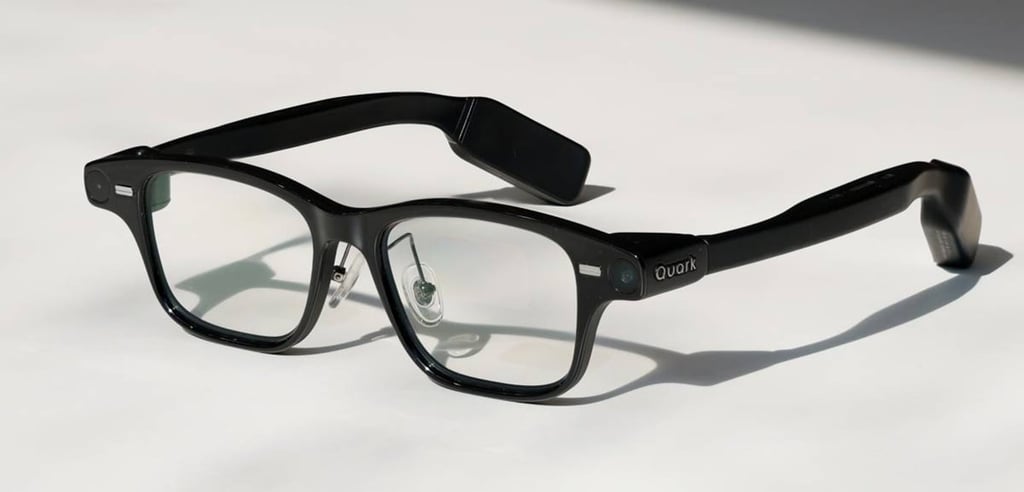
Alibaba has unveiled its new Quark AI Glasses series in China. The lineup includes three variants of the flagship dual-display S1 glasses and three versions of the lightweight, camera-focused G1. All models are tightly integrated with Qwen, Alibaba’s large language model, and the recently launched Qwen App, enabling voice- and touch-controlled AI assistance. Prices start at ¥3,799 ($536) for the S1 and ¥1,899 ($268) for the G1.
The launch underscores Alibaba’s strategy to merge its AI capabilities with consumer hardware, positioning Qwen as the intelligence layer across its growing suite of apps, devices, and services.
Hands-free AI for daily living
The new glasses deliver a range of real-time AI interactions, combining voice input, visual understanding, and contextual awareness. Users can activate the assistant via the wake phrase “Hello Qwen” or through touch controls situated on the frame.
Powered by Qwen, the glasses can perform instant price recognition, provide text- and image-based Q&A, translate languages on the fly, and display near-eye navigation instructions. They can also generate meeting notes, surface smart reminders, act as a live teleprompter, and deliver location-aware assistance such as identifying nearby shops or managing schedules.
These capabilities reflect a broader industry trend: the shift from AI as an app-based tool to AI as a continuous presence embedded in the physical environment. By bringing together vision and language models in a wearable form, Alibaba aims to create a more natural interface that reduces friction between digital and real-world tasks.
Integration with Alibaba’s ecosystem
Both S1 and G1 models connect with core Alibaba platforms, including Alipay, Amap, Taobao, and travel service Fliggy. They also work with major music apps such as QQ Music and NetEase Cloud Music. This integration means users can shop, navigate, pay, listen to music, and manage productivity tasks without reaching for a smartphone.
If widely adopted, this level of integration could shift how consumers interact with Alibaba’s services. Tasks like visual shopping and hands-free payments could become more common, potentially increasing user retention across Alibaba’s ecosystem. The company is effectively using hardware as a new entry point into its services, a playbook similar to strategies used by US tech giants.
Wearables on the rise
Alibaba’s product debut arrives at a moment of renewed momentum for the global wearables market. According to IDC, 136.5 million wearable devices shipped in Q2 2025, a 9.6 percent increase from the previous year. China remains the largest market, accounting for nearly 50 million shipments, driven by strong consumer interest in new device formats and competitive offerings from local brands.
Smart glasses have historically struggled to achieve mainstream penetration, but a combination of improved display technology, lighter materials, and more capable AI models has sparked growing optimism in the sector. Alibaba’s entry adds weight to the idea that smart glasses may be moving from experimental to commercially viable.
Features and specifications
The S1 model targets all-day functionality, pairing a comfortable design with dual micro-OLED displays, dual processing chips, and bone-conduction audio for advanced voice pickup. A swappable dual-battery system — an industry first, according to Alibaba — enables up to 24 hours of continuous use. This approach directly tackles one of the biggest barriers in smart-glasses adoption: battery life.
For visuals, the S1 supports 0.6-second instant photo capture, smooth 3K video recording, AI-enhanced 4K output, and strong low-light performance. Quark’s proprietary Super Raw technology ensures clarity in nighttime shots, making the device appealing to on-the-go content creators.
The G1 offers many of the S1’s core features but without the display, allowing the glasses to weigh just 40 grams. This positions the G1 as an everyday lifestyle accessory rather than a productivity-oriented tool, potentially broadening the target demographic.
Both models support the open MCP protocol, enabling third-party developers to build applications that leverage the glasses’ hardware and Qwen’s AI capabilities. A strong developer ecosystem would be essential if Alibaba wants to compete long-term in consumer AI hardware.
Expanding the Qwen consumer ecosystem
The release of the Quark AI Glasses follows several major moves by Alibaba to bring Qwen into mainstream use. The company recently introduced the Qwen App, which surpassed 10 million downloads in its first week of public beta — one of the fastest adoption rates for a consumer AI app in China. Alibaba also unveiled upgrades to its Quark AI browser, embedding Qwen as the central intelligence engine.
Taken together, these efforts suggest that Alibaba sees AI-driven consumer tools as a pillar of its future growth strategy. If the glasses succeed, they could serve as a model for further AI-enabled hardware products.
Last month, Alibaba said its investment in AI has reached break-even levels within its e-commerce business.