






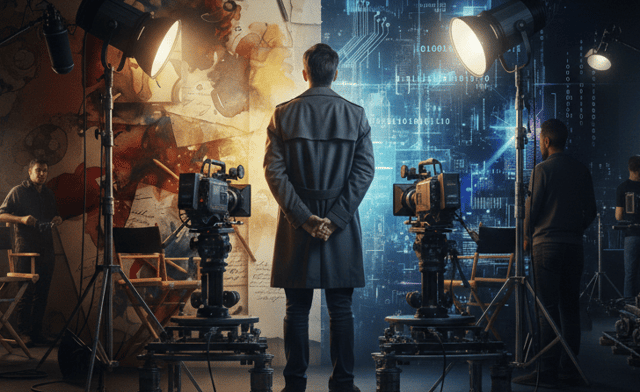


Benedict Cumberbatch isn’t buying the promise of perfect machines. The Doctor Strange star says artificial intelligence (AI) is sanding down the flaws that make art, and people, human.
Speaking in a Reddit AMA, Cumberbatch said he feels “pretty depressed” about AI’s influence on creativity, warning that the rush for speed and perfection risks “vanilla-fying” the tension and mess that fuel original thought.
The perfection of imperfection
Cumberbatch didn’t stop at criticism. The actor laid out a philosophy of what makes creativity human. He said it’s our “fallibility, our mess, and our inaccuracy” that give rise to originality, calling those imperfections the friction that keeps ideas alive. What worries him, he added, is a culture chasing instant results and gratification at the expense of patience and depth.
He also described the trend as “asphalting over” what makes people human — the rough edges that give art its life.
Still, he drew a line between rejection and reflection. “I’m not a Luddite,” he said, noting that AI tools can have a place if creators preserve what he called the “analog mess of the biochemistry wielding them.”
He likened his view to musician Nick Cave’s defense of failure and limitation as the roots of authentic storytelling, the struggle that turns a blank page into something worth feeling.
When the actress isn’t real, the outrage is
Cumberbatch isn’t alone in his unease over AI’s growing role in entertainment. When headlines surfaced about the AI-created performer Tilly Norwood, veteran voices weighed in fast.
On The View, Whoopi Goldberg said, “You can always tell them from us. We move differently, our faces move differently, our bodies move differently.” Emily Blunt called the idea “really, really scary.”
Their sentiments track with Cumberbatch’s concern about where this is headed.
Hollywood’s split screen
While some actors recoil from technology’s reach, others are leaning in on their own terms.
Marvel directors Joe and Anthony Russo have championed what they call “artist-led innovation,” arguing that creators, not corporations, should decide how new tools reshape filmmaking. Through their $400 million Agbo studio investment, they’re backing in-house AI systems designed to expand storytelling rather than replace it.
Additionally, James Cameron joined Stability AI’s board, showing deeper collaboration between filmmakers and tech developers.
Matthew McConaughey and Michael Caine have lent their voices to ElevenLabs’ replica projects, and Runway’s partnership with Lionsgate has used the studio’s film library to train a custom video model for production work.
The split is becoming unmistakable. One side worries that technology will smooth away the human touch, while the other sees an opening to reinvent how stories are told.
After months of legal friction, Warner Music and Suno have chosen collaboration, marking a rare peace in the ongoing tug-of-war between artists’ rights and algorithmic creation.