







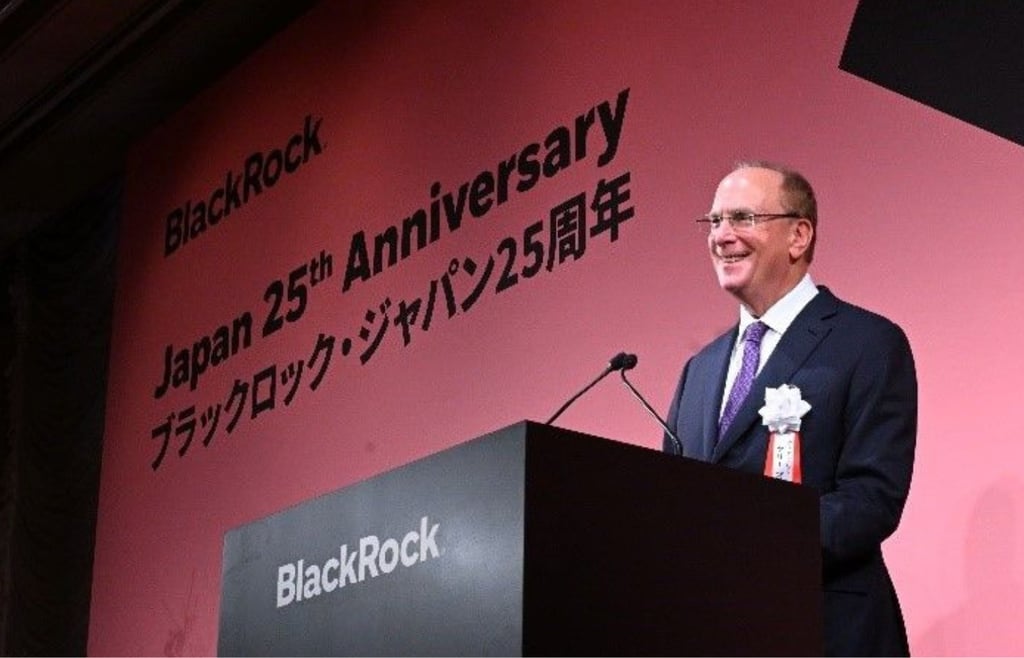
The man who controls $14 trillion in assets has a career tip for the next generation: pick up a wrench.
As AI begins to handle the heavy lifting in office cubicles, Larry Fink, chairman and CEO of BlackRock, suggests that the real job security of the future lies in the skilled trades that tech can’t touch.
For decades, the standard advice for success was simple: get a degree, find an office, and climb the ladder. Fink argues that we might have pushed that narrative a bit too hard. In an interview with the BBC, he noted that the US “overdid” the push for universities at the expense of essential blue-collar work.
The BlackRock chief believes it’s time to stop looking down on people who work with their hands.
Speaking to the BBC, Fink said, “We really put judgment on so many jobs and so many people who probably should not have gone into banking or media or law, probably should have been a great worker with their hands, and we need to now rebalance that approach.”
He pointed out that while television often portrays plumbers in a mocking light, investment bankers are often “idolised.” Fink wants that to change, telling the BBC, “We need to balance that out, and we need to be proud that… a career can be just as strong in these fields of plumbing and electricians.”
While AI is expected to create jobs for welders and electricians, it also has a massive appetite for electricity. Fink warns that the biggest hurdle for AI in the West isn’t the software, it’s the energy bill. He noted that countries need to be “pragmatic” about where their power comes from, whether it’s solar, wind, or hydrocarbons.
The stakes are high. Fink warned that if global tensions drive oil to $150 a barrel, a “stark and steep recession” could follow.
“Rising energy prices is a very regressive tax. It affects the poor more than the wealthy,” He told the BBC. Despite these risks, Fink doesn’t believe the current AI frenzy is a bubble. To him, it’s a “race for technology dominance” that the West cannot afford to lose.
A widening wealth gap
In his 2026 Annual Chairman’s Letter, Fink highlighted a sobering statistic: since 1989, a dollar invested in the US stock market has grown more than 15x the value of a dollar tied to median wages. He worries that without a change in how people invest, AI could make this divide even worse.
“Now AI threatens to repeat that pattern at an even larger scale — concentrating wealth among the companies and investors positioned to capture it,” he wrote.
Currently, about 40% of the US population has no exposure to the capital markets. Fink’s goal is to use new “plumbing” in the financial system, such as digital wallets and tokenization, to make investing as easy as sending a text, ensuring more people own a piece of the economy they help build.
No 2008 sequel in sight
Despite the nervousness in today’s markets, Fink is dismissing any talk of a 2007-08 style collapse. When asked by the BBC if he saw similarities between the current energy spikes and the lead-up to the Great Recession, his answer was blunt:
“I don’t see any similarities at all. Zero.”
He maintains that financial institutions are more secure today and that the “civic miracle” of long-term investing remains the best path forward for families, even in an age when a robot might do your taxes but still can’t fix your sink.
Also read: Oxford Economics warns that up to 20% of US jobs are highly vulnerable to automation, adding urgency to the debate over which roles AI will replace and which will grow.