







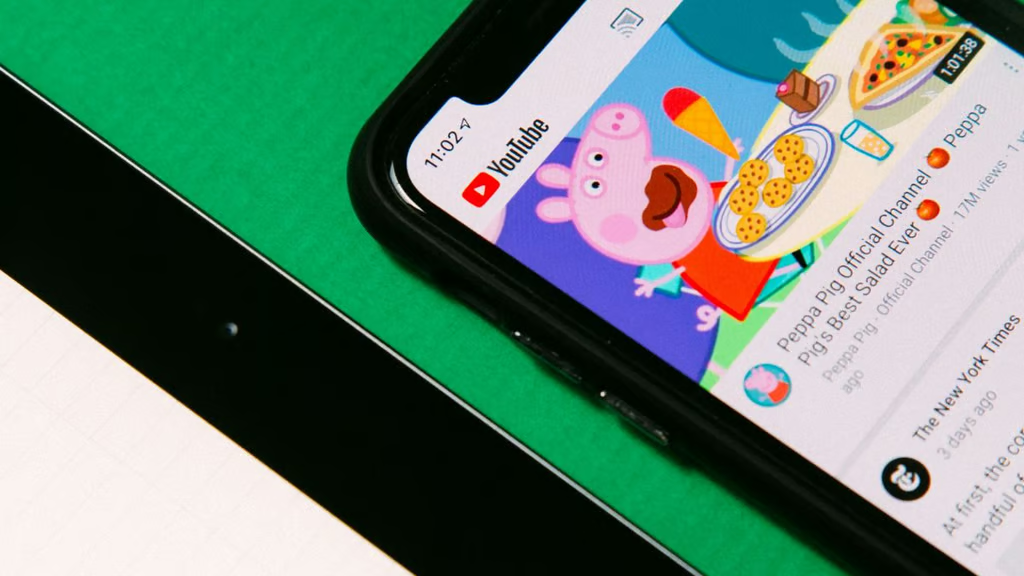
Peppa Pig’s latest problem is not a lost dinosaur or a rainy day. It is a fight over what AI could do with children’s voices.
Hasbro is facing criticism over reported contract terms that could allow AI-related use of child performers’ voices on Peppa Pig, according to Deadline. The Agents of Young Performers Association has objected to the language, warning that child performers’ voices should not be treated like ordinary reuse rights.
A child’s voice can outgrow a role. AI could make that same voice commercially reusable long after the recording session ends, raising questions about consent, control, and how far future-use rights should go.
Contract language puts AI voices on the table
Hasbro reportedly asked child voice actors on Peppa Pig to sign over their voices for AI use, according to Deadline. The terms could theoretically allow it to recreate a child actor’s voice and use AI-generated audio in commercial franchise assets.
The global toy company said it could not comment on “specific negotiations or contractual arrangements.” It added that “the protection of child performers is core to who Hasbro is” and that it is committed to engaging with AI “in a responsible and transparent manner” as industry standards evolve.
Agents call for the ‘greatest of care’ on child voices
The AYPA penned an open letter urging studios and producers to treat child performers’ voices differently from those of adult performers. “Where the performer is a child, consent must be treated with the greatest of care,” the group wrote.
The letter argued that children cannot provide fully informed legal consent, and that a parent or guardian’s approval should not become a “blanket licence to capture, clone, train, or reuse a child’s voice indefinitely.”
The group also said any agreement involving a child’s voice should be fully exempt from AI use. The AYPA’s board told Variety, “There should be no question of using child actors in any form of AI, whether film, recorded media or images.”
AI voice reuse puts child consent under pressure
A studio recording used to have a fairly obvious endpoint. The actor said the line, the production used it, and any further use could be negotiated around the recording.
AI voice replication changes the endpoint. Once a voice can be modeled, a past performance can become the basis for a speech the actor never recorded. The question shifts from where a recording can be used to what else can be made from it.
A performer may have agreed to record a role. New dialogue made from their voice raises a different question of approval, especially when the actor never said the words being generated.
Child performers bring a bigger consent problem into the debate. A young actor may not understand how valuable their voice could become or how long a model based on that voice might remain useful. The risk does not end when the recording session does.
The Peppa Pig dispute leaves studios, agents, parents, and performers with a question that could define future voice contracts. Should AI voice rights be treated like ordinary reuse language or as a separate form of permission when the performer is a child?
ChatGPT is getting access to Getty Images photos through a deal that could change how AI tools handle visual media.