







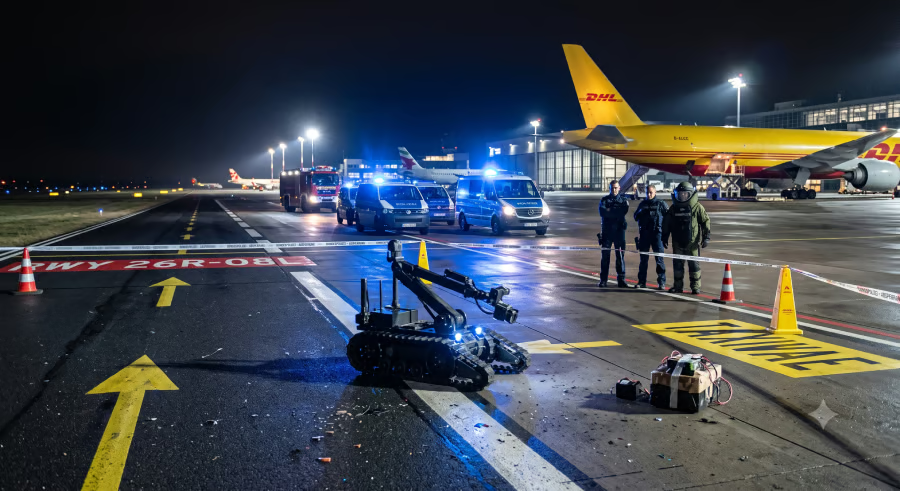
Police at Leipzig/Halle Airport sent a bomb-disposal robot to examine a suspected explosive before anyone approached on foot.
German authorities deployed the machine after a flying device was spotted near the airport and a second item was found beside the southern runway late Tuesday. Authorities later confirmed the grounded device was a drone fitted with explosives, while several flights were diverted during the response.
One unmanned machine brought danger onto the tarmac. Another helped police determine what they were facing.
Robot helps reveal the threat
Federal police guided a tracked robot across the restricted area while bomb technicians monitored the operation from a distance. Video from the scene showed the machine beside a Ukrainian Antonov cargo plane, according to Euronews.
X-ray imaging revealed explosives and a detonator inside the drone. Specialists then neutralized the device near the runway.
Bomb-disposal robots use cameras and mechanical arms to give crews a closer view without sending someone into the blast zone. Machines used for jobs too dangerous for people can also place sensors or handle suspicious devices while operators remain behind cover.
Flights diverted as police secure the runway
Several aircraft were sent elsewhere after the late-night alert. A passenger flight from Mallorca and multiple cargo services landed at other airports while police sealed off the southern runway.
Another cargo plane abandoned its approach and later struck an unidentified item roughly six kilometers from the airport. Crews found minor damage after the aircraft landed safely in Hanover.
Traffic resumed early Wednesday on the northern runway as investigators continued working on the southern side. No injuries were reported.
Faster response could protect more passengers
Leipzig raises a direct safety question for airport operators: how quickly can a robot-equipped team reach an airfield when a suspicious device appears near passengers, crews, or parked aircraft? Faster access can help security teams establish a wider perimeter and begin assessing the threat before more people are exposed.
Airports are already becoming more familiar with robots in daily operations.
For example, Japan Airlines is testing humanoids at Haneda Airport for baggage and cargo work, and autonomous security robots are being prepared for transport hubs to patrol public areas and flag incidents.
Robot dogs used at major events offer another example of mobile machines checking risky locations and sending information back to security teams.
Future bomb-disposal systems could add better mobility and more reliable control across large airport grounds. Airport leaders should know which unit can bring the equipment, how it will reach restricted areas, and whether communications will hold once it arrives.
Preparation determines whether the robot becomes part of the response immediately or gets slowed by the airport around it.
Humanoid robots are becoming a new airline baggage concern, even as smaller robotic devices remain permitted under existing rules.