







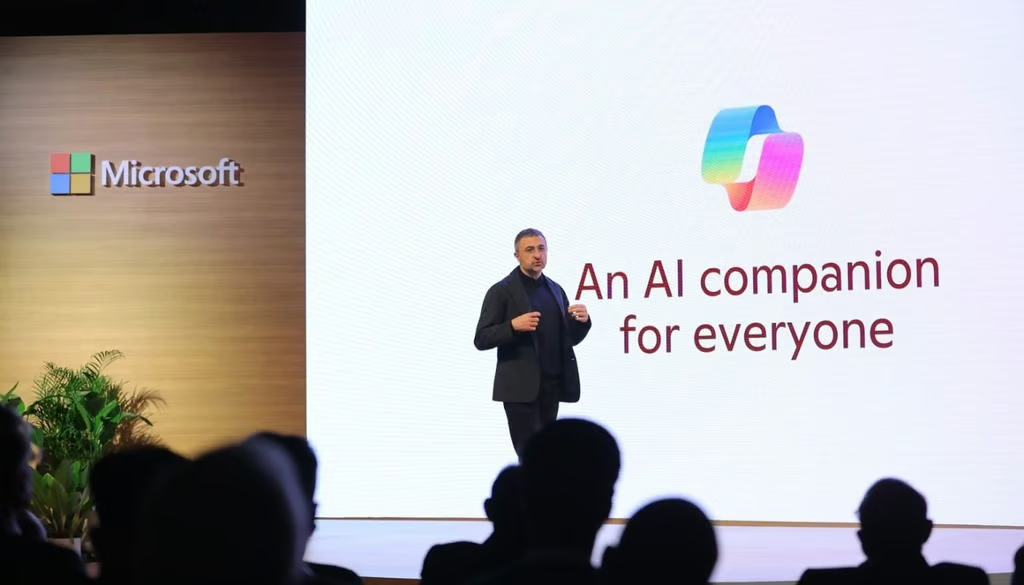
Microsoft is drawing a hard line on AI intimacy. The company’s AI chief, Mustafa Suleyman, says Copilot will never flirt, romance, or engage in erotic chats — not even with adults — as Microsoft doubles down on keeping its assistant “emotionally intelligent but boundaried.”
In remarks reported by CNN, Suleyman said the goal is to make an AI people can trust their kids to use, rejecting the rise of “AI lovers” in favor of a safer, more human-centered Copilot.
Building AI that helps people, not imitates them
Microsoft’s new Copilot release puts that philosophy into practice. The company is reshaping its assistant to support, not simulate, human connection.
The update marks a shift from automation to amplification, with Microsoft aiming to “give people back time for things that matter” and technology that “deepens human connection.”
That principle guides everything from Copilot’s tone to its features. “Technology should work in service of people. Not the other way around,” Microsoft said in its release.
Suleyman reinforced that idea, telling CNN that Copilot’s intelligence will remain “boundaried and safe,” built with empathy but never emotion. The company wants an assistant that helps people think, plan, and create, then gets out of the way.
Microsoft swipes left as rivals chase emotional AI
While competitors lean into intimacy, Microsoft is charting the opposite course. The company wants Copilot to sound understanding, not infatuated.
OpenAI is preparing to roll out adult-only erotica features in ChatGPT for verified users, part of a policy shift that treats “adult users like adults.” Elon Musk’s xAI has gone further, debuting flirty personas and drawing backlash after one of its AI models generated sexualized deepfakes of celebrities.
Those moves highlight a widening gap in how AI giants define “emotional intelligence.” Where others see opportunity in companionship, Microsoft sees risk — and responsibility.
Suleyman’s stance is unambiguous: AI can show empathy, but it shouldn’t fake emotion. The company’s bet is that users will trust the assistant that knows where to draw the line.
Caution over connection
Microsoft is threading safety into every layer of Copilot’s structure. The latest update adds health-related guidance and guardrails that direct users to real doctors or helplines rather than trying to comfort them itself. This safeguard is meant to prevent emotional dependence or misinformation when users seek help.
The new Mico persona gives the AI a friendly, visible presence built for clarity. Microsoft says it’s meant to make interactions warmer without creating the illusion of emotion or personality.
It’s a preventive move in an industry facing mounting scrutiny. Other AI chatbots, like Meta and ChatGPT, have been linked to tragic incidents and legal challenges, while Microsoft is working to avoid those headlines by proving safety can be designed in.
Holding back to push forward
As competitors rush to make AI more lifelike, one company is taking a steadier route, anchoring progress in safety, transparency, and trust.
By keeping Copilot grounded in human values, Microsoft shows it’s willing to slow down where it matters, trading speed for credibility in a field chasing sensation.
Reddit is taking a stand of its own, filing a lawsuit that accuses AI startup Perplexity of lifting millions of posts and comments without permission.