







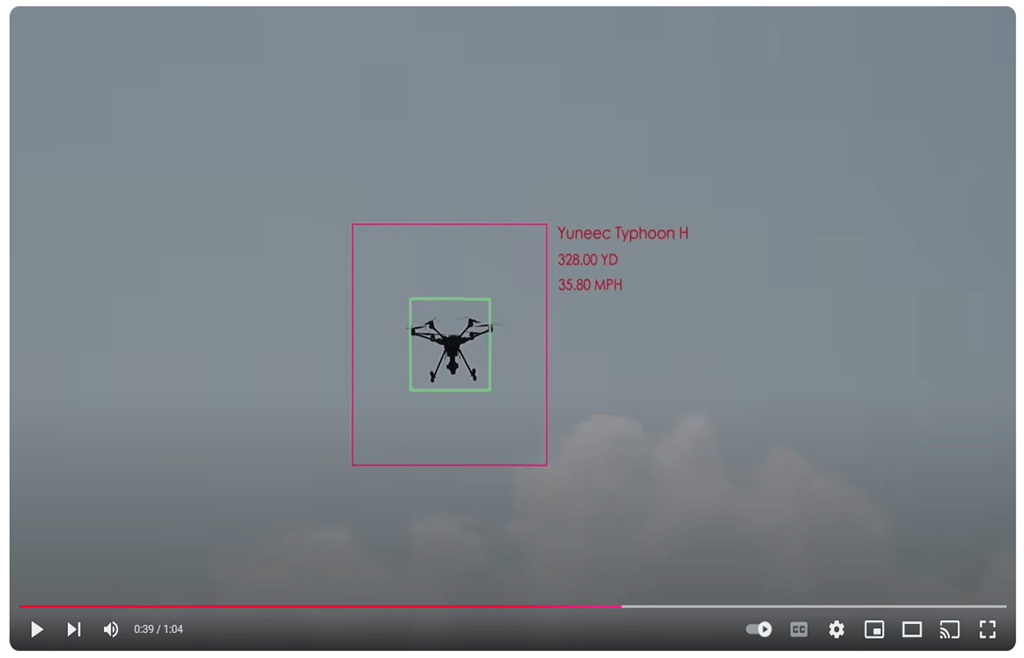
The U.S. military is planning to use an artificial intelligence-powered machine gun to fight back against the rising threat of drone attacks. Drones are inexpensive to produce but pose a lethal danger to troops stationed abroad. The precision focus of the gun—called “The Bullfrog”—could be a game-changer for military defenses dealing with them.
The Bullfrog consists of proprietary AI, computer vision software, and an electro-optical sensor embedded into a 7.62-mm M240 machine gun mounted on a rotating turret. According to a Wired report, this weapon system is capable of tracking and taking down drones better than the best sharpshooters using standard-issue weapons like the M4 carbine or XM7 rifle. Footage of The Bullfrog published by its manufacturer, Allen Control Systems, shows the autonomous system zeroing in on small drones and shooting them out of the sky with just a few shots.
The Bullfrog: What You Need to Know
The Bullfrog is expected to cost around $10 per kill, significantly lower than the million-dollar missiles currently used to defend against much cheaper drones. At 165 pounds, the lightweight system requires little power. According to the manufacturer, it operates on 24V DC and can be easily integrated with common NATO vehicles. It has a fully passive detection system for safety maneuvering and AI-enhanced vision. Allen Control Systems said millions of training images let the system predict whether a shot will be on target before firing or recognize when it cannot track a certain target maneuver.
Modern drones, or unmanned aerial vehicles (UAVs), were introduced in 1935 by the British Royal Navy and have been in use since World War II. Commercial production began in the mid-2000s, prompted by the Sept. 11 terrorist attacks in the U.S.
According to a U.S. Army article published in October, sensors and weapons mounted on different types of unmanned systems have become more ubiquitous and more inexpensive. “The integration of artificial intelligence and machine learning, enhanced navigation systems, anti-jamming capabilities, and advanced satellite communications enable today’s drones to execute missions with unprecedented accuracy and stealth while ensuring operational safety in increasingly contested spaces,’’ it said.
The increased use of UAVs in warfare represents a shift toward intelligent and autonomous systems with the ability to take decisive actions in critical moments.