







- NASAs Latest (and Greenest) Mission Focuses on Climate Change
- Will NASAs Green Space Shot Sink?
- The Idea: A Space Hunt for Carbon Dioxide Sinks
- Getting There: The Ride to Low Orbit
- Payload: Very Precise Spectrometers
- Vital Stats
- Mission Duration
- The Neighborhood: Say Hello to the A-Train
- Cost: A Green Bargain
- No Title
NASAs Latest (and Greenest) Mission Focuses on Climate Change
by Roy Mark
Will NASAs Green Space Shot Sink?
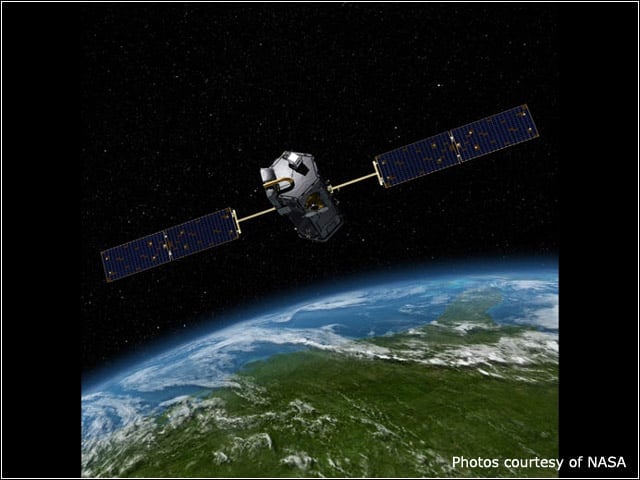
The Idea: A Space Hunt for Carbon Dioxide Sinks

The Orbiting Carbon Observatory will study carbon dioxide sources (where it comes from) and sinks (where it is pulled out of the atmosphere and stored). Carbon dioxide is a major contributor to global warming. The new data will help scientists more accurately forecast global climate change.
Getting There: The Ride to Low Orbit
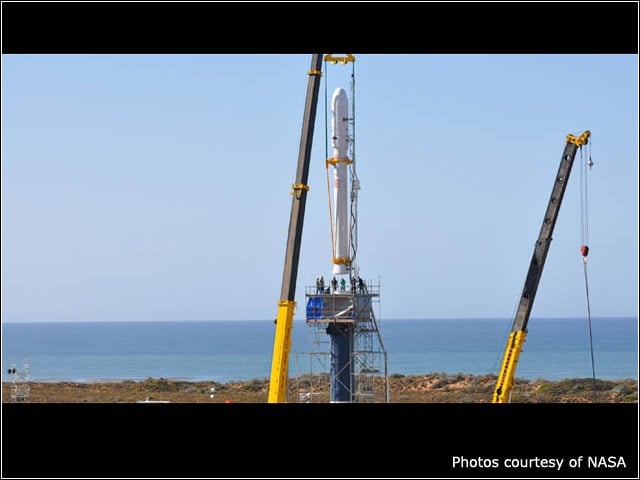
The Orbiting Carbon Observatory will depart from Space Launch Complex 576-E at Vandenberg Air Force Base, Calif., on a Taurus XL 3110 launch vehicle. Manufactured by Orbital Sciences and developed under the sponsorship of DARPA (the Defense Advanced Research Projects Agency), the Taurus rocket carries small satellites into low-Earth orbit.
Payload: Very Precise Spectrometers
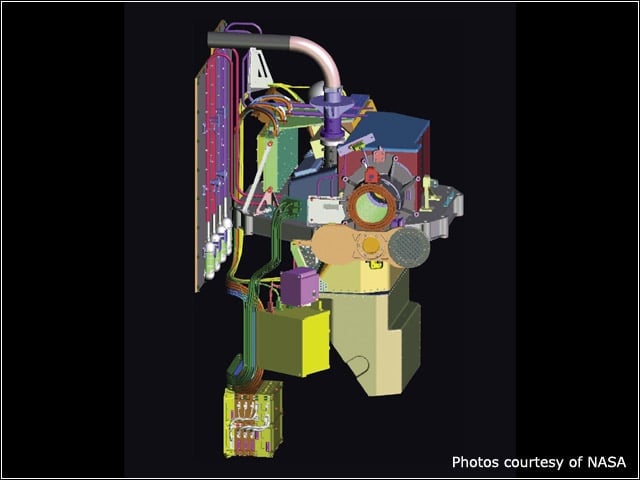
A 300-pound satellite strapped with three high-resolution spectrometers to measure carbon dioxide and oxygen molecules in Earth’s atmosphere based on the way those molecules absorb sunlight. The OCO will target ground-based spectrometers incorporated into the Total Column Carbon Observing Network.
Vital Stats
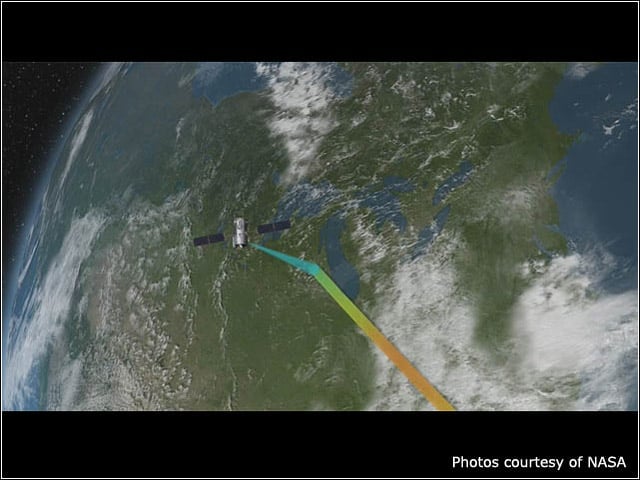
The OCO is 6.96 feet long by 3.08 feet wide when stowed on board. The combined weight of the spacecraft and science instruments is 972 pounds, while the spectrometers are 298 pounds. When deployed in space, the spectrometers measure 5.3 feet by 2 feet.
Mission Duration
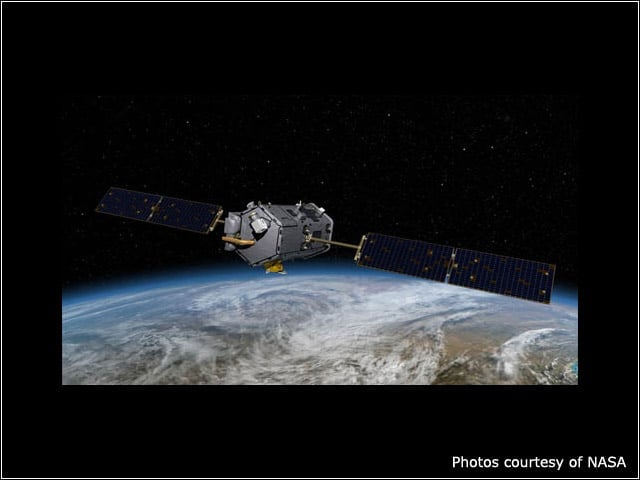
The OCO will circle Earth, mapping the globe every 16 days from its near-polar, sun-synchronous orbit. The OCO will collect about 8 million measurements every 16 days for at least two years with the precision, resolution and coverage needed to characterize carbon dioxide’s global distribution. Depending on funding, NASA could extend the mission for another three years.
The Neighborhood: Say Hello to the A-Train

The OCO will fly at an altitude of 438 miles. In a nearly north-south orbit track, the OCO will fly in a loose formation with the other Earth-observing satellites of NASA’s Afternoon Constellation—known as the A-Train—each of which monitors various aspects of the same region of the atmosphere at about the same time.
Cost: A Green Bargain
In an age of billion- and trillion-dollar budgets, the OCO comes in at virtually pocket change: $273.4 million, including design, development, launch and operations.
