







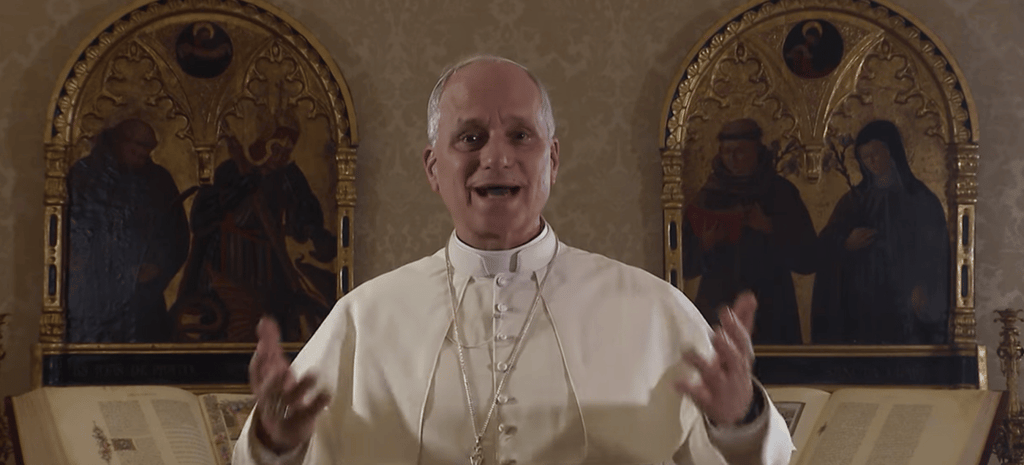
He likes technology when it’s a Popemobile, but when it’s about AI use in healthcare, the Pope has a certain viewpoint.
An international congress titled “AI and Medicine: The Challenge of Human Dignity” opened in Vatican City today (November 10), bringing together scientists, ethicists, and healthcare professionals. Organized by the Pontifical Academy for Life, the meeting aims to explore how AI can coexist with the moral imperatives of medicine — particularly the protection of human dignity.
Pope Leo XIV addressed the participants through a written message (probably composed without the help of ChatGPT), offering his “prayerful good wishes” and urging them to ensure that new technologies never replace the human relationships that lie at the heart of caregiving.
His comments highlight a growing global debate over the use of AI in health — from diagnostics and surgery to patient monitoring and mental health support — and the ethical responsibilities accompanying these advances.
Dehumanization in an age of machines
The Pope reflected on the way AI is reshaping human interaction and self-perception. At no point did he refer to AI as the Devil’s work.
“We currently interact with machines as if they were interlocutors, and thus become almost an extension of them,” he said. “In this sense, we not only run the risk of losing sight of the faces of the people around us, but of forgetting how to recognize and cherish all that is truly human.”
His words echo broader concerns among ethicists that an overreliance on algorithms and automation could lead to the erosion of empathy and personal connection in medicine. As hospitals and health systems increasingly turn to AI-driven tools for triage, diagnostics, and administrative efficiency, the Pope’s remarks serve as a reminder that technology should complement, not replace, the human dimension of care.
Balancing innovation and moral responsibility
While praising the enormous benefits that technological developments have brought to healthcare — from early disease detection to personalized treatment — Pope Leo XIV emphasized that true progress cannot ignore ethical boundaries. He said that both individuals and institutions must ensure that advances in AI serve the “common good” rather than economic or political interests.
Though AI and other technologies can be used to devastating effect on humanity when used maliciously, he said, those same technologies have the potential to be “transformative and beneficial” if placed at the true service of the human person.
This call reflects the Vatican’s ongoing engagement with technology ethics. The Church has frequently urged collaboration between scientists, regulators, and faith communities to shape digital innovation that respects privacy, justice, and dignity. For healthcare systems grappling with data privacy and algorithmic bias, the Pope’s intervention underscores the need for transparency and moral accountability.
The irreplaceable role of human relationships
While most businesses tend to view humans as utterly expendable, Pope Leo XIV stressed that medicine is not merely a technical discipline but a deeply relational one.
“The fragility of the human condition,” he noted, “is often manifest within the field of medicine, but we must never forget the ‘ontological dignity that belongs to the person as such simply because he or she exists and is willed, created, and loved by God.’”
He reminded caregivers that their vocation involves both professional skill and emotional presence. Healthcare cannot be reduced to solving a problem, he said, adding that devices and data must never erode the bond between patient and carer.
“If AI is to serve human dignity and the effective provision of healthcare, we must ensure that it truly enhances both interpersonal relationships and the care provided.”
These remarks strike at the core of debates over digital medicine, where efficiency often comes at the cost of empathy. The Pope’s message encourages health workers to use AI as a supportive tool rather than as a substitute for compassion.
Economic and political implications
In concluding his message, Pope Leo XIV warned about the “vast economic interests often at stake in the fields of medicine and technology, and the subsequent fight for control.” The commercialization of health data and the concentration of power among major tech firms raise concerns about access, equity, and ethics in global health.
The Pope called for broad collaboration between healthcare professionals, policymakers, and international institutions to ensure that AI-driven medicine promotes human flourishing across borders. By grounding innovation in moral responsibility, he suggested, the world can harness AI not as a threat to humanity but as an instrument for solidarity and care.
Alas, AI can be used for evil purposes. Warren Buffett is warning viewers to watch out for impostors.