








The first rule of Fight Club has changed — now that robots are part of the conversation, we should definitely talk about it.
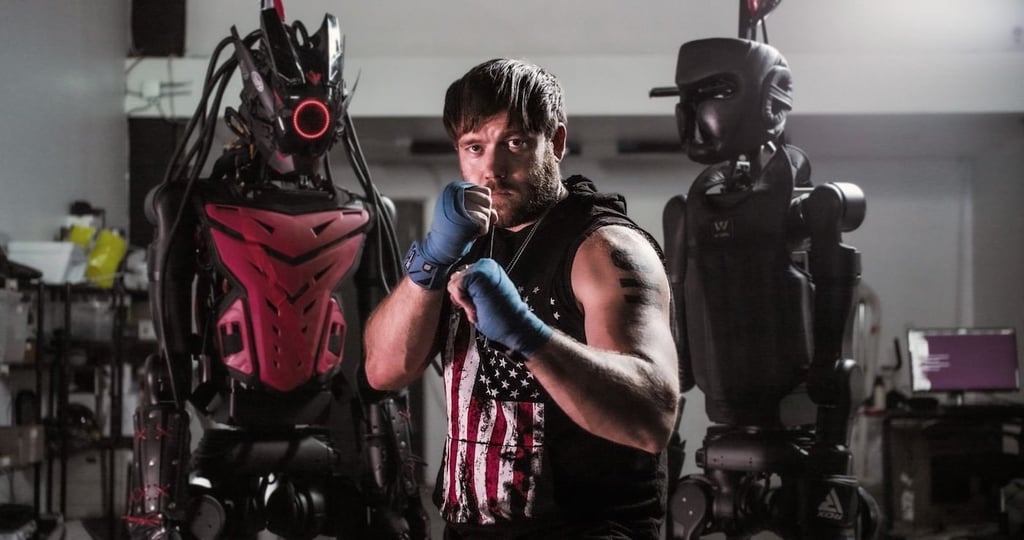
In a warehouse off Van Ness in San Francisco, Cix Liv is building something straight out of a sci-fi fever dream: a VR-powered robot fight club. Picture four humanoid bots, suited up with armor, boxing gloves, or swords, waiting for their human pilots to jack in and send them into battle.
From BattleBots to brawling bots
“This is going to be the next UFC,” Liv said in an exclusive with Core Memory. “When this guy’s walking around and he has full swords, you can feel the pounding in the ground. You know deep in your soul that this thing could kill you.”
Robot fighting is nothing new, but VR veteran Liv and his team at REK are aiming higher, and the difference is humanoid robots. They look like us and move almost like us, making them instantly familiar to anyone watching. Humanoid robots also open up possibilities for storytelling and showmanship in the ring.
Liv, whose previous company helped popularize Beat Saber videos, is leaning heavily into that technology. Pilots will don VR headsets, strap into “combat controllers,” and see a holographic cockpit view of their bot. Every punch, slap, or sword swing will translate into physical moves in the cage.
On LinkedIn, Liv’s title at REK is Chief Robot Fighter, and he posted that he’s building “Real Steel” in reference to the 2011 Hugh Jackman movie. He wrote on X earlier this week about the Core Memory article that, “Soon you will see the vision in my head, and it’s more wild than any sci-fi movie.”
The tech and the temper tantrums
Pulling this off is not exactly easy. Today’s humanoid robots aren’t built for combat, and overheating or balance issues are common. REK’s current heavyweights, 90kg Unitree robots, can throw decent punches, but they are expensive, delicate, and need careful software tuning.
Then there’s DeREK, the bot that went viral for going haywire. In a video Liv posted on X, DeREK, suspended from a gantry, lost his stability sensors and flailed about wildly, ultimately crashing to the ground. REK CTO Amanda Watson, who spent years at Oculus solving latency problems in VR, sees these glitches as solvable.
“If you know the real issues associated with latency, then you can control for them,” she told Core Memory. “A good programmer can make it look as though things are happening very responsively.”
Robots are ‘the future of combat sports’
While REK has been self-funded so far — “I chose to do this instead of having a house,” Liv admitted in the exclusive — the vision goes well beyond flashy showdowns.
This is as much a robotics and AI project as it is a sport. The bots are feats of engineering: precision actuators, advanced motion control, and software capable of translating human intent into mechanical action in real-time.
REK is already training AI models on real fight footage, teaching robots to chain moves together the way a real fighter would. Over time, those models could adapt strategies mid-match, adjust their balance dynamically, and even “learn” an opponent’s style. It’s the same AI-meets-mechanics equation that’s pushing forward self-driving cars and humanoid labor bots.
For Liv, this tech-first approach is part of the appeal. “It would be the first combat sport where you have parity and everyone is competing on a level playing field,” he told Core Memory. Indeed, the physical risks shift from human bodies to engineered ones, and every jab, flail, and knockout becomes another data point for the next generation of fighters.
“The future of combat sports is robots,” Liv said.
Humanoid robots will achieve a major milestone this weekend at the first World Humanoid Robot Games in Beijing, with more than 100 teams competing.