







Artificial intelligence (AI) is taking the world by storm. We are seeing breakthrough tools like ChatGPT, and Google DeepMind scientists even won the 2024 Nobel prize for using AI to better predict and design protein structures. While the possibilities of AI are nearly endless, some are warning of the potential for misuse—common fears include a financial crisis driven by AI, a collapse of the power grid driven by increasing AI energy demands, or bioweaponry designed by next-gen AI. While most scientists and researchers are optimistic about AI’s future, others fear an AI-driven disaster sooner rather than later.
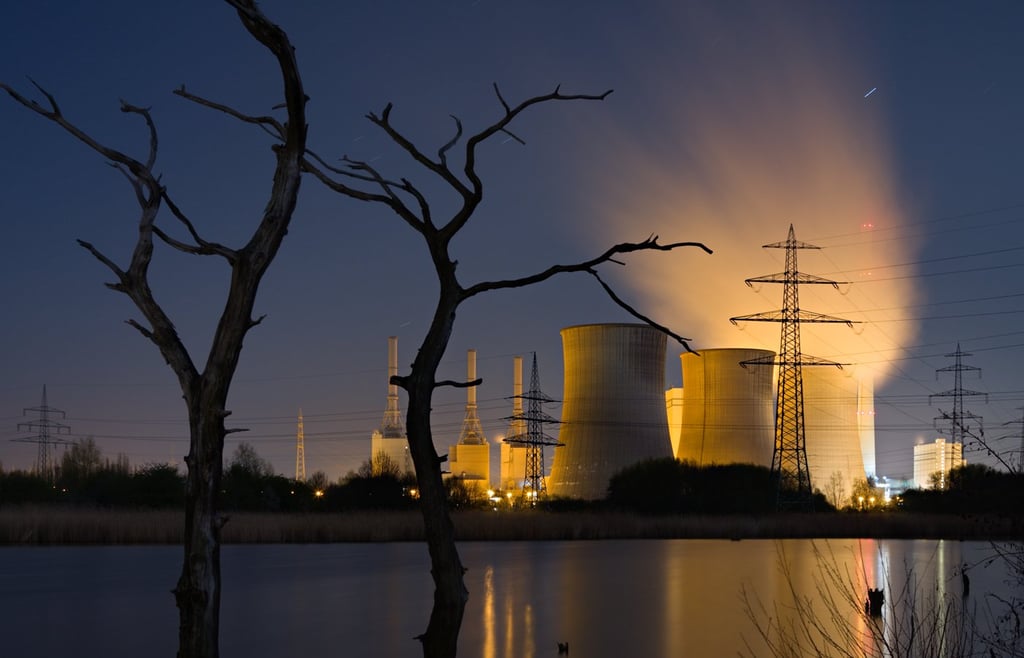
“I think it’s almost inevitable that, at least in my lifetime, there will be some version of an AI Fukushima,” said Columbia University researcher and Pulitzer prize winner Siddhartha Mukherjee, referring to the 2011 nuclear reactor accident in Japan.
Using Energy to Battle the Climate Crisis
Climate change is one of AI’s biggest obstacles. On one hand, tech companies are already using advanced AI algorithms to better predict floods, heat waves, and other natural disasters. However, some of these same systems consume an exorbitant amount of energy themselves. It’s a double-edged sword that cannot be ignored.
Certain processes, like training large language models (LLMs), consume enough energy to power 1,000 homes for an entire year. Issues like this only add to the number of potential dangers of AI, and many scientists and researchers are rightfully concerned.
“AI companies that are involved in this space are investing a lot in renewable energy, and hopefully that will spur a faster transition away from fossil fuels,” said Asmeret Asefaw Berhe, former director of the U.S. Department of Energy’s Office of Science. “But is that enough?”
Some calculations have determined that next-gen AI will consume as much as 134 terawatt hours each year, enough to power a country the size of the Netherlands. To further back up these claims, a recent International Energy Agency study estimates that data centers around the world could consume up to 1,050 terawatt hours per year by 2026. Given that the U.S. is home to approximately 33 percent of all data centers in the world, it’s easy to see how this could quickly become an energy crisis of its own.
Avoiding the Dangers of AI Technology
Even though artificial intelligence is still in its infancy, with seemingly endless possibilities, some scientists and researchers are already warning consumers about the dangers of AI technology. Despite the dangers, news reports about AI generally focus on the benefits. As the numbers show, however, the potential for a Fukushima-level AI disaster should not, and cannot, be ignored.