Taylor Swift, Jenna Ortega, and the Battle Over AI’s Role in Creativity

Taylor Swift, Jenna Ortega, and the Battle Over AI’s Role in Creativity

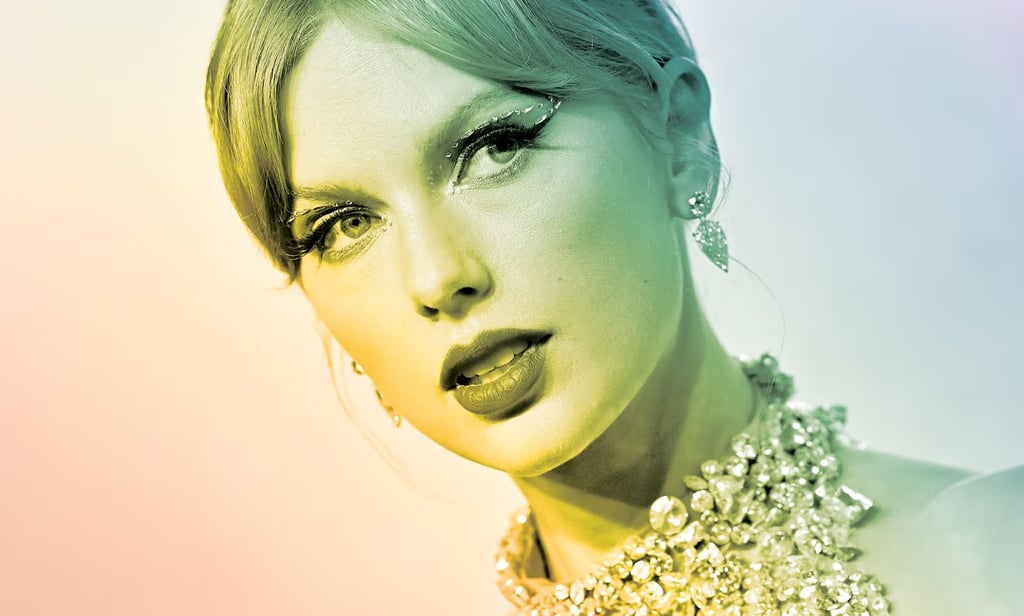
Taylor Swift.

Image: Axelle/Bauer-Griffin/Getty Images

Dec 19, 2025
5 minute read
eWeek content and product recommendations are editorially independent. We may make money when you click on links to our partners. Learn More

Taylor Swift’s voice has always been unmistakably hers. In the age of AI, that distinction is no longer guaranteed.

As synthetic performances creep into film, music, and art, stars like Swift, Jenna Ortega, Joseph Gordon-Levitt, and many other A-listers warn that the industry may be drifting toward a future in which perfection replaces personality and creativity loses its human core.

While some stars see a tool for immortality, others see the death of art itself.

Jenna Ortega: ‘We’ve opened Pandora’s box’

Jenna Ortega emerged this year as one of the most outspoken critics of AI in filmmaking. Speaking at the Marrakech Film Festival, the Wednesday star warned that the industry may already be past the point of no return.

“When you look back at history, we just always take things too far, and I think it’s very easy to be terrified — I know I am — of deep uncertainty,” Ortega said. She added that with AI, “it kind of feels like we’ve opened Pandora’s box in a way.”

Ortega argued that human flaws are essential to art and warned that machine-made content could eventually feel hollow.

“But there’s certain things that AI just isn’t able to replicate. There’s beauty in difficulty and there’s beauty in mistakes, and a computer can’t do that. A computer has no soul,” she added.

Taylor Swift and the AI double-standard debate

Taylor Swift remains one of the most high-profile voices raising alarms about AI misuse, even as her own work has come under scrutiny.

After fake political endorsement images circulated online last year, Swift addressed the danger of AI misinformation in an Instagram post:

“Recently I was made aware that AI of ‘me’ falsely endorsing Donald Trump’s presidential run was posted to his site. It really conjured up my fears around AI and the dangers of spreading misinformation.”

In 2025, Swift faced backlash after fans accused her team of using AI-generated visuals in a promotional campaign for her album The Life of a Showgirl. The videos were later removed, though neither Swift nor Google confirmed whether AI was involved.

The controversy sparked the viral hashtag #SwiftiesAgainstAI, with fans questioning whether artists can oppose AI while quietly benefiting from it.

Advertisement

Joseph Gordon-Levitt warns of an empathy crisis

Actor and tech entrepreneur Joseph Gordon-Levitt focused less on jobs and more on human connection. Speaking at Utah’s 2025 AI Summit, he warned, “I’m worried it could do more harm than good, and in particular to kids, and my kids,” according to AOL.

He added, as reported by Deseret News, “The bedrock of any civilization is human relationships,” stressing that “There’s more to a human relationship than what any chatbot can do.” Gordon-Levitt emphasized that while he sees value in technology, replacing real human interaction with chatbots could lead society down a troubling path.

Meanwhile, Benedict Cumberbatch expressed fears that AI could flatten creativity itself. In a Reddit AMA, he said he felt “pretty depressed” about AI’s influence, warning it risks “vanilla-fying” art by removing imperfection.

Voices against AI grow louder

Several other stars echoed similar concerns this year:

  • Nicolas Cage, while accepting an acting award, warned: “I am a big believer in not letting robots dream for us. Robots cannot reflect the human condition for us.”
  • Scarlett Johansson, responding to a deepfake video using her likeness, said: “The potential for hate speech multiplied by AI is a far greater threat than any one person who takes accountability for it.”
  • SZA bluntly told fans on social media: “Hey, I hate AI.”

AI actors trigger outrage across Hollywood

The debate intensified after the rise of Tilly Norwood, an AI-generated actress created by Dutch producer Eline Van der Velden. While Norwood gained thousands of followers and industry interest, actors and unions pushed back hard.

SAG-AFTRA issued a statement opposing synthetic performers, saying, “Creativity is, and should remain, human-centered. The union is opposed to the replacement of human performers by synthetics.” Emily Blunt called the idea “really, really scary,” while Eiza González described it as “horrific and terrifying.”

Advertisement

Some celebrities choose to lean in

Not every star is resisting. Matthew McConaughey and Michael Caine have partnered with AI audio company ElevenLabs to license AI voice replicas on controlled terms.

“I’m proud to share that I’ve been an investor in ElevenLabs for several years now,” McConaughey said at the company’s summit, adding that the technology unlocks “extraordinary storytelling capabilities and creative potential.”

Caine framed his decision as preservation, saying in a statement, “With ElevenLabs, we can preserve and share voices — not just mine, but anyone’s.” Still, the move sparked mixed reactions online, with critics warning that even licensed AI could normalize replacement.

Other actors have turned to AI for deeply personal reasons. Val Kilmer, who lost his voice to throat cancer, used AI to recreate it for his role in “Top Gun: Maverick,” calling the technology a “gift.” The late James Earl Jones sanctioned the use of AI to preserve his voice as Darth Vader for future “Star Wars” projects.

From a production standpoint, actors like Tye Sheridan (“Ready Player One”) have co-founded AI companies aimed at democratizing high-end visual effects for independent filmmakers. Ashton Kutcher has argued that AI video generators will unleash a boom in creativity by allowing anyone to make a film.

The line in the sand

In the UK, resistance has moved beyond words. Equity, the country’s largest acting union, reported that over 99% of voting members said they would refuse digital scanning on set without proper AI protections, according to Sky News.

Equity General Secretary Paul Fleming called AI “a generation-defining challenge,” warning that performers are prepared to disrupt production if safeguards are not strengthened.

An industry at a crossroads

As 2025 unfolds, AI is forcing Hollywood to confront uncomfortable questions about authorship, consent, and what it means to create.

Some celebrities see opportunity. Others see an existential threat. What’s clear is that the debate is no longer theoretical; it’s playing out in contracts, courtrooms, fan communities, and on screen. And for now, the industry remains deeply divided over whether AI is a tool to be controlled — or a force already moving too fast to stop.

Aminu Abdullahi

Aminu Abdullahi is an experienced B2B technology and finance writer and award-winning public speaker. He is the co-author of the e-book, The Ultimate Creativity Playbook, and has written for various publications, including TechRepublic, eWEEK, Enterprise Networking Planet, eSecurity Planet, CIO Insight, Enterprise Storage Forum, IT Business Edge, Webopedia, Software Pundit, Geekflare and more.

eWeek Logo

eWeek has the latest technology news and analysis, buying guides, and product reviews for IT professionals and technology buyers. The site's focus is on innovative solutions and covering in-depth technical content. eWeek stays on the cutting edge of technology news and IT trends through interviews and expert analysis. Gain insight from top innovators and thought leaders in the fields of IT, business, enterprise software, startups, and more.

Property of TechnologyAdvice. © 2026 TechnologyAdvice. All Rights Reserved

Advertiser Disclosure: Some of the products that appear on this site are from companies from which TechnologyAdvice receives compensation. This compensation may impact how and where products appear on this site including, for example, the order in which they appear. TechnologyAdvice does not include all companies or all types of products available in the marketplace.