






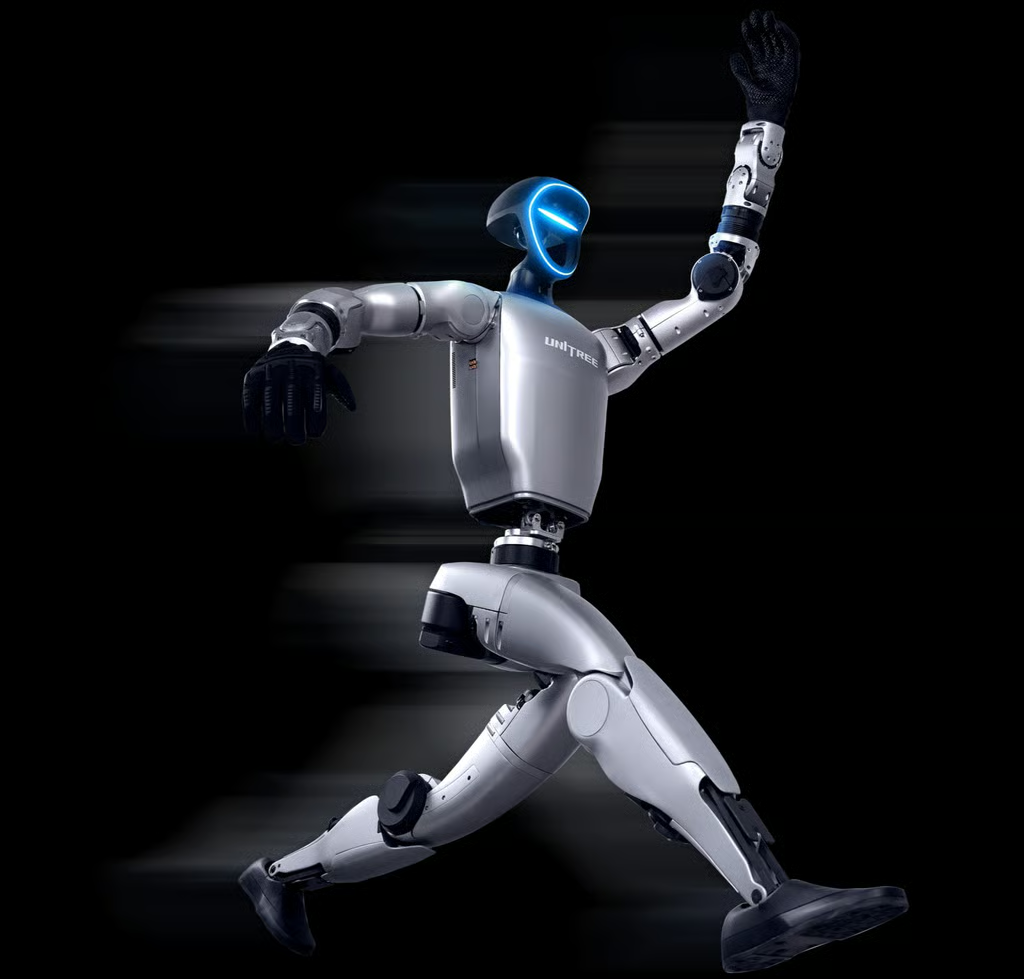


Humanoid robots are stepping into the app era. Chinese robotics company Unitree has unveiled what it calls the world’s first “Robot App Store,” allowing users to download, share, and develop software for its humanoid robots, bringing the smartphone app model to physical AI.
The Unitree App Store is currently in public beta, focusing on motion routines and task models for the company’s G1 humanoid robot. Early applications include entertainment-focused downloads like Funny Actions, the 1960s dance Twist, and a martial arts routine called Bruce Lee, which reproduces the legendary fighter’s moves.
According to Unitree, the platform allows users to “develop and share,” and “exceptional developers will receive rewards.” Users can install motion software on their robots as easily as they would on a phone, while also uploading their own trained action sequences for others to use.
Building a developer ecosystem
Unitree’s app store isn’t just about fun. It’s designed to grow a user and developer ecosystem.
Over 1,200 developers have joined the platform, and 237 applications are already available. The software spans logistics and warehousing (38%), industrial manufacturing (29%), and service robots (17%).
Chinese media outlet 36Kr reports that the company aims to connect 100,000 robot devices, cultivate 100 developer enterprises with annual revenues over 10 million yuan, and create 10 application scenarios worth tens of billions within three years. An IDC data cited by 36Kr estimates the global robot app store market could reach $18.7 billion by 2027, and Unitree hopes to secure an early share.
While the idea is promising, experts note challenges. Industrial users may hesitate to share proprietary motion models that give them a competitive edge. Security is another concern, as allowing third-party code to run on robots could introduce vulnerabilities.
Currently, the store is limited to the G1 model, and most apps are entertainment-focused. But Unitree’s long-term plan includes more practical uses, such as service, warehouse, and industrial robots capable of performing real-world tasks.
Unitree founder Wang Xingxing believes this is just the beginning. After these entertainment-focused canned routines, the company plans to move toward robots that can follow voice commands for real-world chores, such as tidying a table or fetching water, potentially as early as next year.
Also trending: A startup plans to produce up to 50,000 humanoid robots by 2027 for industrial and defense use, spotlighting how rapidly the robotics landscape is evolving.