







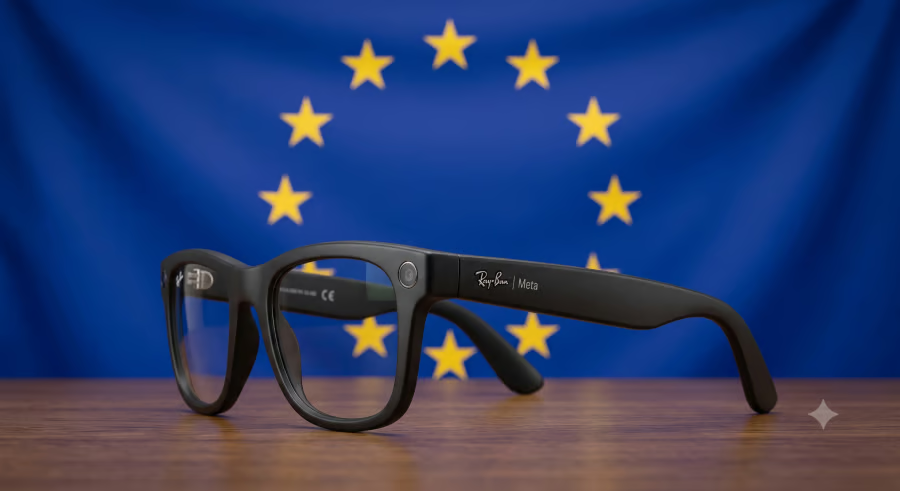
Meta's smart glasses may soon face one less regulatory hurdle in Europe.
The European Commission has proposed exempting smart glasses and other connected wearables from rules requiring consumers to remove and replace built-in batteries. The change could speed up Meta’s rollout across Europe and lower design barriers for Apple, Google, Samsung, and other device makers.
It also puts Brussels under scrutiny over whether the exemption weakens repairability rules and gives US technology companies more influence over European regulation.
Battery rules slowed the European rollout
The Commission adopted a delegated act covering smart glasses, smartwatches, fitness trackers, electric toys, and several other connected products.
Under the proposed exemption, consumers would not need to remove or replace batteries themselves. Independent professionals would still need to be able to perform the repair, according to The Next Web.
The broader EU Batteries Regulation aims to extend product life and reduce electronic waste by requiring portable batteries to be removable and replaceable. Meta’s latest smart glasses use integrated batteries that consumers cannot easily access, creating a design and compliance hurdle for a wider European rollout.
The European Parliament and EU member states now have an opportunity to object. Politico reported that they have two months to challenge the delegated act. Without an objection, the measure would be published in the Official Journal of the European Union and enter into force after 20 days.
US criticism added political pressure
US Ambassador to the EU Andrew Puzder publicly criticized the battery rules in March, arguing that they were too restrictive and blocked the sale of what he called a “wonderful, jointly developed, US-European product.”
“You have to focus on allowing businesses to grow and allowing businesses to innovate,” Puzder said, per Politico.
The Commission denied changing course because of American lobbying. A spokesperson said the proposal followed consultations with consumer groups, industry representatives, member states, and technical experts.
The exemption process also began in 2025, before Puzder made his comments. Although the timeline suggests the proposal was already underway, Puzder's intervention intensified scrutiny over whether Washington's lobbying shaped the debate.
Commercially, the decision could give wearable makers more room to launch the same hardware across multiple markets instead of redesigning products specifically for Europe.
Meta could benefit most immediately because its distribution across EMEA has remained slower than in the United States.
More than 7 million pairs of Meta smart glasses were sold worldwide in 2025, while more than half of potential EMEA sales locations reportedly remained unserved.
Privacy scrutiny remains unresolved
The battery exemption does not address the more difficult questions surrounding smart glasses, including surveillance, bystander consent, data handling, and AI training.
Cláudio Teixeira, head of digital policy at European consumer group BEUC, warned against weakening existing protections.
“Europe should not dilute consumer protections,” Teixeira said, according to Firstpost. He argued that exemptions should rely on clear technical and safety evidence rather than industry influence.
Meta has pointed to privacy safeguards, including a recording light, tamper detection, and local storage for media that users do not share with the company. European regulators are still reviewing whether such measures provide bystanders with sufficient notice and protection.
The European Data Protection Board is expected to complete a report on smart glasses this summer. The findings could influence the extent of smart glasses' usage across Europe, even if the battery obstacle disappears.
Brussels has made smart glasses easier to sell, but not necessarily easier to trust. Manufacturers now face a clearer hardware path into Europe, while privacy, repairability, and consumer confidence remain unresolved.
Read more about Meta’s reported smart glasses that could capture photos and audio to give its AI more context.