







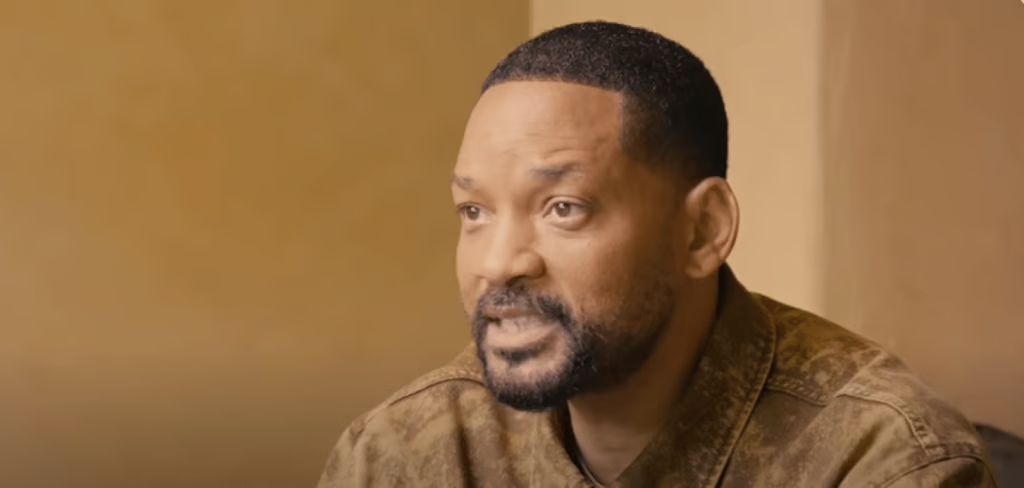
Will Smith’s attempt to restart his rap career has hit turbulence after news coverage said some of his new promotional clips appear to feature AI-generated crowds cheering him on. The videos, uploaded to his official YouTube channel in August, showed dense audiences waving in unison, but viewers flagged repeating glitches and uniform movements as signs of synthetic footage.
The accusations added another layer of controversy for the 56-year-old actor and musician, who has been working to rebuild his public image since the 2022 Oscars incident.
The criticized videos remain online, and Smith’s representatives had not responded publicly as of Wednesday.
AI crowd claims spark skepticism
The alleged AI crowds immediately drew mockery across comment threads, with critics suggesting the use of fake fans pointed to insecurity about Smith’s popularity. On Yahoo, a Fortune writer reported that some comments even highlighted misspelled fan signs in the background as possible digital errors. The optics matter — Smith is currently touring in the UK while trying to show audiences he can still command stages organically.
A comeback clouded by past controversies
Smith rose to fame in the late 1980s with DJ Jazzy Jeff & the Fresh Prince, scoring Grammy wins for songs like “Summertime.” His music career eventually gave way to blockbuster films, but he returned to headlines in 2022 when he slapped comedian Chris Rock during the Oscars broadcast.
The altercation led to a 10-year Academy ban and slowed new opportunities, though Smith starred in “Bad Boys: Ride or Die” earlier this year. His return to rap was meant to reclaim authenticity, but these latest allegations have complicated that narrative.
Examples of other AI missteps
Smith’s flap fits into a larger pattern of AI misuse that has rattled politics, media, and culture in recent years.
- In April 2023, the Republican National Committee released an attack ad built entirely with AI-generated imagery, drawing scrutiny over the lack of disclosure.
- In May 2023, an AI-generated image of a fake explosion near the Pentagon spread online, briefly jolting financial markets before fact-checkers debunked it.
- Later that year, Sports Illustrated came under fire after an investigation found AI-generated stories published under fake author profiles, undermining the outlet’s credibility.
- Music has also faced disruption — in 2023, a viral AI track imitating Drake and The Weeknd was pulled from streaming services over copyright concerns.
Why it matters
Incidents like these highlight how quickly synthetic media can blur the line between performance and illusion. For fans, trust is at stake. Audiences want to know whether what they are seeing is real. For businesses and public figures, undisclosed AI risks reputational damage if discovered after the fact. The conversation around Smith’s videos underscores the growing demand for transparency, whether in entertainment, politics, or news.
When synthetic media is passed off as authentic, it can damage credibility with audiences. There’s a wider risk, as viral AI fakes have already misled markets and voters, showing the stakes extend far beyond celebrity image management.
The bigger picture
Synthetic media is not going away, but the backlash against AI crowds, fake political ads, and cloned music shows a cultural adjustment period. As Smith’s situation demonstrates, using AI without acknowledgment can overshadow the art itself. Fans, consumers, and voters are increasingly alert to spotting glitches, raising the stakes for how creators and institutions deploy these tools.