Rev your engines, Tech Insiders.
Cheap horsepower from Claude Sonnet 5, Google's Gemini on note-taking duty, and Apple throwing down pit-stop patches. There's lots of rubber hitting the road today. Buckle up for the circuit ahead. |
|
|
|
Here's what you need to know today: |
|
|
|
Claude Sonnet 5 Nears Opus Power at Bargain |
Anthropic just turbocharged its mid-tier model without the mid-tier price tag.
Anthropic has launched Claude Sonnet 5, calling it its most "agentic" Sonnet yet and rolling it out to Free, Pro, Max, Team, and Enterprise users today.
The company says the new model's reasoning, coding, and tool-use skills now sit just a hair below flagship Claude Opus 4.8, yet Sonnet 5 costs a fraction as much. Through August 31, it runs at an introductory $2 per million input tokens and $10 per million output tokens, before jumping to the standard $3 and $15 rates.
Benchmark snippets shared by Anthropic show Sonnet 5 beating the older Sonnet 4.6 on complex reasoning, scoring within a few points of Opus on tasks like multistep coding and knowledge work. Internal red-team testing also found lower "unsafe" completion rates than its predecessor and weaker cybersecurity exploit ability than Opus, bolstering Anthropic's safety pitch.
|
Developers can tap Sonnet 5 in Anthropic's API today; the model is already live on Amazon Bedrock, Google Cloud, and Microsoft Foundry. To sweeten the deal for the science crowd, Anthropic simultaneously released Claude Science, a specialized AI workbench—not a new model—that integrates with 60+ scientific databases.
Why it matters: You're getting near-flagship muscle at a midrange price, saving serious GPU cash if you're building agents, copilots, or customer chatbots. The release also tightens the race with OpenAI's recently previewed GPT-5.6 Sol, Terra, and Luna, and Google's Gemini 3.5 Flash, nudging the market toward cheaper, more capable foundation models—good news for every budget-strapped dev team out there.
|
|
|
|
Right now, your primary AI model provider is... |
|
|
|
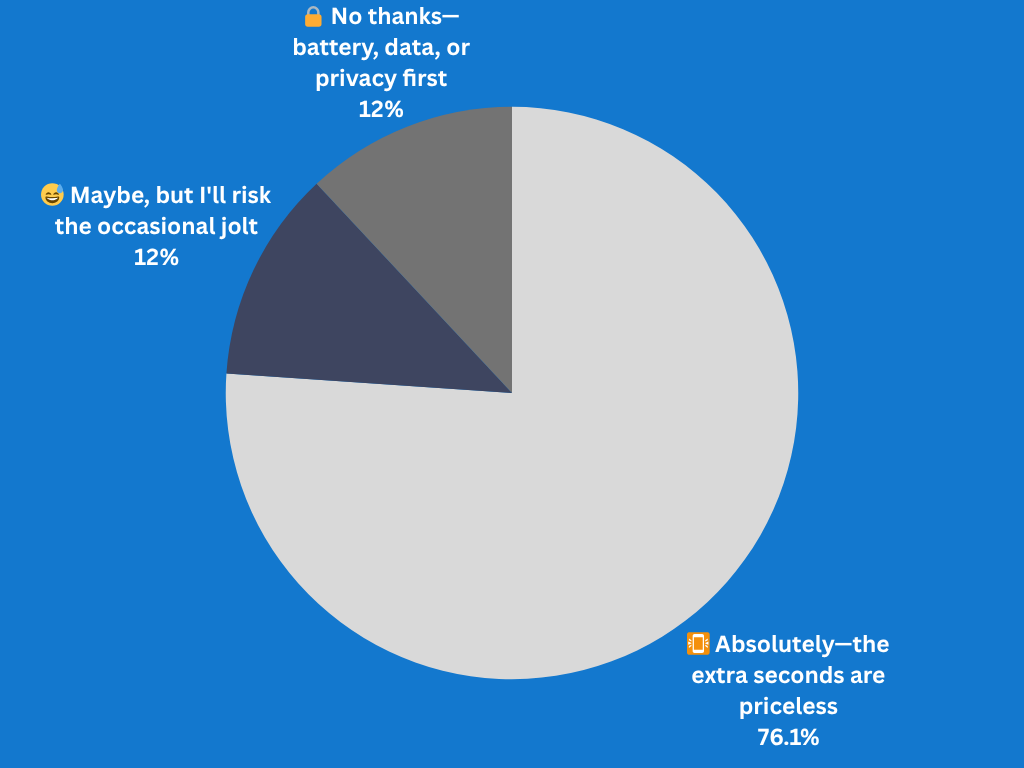
Results from Yesterday's Pulse Check |
Will you keep Android's earthquake alerts switched on? |
|
|
|
Google Meet Now Auto-Summarizes Video Calls for Google AI Subscribers |
Host hat on, pen down—Gemini is ready to scribble so you don't have to.
Google is rolling out its "Take notes for me" feature in Meet to Google AI Pro ($19.99/month) and AI Ultra (starting at $100/month) subscribers, ending the tool's two-year stint as a Workspace-only perk. However, Plus users must still scribble their own notes (sorry).
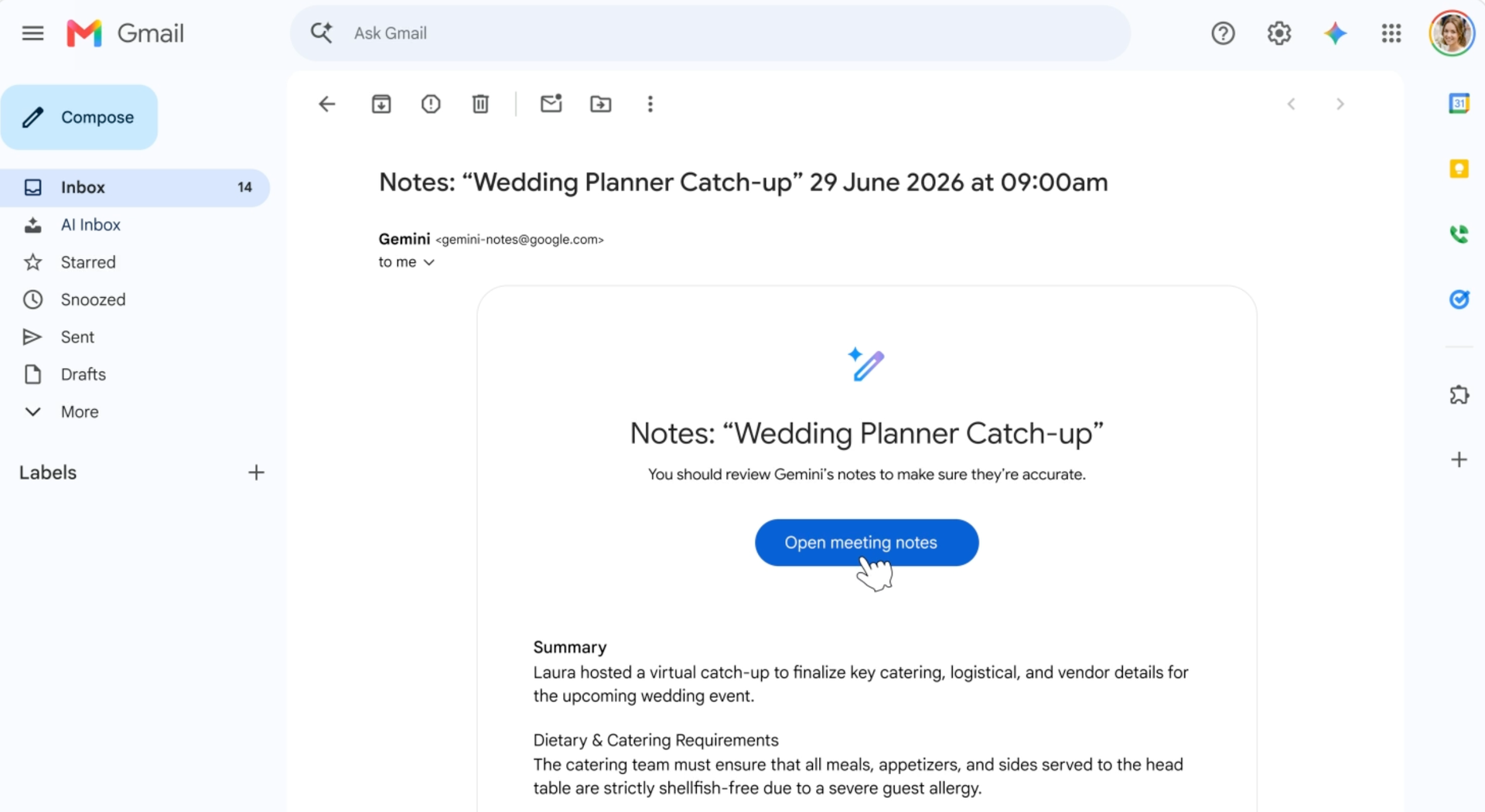
Once you tap the pencil icon, or pre-enable it in settings, Gemini summarizes the call, distills key decisions and action items, then files a neatly structured Google Doc to your Drive and shoots a recap email minutes after the meeting. (Note that this generates a structured recap, not a verbatim transcript.)
The upgrade works on web, Android, and iOS (though mobile apps lack live "Summary so far" tracking), but only for calls you host that run between 15 minutes and 8 hours. Join someone else's meeting or host a quick 10-minute huddle, and your shiny subscription sits idle. |
Supported languages remain limited to eight (English, French, German, Italian, Japanese, Korean, Portuguese, Spanish), and mixed-language calls still confuse the bot. Google touts productivity gains, yet its consumer privacy terms aren't as granular as enterprise controls, and the AI can still hallucinate, so double-check the notes before acting on them. Even so, Meet now matches Microsoft Teams' Copilot recaps and Zoom's AI Companion, tightening the AI-assistant arms race across video platforms. Proof that your next pricey subscription might actually buy you back a few brain cells. |
|
|
|
AirDrop, Quick Share Bugs Knock Devices Offline Nearby |
Researchers have uncovered six flaws in Apple AirDrop and Google/Samsung Quick Share that let anyone within 30 meters wreak havoc on your Mac, iPhone, Galaxy, or Windows laptop without a single tap.
Three bugs live in AirDrop's "sharingd" daemon. Instead of staying down until a reboot, the service auto-restarts, but an attacker can spam malformed requests every two seconds to trap AirDrop, AirPlay, and Handoff in a relentless crash loop. |
Image created with ChatGPT |
The other three break Quick Share's session checks, letting unauthenticated creeps bypass encryption, while one Windows client race-condition bug opens a path to code execution.
Apple has patched one AirDrop issue, Google fixed the Windows flaw, and remaining CVEs are still pending. Until the rest of the updates land, switch AirDrop or Quick Share to "Contacts Only" (or off) and keep devices fully patched. Think of it as digital freeze tag; avoid "Everyone" unless you enjoy your phone taking unexpected naps. |
iPhone Security Fixes Speed Up as AI Shortens Patch Windows |
Apple is now pushing iOS, iPadOS, macOS, and Safari security fixes out weeks earlier, saying AI is shrinking the time hackers need to exploit fresh bugs.
The surprise iOS 26.5.2, iPadOS 26.5.2, macOS Tahoe 26.5.2, and Safari 26.5.2 updates patch more than 30 flaws, most in WebKit, and were originally slated for July's 26.6 release. Ironically, AI tools from OpenAI and even Anthropic's Claude actually found several of these bugs, meaning Apple is essentially racing AI to protect us from AI.
While Apple sees no active attacks yet, security pros warn AI tools can weaponize published bugs within hours. Don't wait for Automatic Updates to kick in, as Apple's rollouts can lag. Install the updates ASAP by going to Settings > General > Software Update. Organizations managing fleets should treat these sub-point releases as priority patches.
Beat them to the patch, or they'll beat you to your data. |
Samsung and SK Hynix Lead $590B South Korean Chip Megaproject |
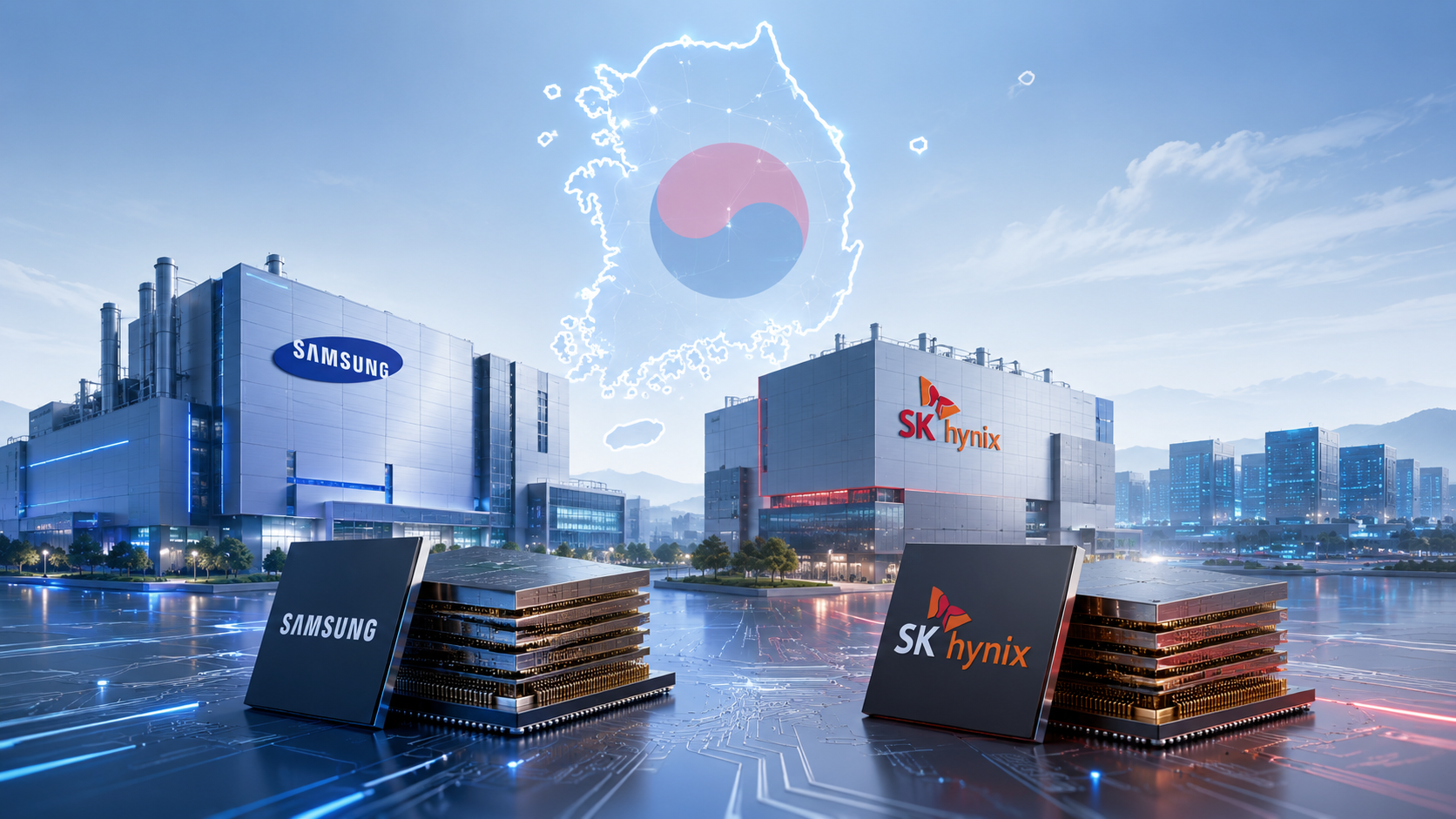
Samsung Electronics and SK Hynix will pour 911 trillion won (~$590 billion) into four new memory fabs and an advanced packaging hub, the centerpiece of President Lee Jae Myung's "Three Mega Projects" unveiled Monday.
The chip megaproject pushes production far beyond Seoul, seeding a second manufacturing belt in the southwest while reserving 81 trillion won (~$52 billion) for packaging in the center and 30 trillion won (~$19 billion) for next-gen AI and defense chips. Running parallel to this is a separate, massive 550 trillion won (~$355 billion) data center expansion spearheaded by Naver, GS Group, and SK Group.
With Samsung and SK Hynix controlling about 80% of the HBM market, South Korea wants capacity ready as hyperscalers race toward a projected $700 billion in 2026 AI capex. | Image created with ChatGPT |
Analysts, however, caution that two-to-three-year build lags can flip shortages into gluts; Samsung shares slid 4.8% and SK Hynix 1.6% on oversupply jitters—and just days after a US class-action accused the duo (alongside Micron) of price-fixing commodity DRAM to spark a "RAMpocalypse" (which has already prompted Apple to hike device prices). Critics also worry talent may balk at relocating away from the capital's established ecosystem.
For Seoul, the bet is simple: double down on memory now or risk watching the AI gold rush pass by. Silicon meets civic boosterism... may the demand curve stay vertical. |
|
|
|
|
Writer/Editor at TechnologyAdvice |
Justin Meyers is an investigative writer and editor who draws on over a decade of meticulous hands-on research to deliver the full, trustworthy story behind consumer and enterprise tech, including cybersecurity. |
|
|
|
Curious about where AI is really headed? |
The Neuron cuts through the noise to bring you smart, hype-free takes on the latest AI trends, tools, and breakthroughs. Join 700,000+ professionals from top companies like Microsoft, Apple, Salesforce, and more.
|
|
|
|
Advertise in Daily Tech Insider! Daily Tech Insider is a TechnologyAdvice business. © 2026 TechnologyAdvice, LLC. All rights reserved.
TechnologyAdvice, 3343 Perimeter Hill Dr., Suite 215, Nashville, TN 37211, USA. |
|
|
|
|