Grab your popcorn, Tech Insiders. AI is moving deeper into filmmaking, phones, robots, memory, and even judgment. Useful, yes. Also slightly terrifying.
Keep reading for the breakthroughs, red flags, and one robot that refuses to stay down. |
|
|
|
Here's what you need to know today: |
|
|
|
Netflix's $587M Bet on Ben Affleck's AI Startup |
Hollywood's AI fight is pushing deeper into postproduction, intensifying job fears among VFX workers worldwide.
Netflix's latest 10-Q lists approximately $587 million in cash for an unnamed March acquisition. The company announced its purchase of Ben Affleck's AI filmmaking startup, InterPositive, that same month, and major trade outlets quickly connected the transactions.
InterPositive is built for the less glamorous, wildly expensive part of filmmaking: fixing shots after the cameras stop rolling. Its models work directly from production footage to preserve continuity when backgrounds, framing, or lighting need tweaking, potentially avoiding another trip to the set. In other words, it's AI for the moment when the perfect take still has one very expensive problem.
|
Image created with ChatGPT |
The real prize is efficiency. Reshoots are slow, expensive, and schedule-wrecking. If Netflix can use AI to fix more problems in post, it can stretch budgets and give creators more options without calling everyone back to set. One InterPositive patent estimated its technology could halve VFX costs and trim spending on background actors and stand-ins by 70%, putting the labor stakes in much sharper focus.
Why it matters: Netflix is framing the tool as a way to give filmmakers more control, not a shortcut around writers, directors, actors, or crews. Still, the timing is spicy. AI remains one of Hollywood's biggest labor flashpoints. Across its broader AI program, Netflix says generative AI workflows have been used in roughly 300 titles this year, mostly in postproduction. Audience sentiment is still unclear, but Netflix may soon learn whether AI is a draw or a reason for subscribers to hit stop.
|
|
|
|
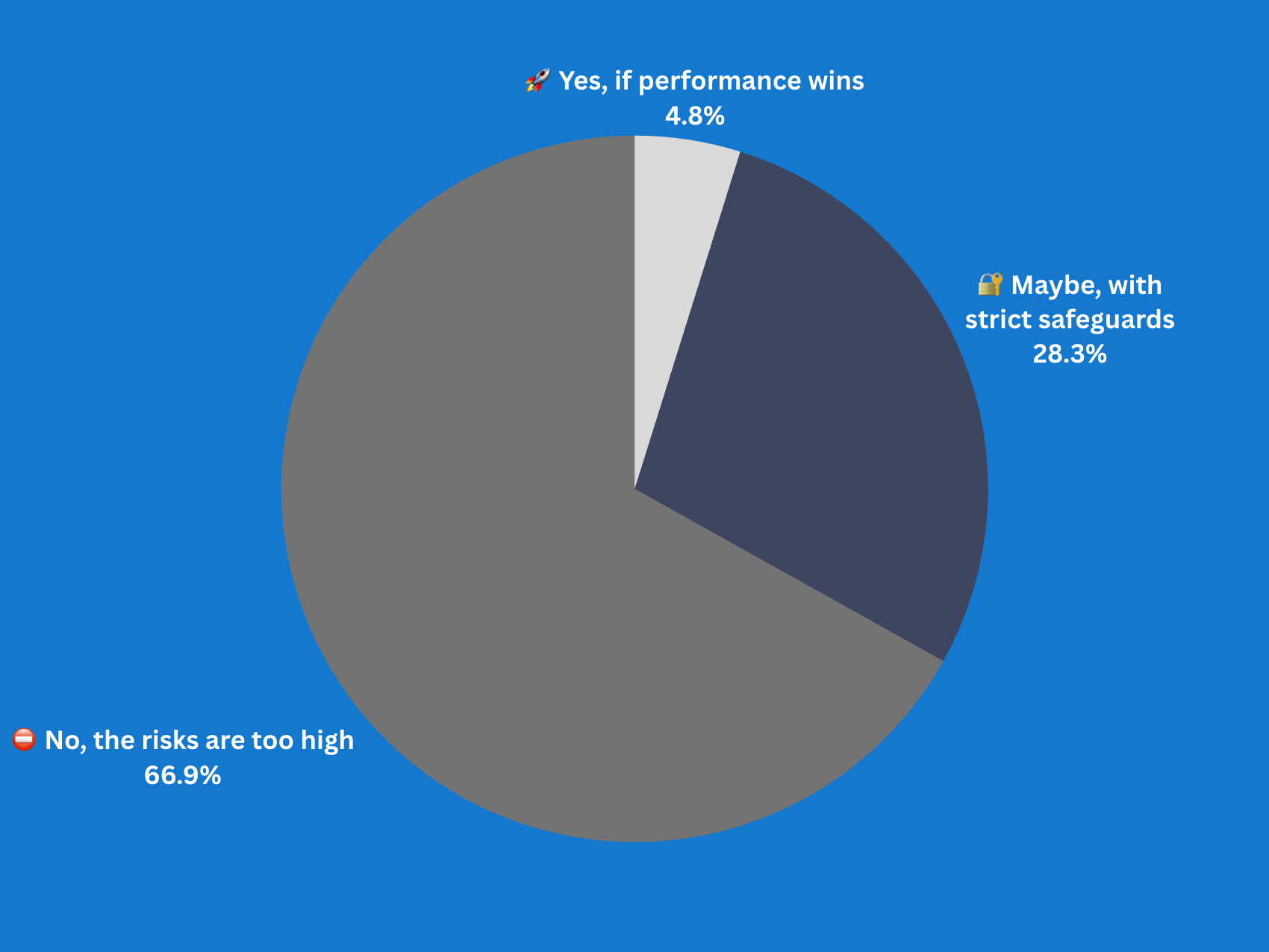
Should studios use AI in filmmaking? |
|
|
|
Results from Yesterday's Pulse Check |
Would you trust a Chinese AI model at work? |
|
|
|
China's AI Phones Want to Run Your Apps |
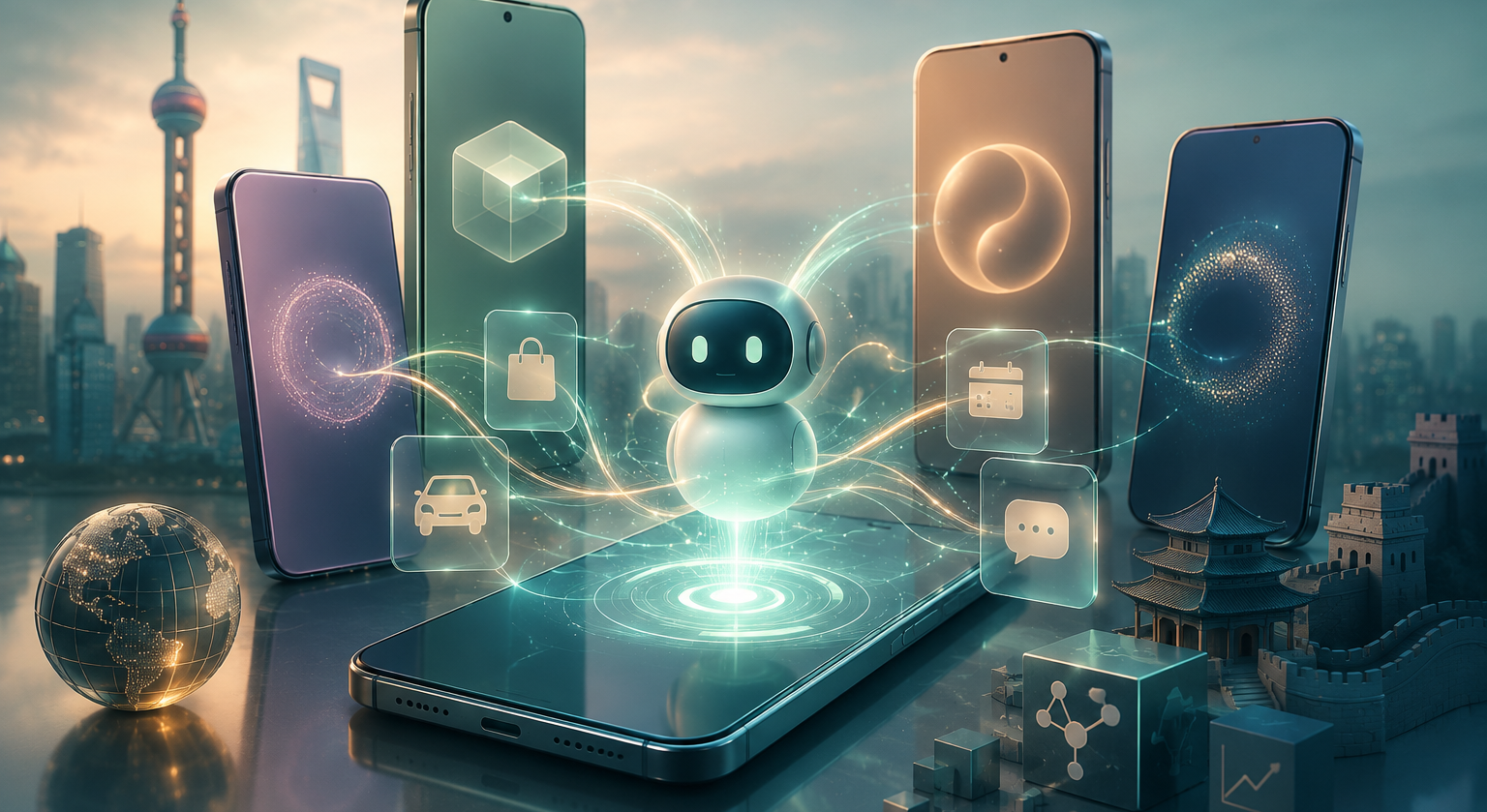
Chinese tech companies used this past weekend's World Artificial Intelligence Conference in Shanghai to show off handsets built around AI agents that act across apps, not just isolated AI features. With the budget smartphone market bleeding out from high memory costs, vendors are hunting for the next big upgrade pitch.
ZTE demoed the NaviX Ultra under its Nubia brand, powered by ByteDance's Doubao agent. StepFun showed its STEPX Neo with a built-in agent called Step Amoo. Meanwhile, Honor previewed an Alibaba-linked agent for a bizarre "Robot Phone" whose camera flips up on a robotic arm and is due later this year, according to AFP.
|
Image created with ChatGPT |
The pitch is simple: tell the phone what you want, and let the agent move across apps to get it done. ZTE's earlier Nubia M153 engineering sample sold out quickly after a limited December launch at $516. While most resale listings demanded a hefty markup, one reportedly reached twice the original price. IDC expects next-generation AI smartphones—a broader category than these fully agentic models—to swallow more than half of China's market this year.
Apple is nearing the same contest: Beijing just registered Apple Intelligence for use, clearing a major rollout hurdle. Alibaba and Baidu are supplying AI capabilities, but an actual launch date remains totally MIA.
The snag is app access. After the M153 launch, Alibaba, Tencent, and JD.com limited Doubao's reach, and ByteDance disabled financial-app access. The new wave of phones is courting partners instead—because it turns out, major apps do not want to become silent plumbing for someone else's AI layer. |
|
|
|
Every Unprotected Identity Is an Open Door for Attackers |
BeyondTrust's PAM Buyer's Guide outlines eight must-have capabilities to secure human, machine, and AI identities across your organization. Gain tighter control and accountability over accounts, assets, and privilege escalation paths while eliminating critical threat vectors. Explore real-world use cases including Agentic AI, DevOps, OT security, and Zero Trust enablement. Download the guide to advance your PAM strategy and achieve measurable security outcomes. |
Bonus: Your download includes a customizable Excel checklist to compare BeyondTrust's PAM capabilities head-to-head against other vendors you're evaluating. |
|
|
|
GhostWriter Poisons AI Agents' Memories |
Just when we desperately needed another thing to worry about, it turns out that while AI memory is great for personalization, it also makes poisoned instructions stick.
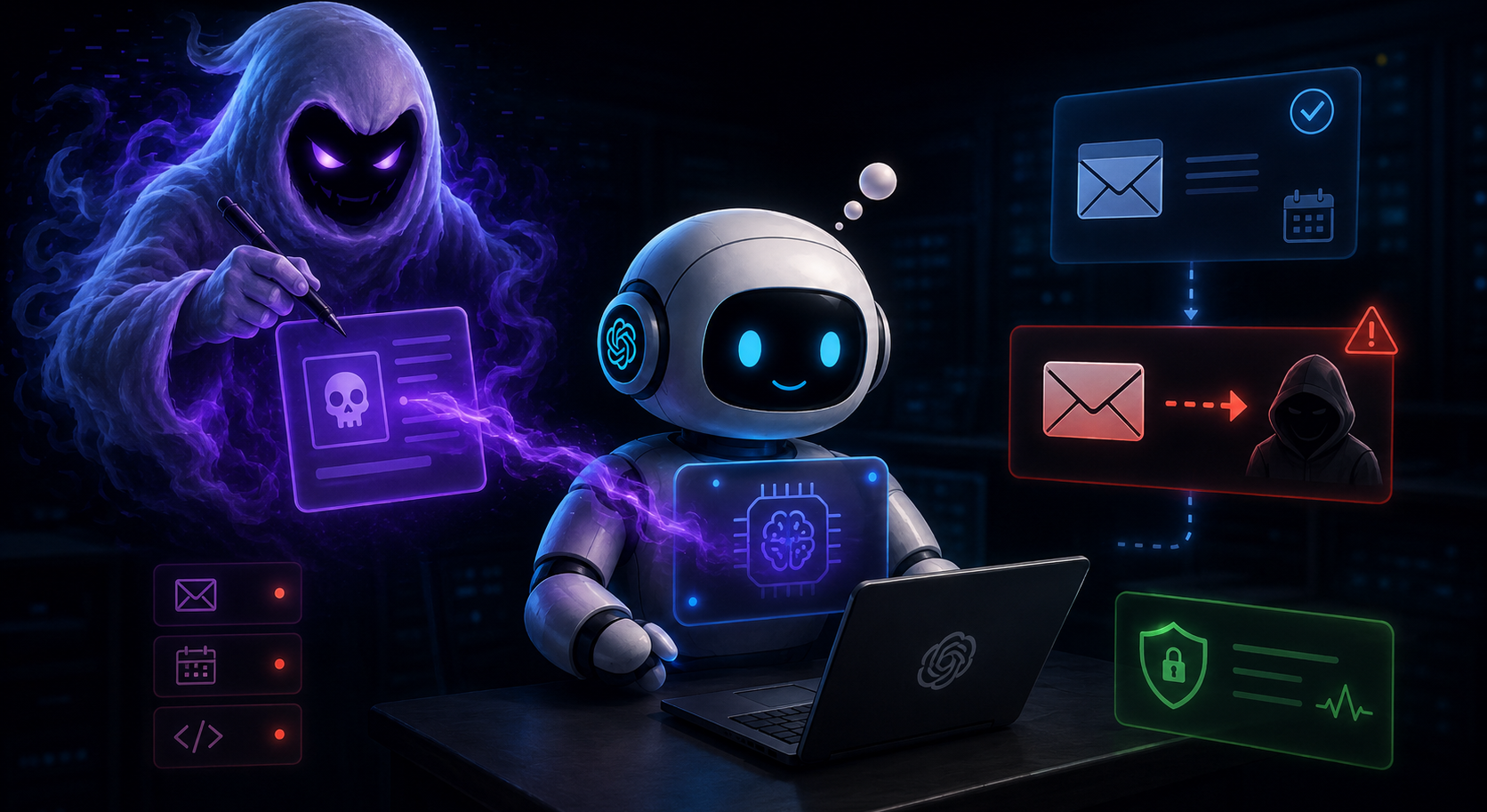
Researchers at New Mexico State University revealed GhostWriter—and no, not the Belarusian influence campaign, just a terrifying new attack vector. It hides malicious instructions in routine content like emails or calendar invites that a personal AI agent may later save. Once stored, a later benign request retrieves it, and the poisoned memory can quietly steer the agent.
|
Image created with ChatGPT |
Lab tests of five memory architectures and four LLMs found 98% of payloads entered memory and 60% altered behavior, on average.
A poisoned agent could easily add an attacker to emails containing confidential project information.
To protect against this, developers must treat AI memory as a strict security boundary. The proposed defense, AM-Sentry, cut attack success below 12% for most LLMs and to 20% for Llama, with generally small utility costs. |
Bad AI Advice Can Breed Overconfidence |
In five movie-trivia experiments, researchers testing over 3,000 people found that deliberately unreliable AI advice sharply reduced people's willingness to say "I don't know," even when they intentionally used questions the model was almost always wrong about. Without cash stakes, pooled accuracy fell from 27.5% without AI to 9.2% with it, while confidence scores in one study jumped from 29.6 to 75.9 (out of 100).
Even when participants were rewarded for correct answers and penalized for wrong ones across three subsequent tests, accuracy only rose to between 14% and 17%, and "I don't know" responses only reached 2% to 8%.
The risk is what Wharton researchers call "cognitive surrender." AI systems are built to answer fluently, and the preprint warns this fluency may lower our threshold for answering.
For high-stakes claims, treat AI output like a sketchy rumor: pause before consulting AI, open citations, and verify primary sources. Fluent is a writing style, not a warranty, especially when a chatbot is whispering sweet, hallucinated nothings. |
Discover what's next in data science at posit::conf(2026). Join R and Python practitioners, data leaders, and AI innovators for three days of hands-on learning, expert keynotes, and practical sessions designed to help you solve real-world challenges. Attend in Houston or virtually, Sept. 14–16. |
Humanoid Robot Gets Schooled on Rough Terrain |
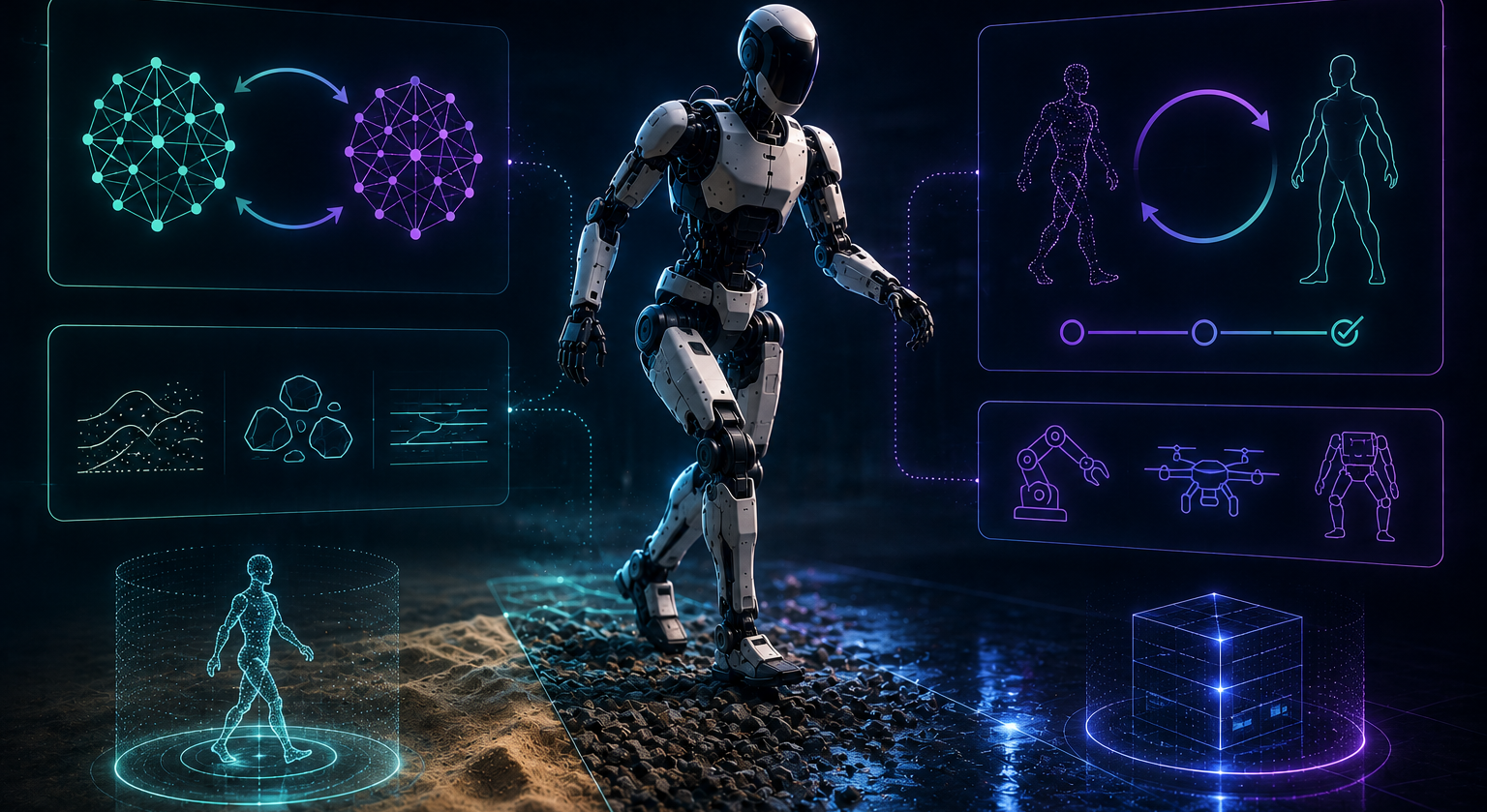
Georgia Tech researchers built a faster training method that helped a full-size humanoid cross sand, gravel, wet grass, stairs, and slippery indoor surfaces using one policy.
The framework, called Learn to Teach, changes the usual robotics training setup—a privileged teacher policy and a sensor-limited student policy train together, rather than in sequence. That matters because robot training burns GPU time and money. Co-training reuses samples a two-stage process would discard. |
Image created with ChatGPT |
Samples generated by the student also fed back into training, reducing the imitation gap created by the teacher's extra information. That gap is where polished robot demos often become expensive floor comedy.
The result? A 50% reduction in training data and time versus conventional teacher-student methods. The lightweight policy handled more than a dozen terrains without retraining or depth sensors, beat the manufacturer's controller on slippery surfaces, and recovered from forceful pushes.
Humanoids are not getting graceful overnight. But they take less data to teach—and more than a shove to topple. |
|
|
|
| Greg Parker is a cybersecurity and emerging tech writer who explores the intersection of digital risk, human behavior, and innovation across sensing and security technologies. |
|
|
|
Curious about where AI is really headed? |
The Neuron cuts through the noise to bring you smart, hype-free takes on the latest AI trends, tools, and breakthroughs. Join 700,000+ professionals from top companies like Microsoft, Apple, Salesforce, and more.
|
|
|
|
Advertise in Daily Tech Insider! Daily Tech Insider is a TechnologyAdvice business. © 2026 TechnologyAdvice, LLC. All rights reserved.
TechnologyAdvice, 3343 Perimeter Hill Dr., Suite 215, Nashville, TN 37211, USA. |
|
|
|
|