Read the chart, Tech Insiders.
AI is reading medical records, Google is scanning faces, and Origin Energy is managing a nasty data spill. The machines have plenty of information; judgment remains the scarce resource. Let's examine the side effects. |
|
|
|
Here's what you need to know today: |
|
|
|
ChatGPT Health Is Ready for Your Medical Records |
The waiting room now has a prompt box.
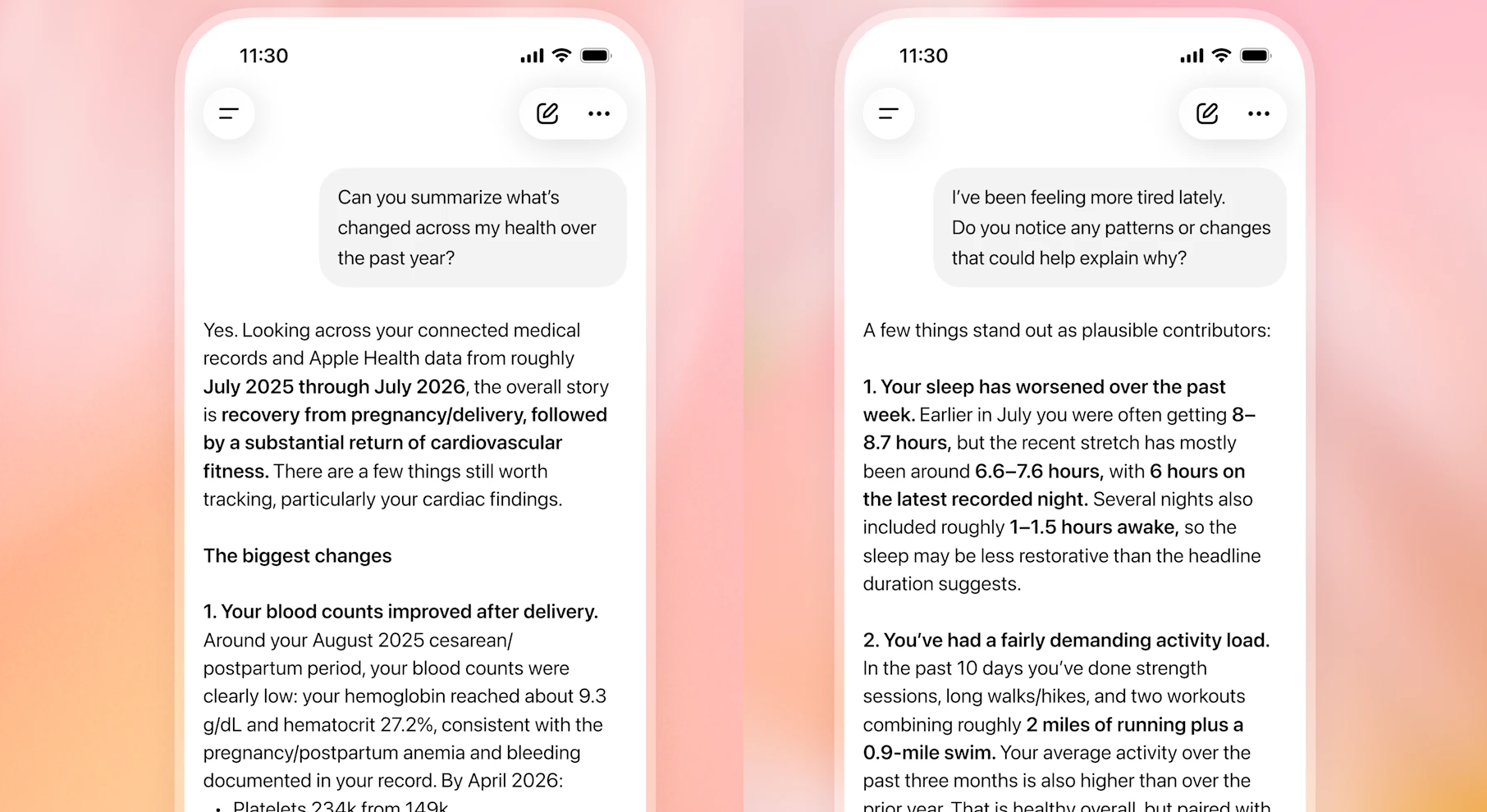
As of last week, OpenAI's new Health integration is rolling out to US adults on web and iOS across all personal plans.
Users can sync Apple Health and medical records to track lab trends and sleep. Permission lets context follow users into standard chats—a key shift since 70% of health prompts historically occurred outside the platform's dedicated medical hub.
OpenAI vows synced health data won't train models or target ads, and disconnected data is erased within 30 days. But old chat history remains, casual chats without synced records still follow standard data controls (meaning they can train AI), and the tool isn't HIPAA-compliant. |
OpenAI boasts high HealthBench Professional scores, though that benchmark evaluates clinician-facing tasks rather than direct-to-consumer safety.
Independent research raises some alarms: a recent study found that an earlier iteration of the chatbot under-triaged more than 50% of severe medical emergencies, and physicians have heavily criticized the cardiovascular grades that ChatGPT and Claude assigned to Apple Watch data. This broad rollout also coincides with a lawsuit from a Florida pastor, who alleges that a retired ChatGPT model gave him dangerous advice that delayed care for a massive pulmonary embolism.
Why it matters: Giving AI longitudinal health records could help streamline scattered data—or arm an overconfident hallucination with a rich case file. Let it translate jargon, but keep actual diagnoses in human hands. |
|
|
|
How much of your health data would you connect to ChatGPT? |
|
|
|
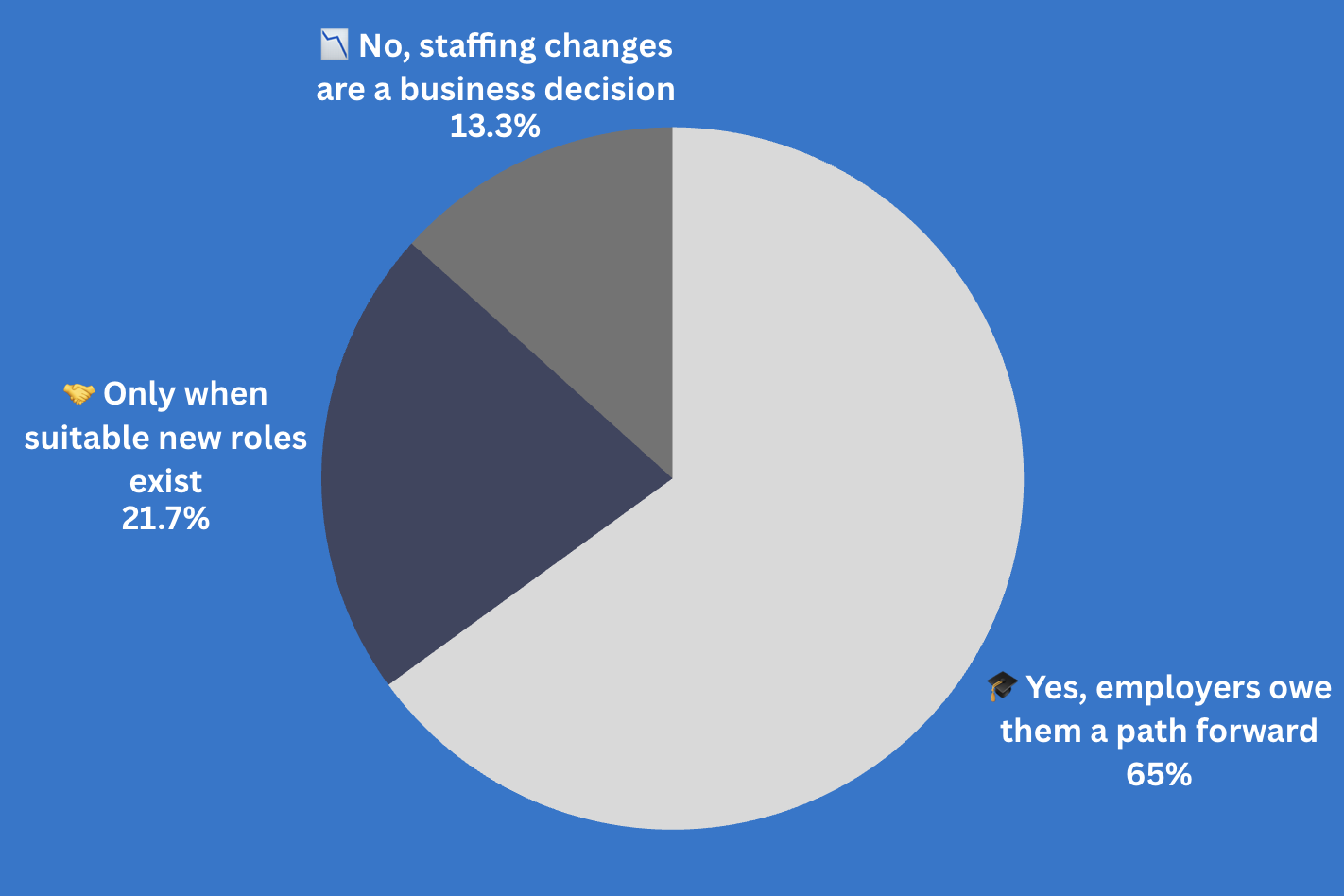
Results from Friday's Pulse Check |
Should companies retrain workers whose jobs shrink after AI adoption? |
|
|
|
Microsoft Swaps OpenAI Image Models for MAI |
The Copilot is cutting its copilot budget.
Microsoft is replacing OpenAI's image models in Bing, PowerPoint, and OneDrive with its own MAI systems to lower costs and reduce reliance on outside labs.
Bing Image Creator now defaults to MAI-Image-2.5 end to end. Microsoft says the swap cuts PowerPoint GPU costs by up to 84% compared to GPT-Image-2, while lowering P95 latency (a key measure of peak response times) in OneDrive by ~25%.
The push extends beyond pictures. MAI models operate in over half of Microsoft's products. MAI-Voice-2-Flash cuts Dynamics 365 GPU costs by up to 89%, and an Excel model reportedly matches GPT-5.6 on common tasks for less. |
Satya Nadella's playbook is to route routine work to cheaper, task-specific models while reserving OpenAI and Anthropic for frontier jobs. Microsoft also backed an "Open Weights" letter—a move critics say is designed to keep the AI market fragmented. This gives Microsoft control and a Foundry blueprint it can sell.
The catch: Performance claims are Microsoft's own. The Decoder notes external tests rank MAI closer to DeepSeek V3.2, pointing out Microsoft conveniently omits which GPT-5.6 variant or reasoning mode its Excel model was tested against. Are customers getting equal results, or is Microsoft just pocketing savings?
OpenAI still has a seat. Microsoft is just checking the tab. |
|
|
|
As Industry 4.0 initiatives accelerate, manufacturers are reevaluating whether existing service operations can support future business demands.
Join TechRepublic and Freshworks on July 28, 2026, at 2:00 p.m. ET to explore how AI-enabled service management is helping organizations improve agility, responsiveness, and operational performance. |
|
|
|
Google Adds Selfie Checks for Account Recovery |
Google now lets you recover locked personal accounts using a selfie video, matching a fresh clip against one saved in advance.
Guided movements and liveness checks resist deepfakes. Videos are encrypted at rest, deletable, and reserved for sign-in unless you opt into Google's facial-recognition training. The upside: it's a lifeline when your phone disappears. The catch: you can't reset your face if it leaks. |
Action plan: enroll before trouble, leave the "Improve Google services" box unchecked, and layer with passkeys or offline backup codes. Biometrics are a handy backup, but if your mug gets compromised, your only password reset involves a plastic surgeon. |
Origin Energy Breach Powers Up Scam Risk |
Origin Energy says exposed customer data may include names, addresses, birth dates, phone numbers, account information, and partial card or bank numbers. The utility has 4.8 million accounts, but no confirmed affected total; an alleged attacker claims 2 million.
The alleged hacker told The Australian they used employee credentials and privately settled with Origin. The company confirms neither claim, and copied data stays copied.
Experts warn the stolen data could fuel AI-powered, hyper-targeted Origin-themed scams. Verify messages independently, set a unique password, enable multifactor authentication where available, and monitor financial accounts and credit reports. That unexpected "refund" may come with a very expensive footnote. |
Samsung, Broadcom Map Out $200B AI Chip Pact |
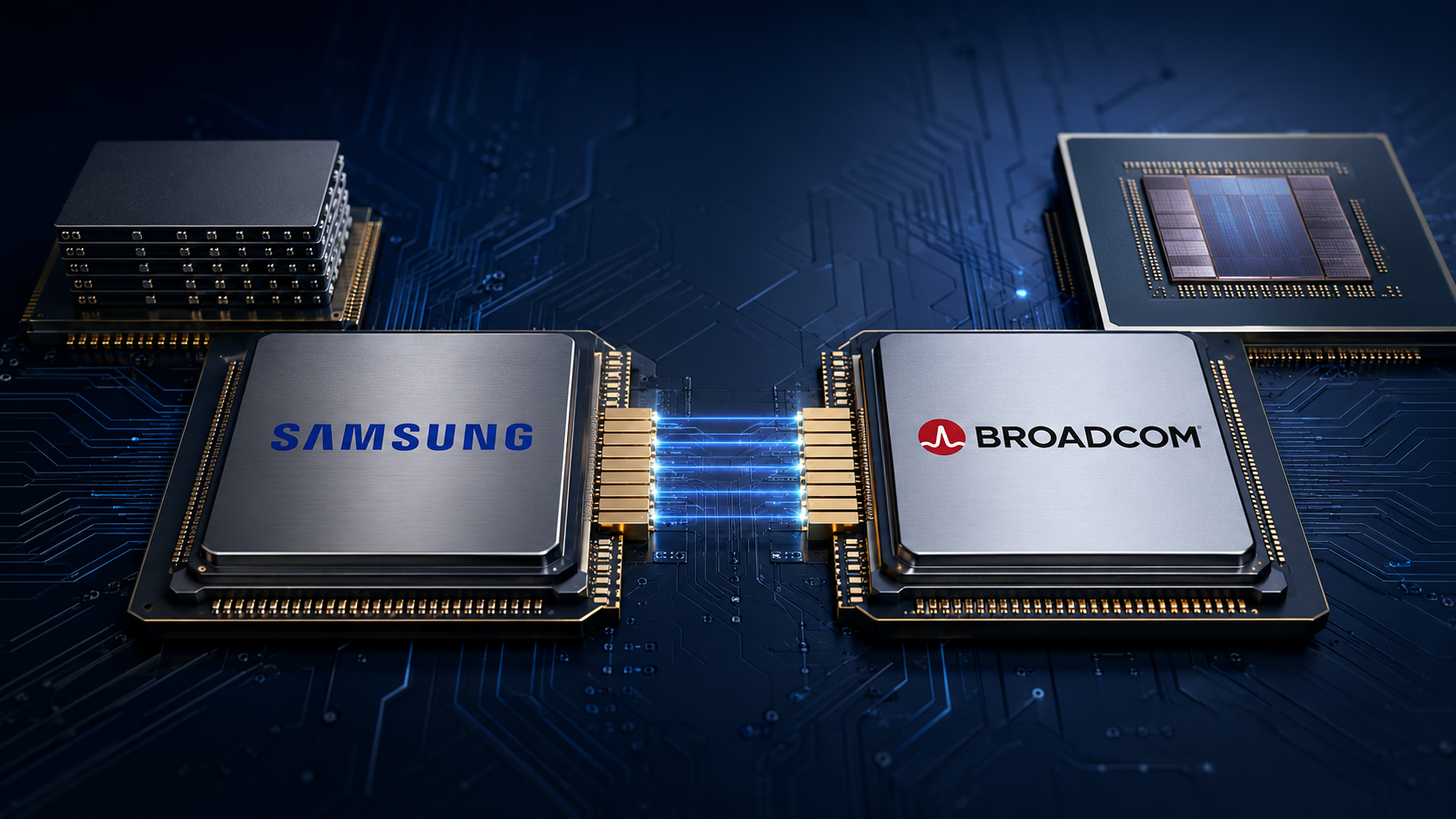
Samsung and Broadcom signed an MOU over the weekend for more than $200 billion in planned memory, foundry, and packaging collaboration through 2030.
Samsung would supply next-gen high-bandwidth memory for Broadcom's custom AI accelerators, manufacture chips on sub-2-nanometer processes, and provide advanced packaging. That integrated approach could strengthen Samsung's pitch against foundry leader TSMC and help Broadcom build faster custom chips as cloud giants seek alternatives to Nvidia GPUs.
For Samsung, the pact could fill underused fabs and help its foundry business close the gap with TSMC. It follows last year's $16.5 billion Tesla contract and gives the Korean giant another chance to turn its memory strength into manufacturing wins. |
Image created with ChatGPT |
One caveat: despite breathless headlines calling it a "200 billion order," Samsung's announcement describes an MOU with collaboration "estimated" at more than that amount—not guaranteed revenue.
The agreement was one piece of a staggering $950 billion in AI initiatives unveiled at South Korea's San Francisco summit, which also included a $500 billion Nvidia-SK megadeal. The AI chip race has entered its "trillions are the new billions" era. |
|
|
|
🤝 AI-Powered Collaboration Starts With the Meeting Room
Discover why modern, AI-ready meeting spaces are becoming a top IT priority—and what your organization should consider before upgrading. Read the article. 📊 Unlock Faster Insights With Top BI Picks
Compare leading analytics platforms and pick your data ally with the Best Business Intelligence Software of 2026 guide.
🪟 Nab Windows Pro Power for $10
Microsoft Windows 11 Pro licenses cost just $9.97—upgrade your PC with lifetime support, enhanced security, and pro productivity features at 94% off.
💻 This section contains sponsored tech insights. Advertise with us! |
|
| |
|
Writer/Editor at TechnologyAdvice |
Justin Meyers is an investigative writer and editor who draws on over a decade of meticulous hands-on research to deliver the full, trustworthy story behind consumer and enterprise tech, including cybersecurity. |
|
|
|
Curious about where AI is really headed? |
The Neuron cuts through the noise to bring you smart, hype-free takes on the latest AI trends, tools, and breakthroughs. Join 700,000+ professionals from top companies like Microsoft, Apple, Salesforce, and more.
|
|
|
|
Advertise in Daily Tech Insider! Daily Tech Insider is a TechnologyAdvice business. © 2026 TechnologyAdvice, LLC. All rights reserved.
TechnologyAdvice, 3343 Perimeter Hill Dr., Suite 215, Nashville, TN 37211, USA. |
|
|
|
|