Map carefully, Tech Insiders. Google Maps redraws reality, Gemini gets better behind the camera, fake recruiters weaponize job hunts, healthcare hackers strike again, and Apple begins its post-Cook era. New maps, new boss, same internet chaos. |
|
|
|
Here's what you need to know today: |
|
|
|
Lake America Splits Google, Apple, and MapQuest |
Turns out one lake can have several digital identities.
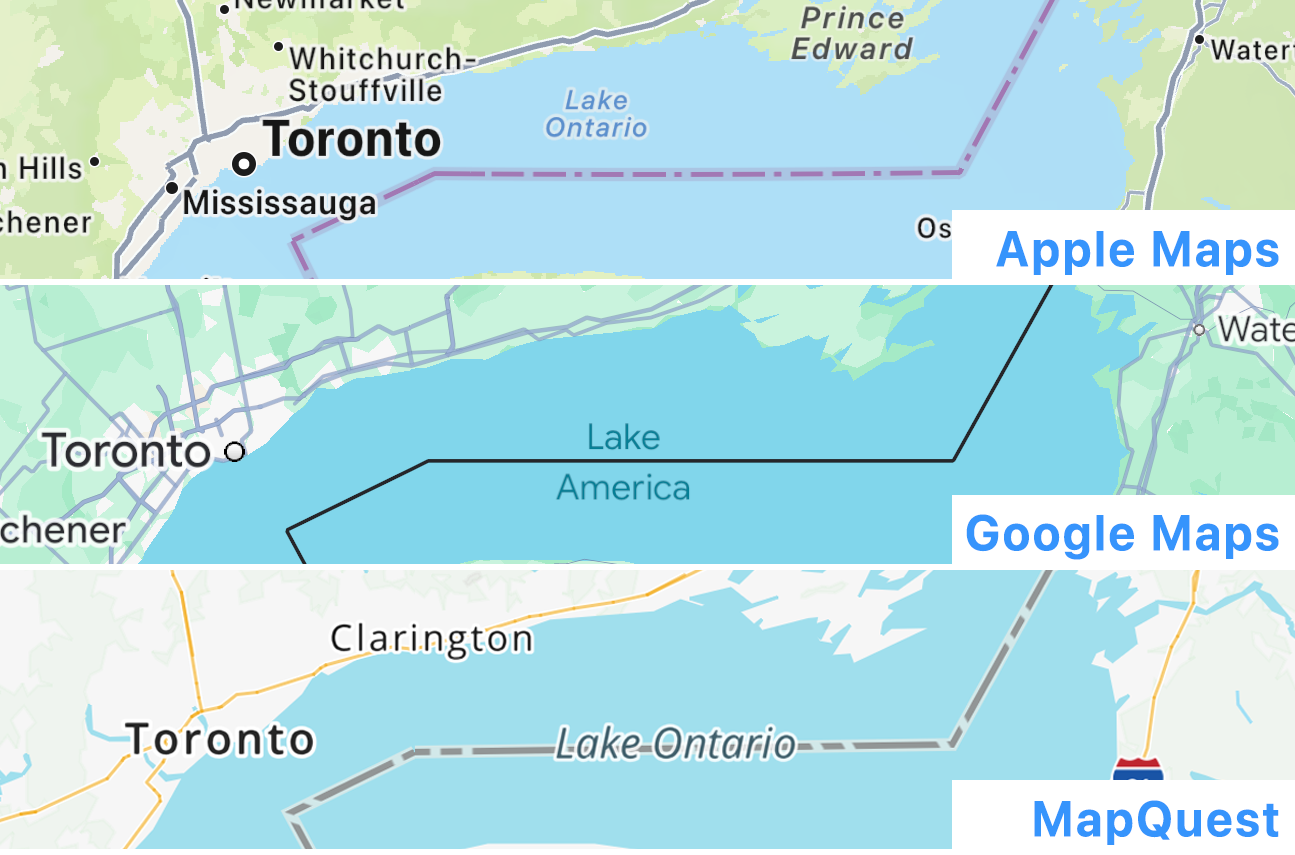
Google Maps now labels Lake Ontario "Lake America" for US users, bowing to the federal Geographic Names Information System after it adopted President Trump's executive renaming last week. Canadians still see Lake Ontario, while everyone else gets both names. Google Earth has made the switch for US users, too.
Apple Maps hasn't followed yet, but Interior Secretary Doug Burgum says Trump personally contacted Apple and suggested a map update may be imminent. Apple hasn't publicly committed, but history suggests it might conform—it took the company three weeks to adopt Trump's "Gulf of America" rebrand last year. |
Waze and OpenStreetMap also still show Lake Ontario.
Then there's MapQuest. The 30-year-old mapping dinosaur declared, "We're not changing it," launched a joke tool letting users rename the lake themselves, and suddenly people remembered it exists. Downloads skyrocketed by the hundreds of thousands, driving a 50-fold usage spike that catapulted the app to No. 1 on Canada's free iPhone charts and No. 4 stateside.
The dispute grew from an escalating US-Canada trade fight, but the executive order only governs federal US naming. Canada has fiercely rejected the change, complete with a giant shoreline billboard from Ontario's premier.
Why it matters: Maps aren't neutral windows onto geography; they're software translating government databases, politics, and corporate choices into what billions see. And MapQuest just demonstrated that snubbing a presidential rebrand can be a pretty effective user-acquisition strategy. |
|
|
|
Would a controversial place-name change make you switch mapping apps? |
|
|
|
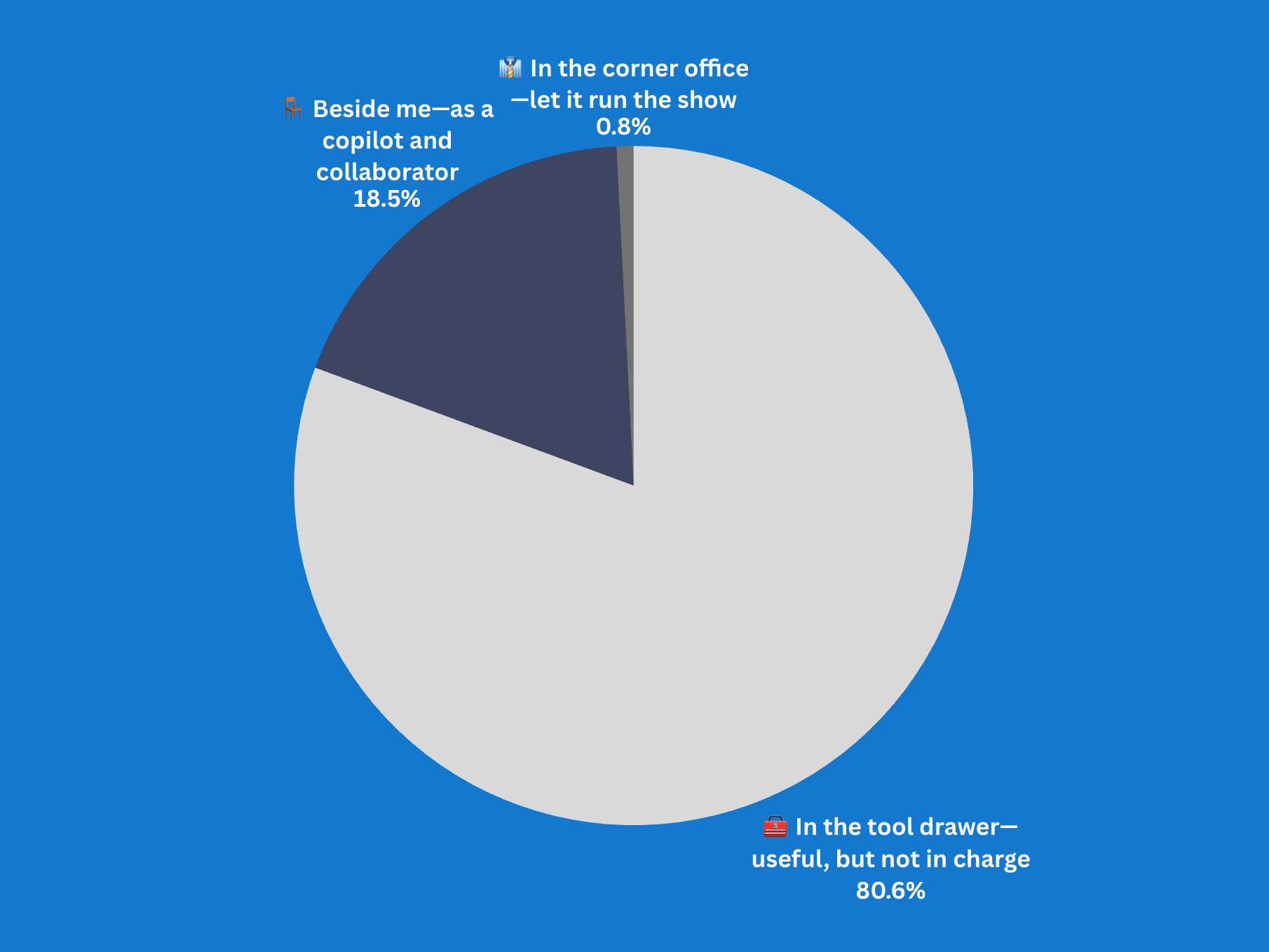
Results from Yesterday's Pulse Check |
Where does AI belong on the org chart? |
|
|
|
Google Gives Gemini Omni 1.1 Tighter Video Control |
AI video is graduating from "surprise me" to "take direction." Google's Gemini Omni 1.1 Flash hands creators tighter control over AI-generated clips by rolling out longer scene extensions, keyframe constraints, faster drafts, video references, and 4K upscaling.
The biggest upgrade is continuity. Omni now digests a full 10 seconds of background footage instead of just the final second, then extends scenes in 10-second increments, up to a cumulative 40 seconds. Creators can also lock in a shot's opening and closing frames and force Gemini to generate the in-between frames—a feature tailor-made for camera orbits, zooms, loops, and transitions. |
Google is heavily pushing a draft-first workflow, too. The fresh 360p preview mode spits out drafts 60% faster at a third of the price of the default 720p (which runs about $0.10 per second with no free tier). This lets budget-conscious prompt engineers nail the shot before upscaling to 1080p or 4K. Adobe and Figma Weave are already integrating the model into their production pipelines.
Cue the inevitable fine print: 1080p and 4K outputs are upscaled rather than native, voice editing is not supported, and every render gets an invisible SynthID watermark. Sorry, Europe, but uploading your own videos to extend or edit them is currently blocked in the UK, Switzerland, and the EEA. Despite Google marketing the update as "production-ready," its Cloud documentation still labels the model a "Preview." Hollywood's newest assistant still needs a lot of notes. |
|
|
|
CRA reporting obligations are now in effect, and software teams may have only 24 hours to respond after discovering certain exploited vulnerabilities or severe incidents.
On Sept. 23, 2026, at 1:00 p.m. ET, DZone and Qt Group will explain how to identify readiness gaps across SBOM visibility, test evidence, and secure product design. See whether your engineering practices can support a fast, defensible response. |
|
|
Fake Indeed Recruiters Push Android Spyware |
Fraudsters are posing as Indeed recruiters to con Android job seekers into sideloading bogus interview apps that drop spyware under the guise of "identity verification" or "salary agreements."
The apps spoof Indeed's login portal, launch suspicious VPN connections, and shamelessly abuse Accessibility permissions to hijack devices and veto your uninstall attempts.
Indeed confirms that real interviews on its platform happen strictly within a web browser and never require a bespoke app. Never download recruiter-supplied APKs; always verify the employer through outside channels. |
Image created with ChatGPT |
If you already took the bait, change your passwords from a safe device, audit your 2FA and account recovery settings, and purge any rogue VPN or Accessibility permissions. Seek professional IT help if removal fails, reserving a data-wiping factory reset strictly as a nuclear last resort. Be sure to also report the fake listing to Indeed. Congrats on the interview. Condolences on the malware onboarding. |
McKesson Breach Could Affect Millions |
Healthcare giant McKesson confirmed a cyberattack compromised third-party apps connected to its Oncology & Multispecialty and Medical-Surgical divisions.
ShinyHunters claims a vishing scheme hijacked employee Okta credentials, unlocking Salesforce and Snowflake environments to siphon roughly 1 TB of data. The group says the 284 million stolen records—not unique patients, but reportedly linked to tens of millions of people—include Social Security numbers, diagnoses, medications, and allergies. McKesson hasn't confirmed these claims.
Meanwhile, the hackers are demanding around $55 million and threatening to leak the files if the company doesn't initiate negotiations by today.
If notified, grab McKesson's offered identity protection, watch for medical or prescription-themed phishing scams, monitor your credit, and always verify unexpected healthcare contacts independently.
Your medical history shouldn't come with a dark-web copay. |
|
|
|
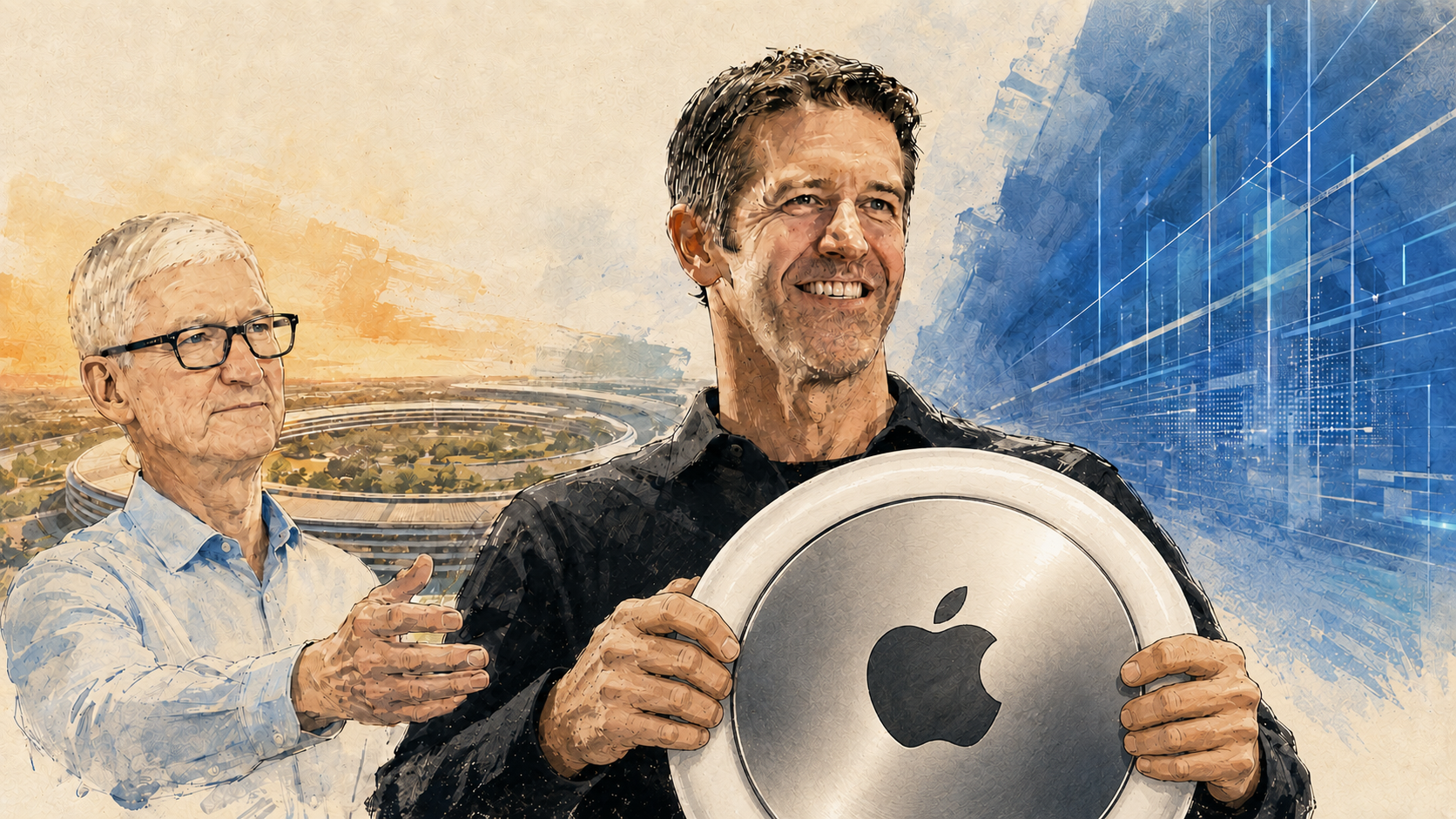
Ternus Takes Apple's Helm as Cook Steps Down |
Image created with ChatGPT |
The handoff won't be clean-cut. Cook plans to keep managing Apple's geopolitical relationships with President Trump and China. Meanwhile, Ternus inherits Apple's AI catch-up effort, a struggling Vision Pro business he reportedly never loved, and an aging executive bench expected to see massive turnover soon.
Phil Schiller has already relinquished oversight of the App Store, and several other longtime leaders—like hardware chief Johny Srouji—could depart in the near future.
Cook leaves the CEO job after multiplying the company's market value 15-fold and briefly pushing it to a $5 trillion peak in July. Ternus now has to prove Apple's next great product era isn't just another keynote slide. New CEO, new AI era, same retirement-ready Apple org chart. |
|
|
|
| Writer/Editor at TechnologyAdvice |
Justin Meyers is an investigative writer and editor who draws on over a decade of meticulous hands-on research to deliver the full, trustworthy story behind consumer and enterprise tech, including cybersecurity. |
|
|
|
Curious about where AI is really headed? |
The Neuron cuts through the noise to bring you smart, hype-free takes on the latest AI trends, tools, and breakthroughs. Join 700,000+ professionals from top companies like Microsoft, Apple, Salesforce, and more.
|
|
|
|
Advertise in Daily Tech Insider! Daily Tech Insider is a TechnologyAdvice business. © 2026 TechnologyAdvice, LLC. All rights reserved.
TechnologyAdvice, 3343 Perimeter Hill Dr., Suite 215, Nashville, TN 37211, USA. |
|
|
|
|