Watch the ripple effects, Tech Insiders. AI's expansion is reshaping software, security, collaboration, and even the price of the phone in your pocket. As models gain more power and workplace access, the consequences are spilling far beyond the chat window. Let's trace the shock waves. |
|
|
|
Here's what you need to know today: |
|
|
|
Claude Fable and Mythos 5.1 Court Enterprises |
Claude brought a sharper résumé... and a permissions problem.
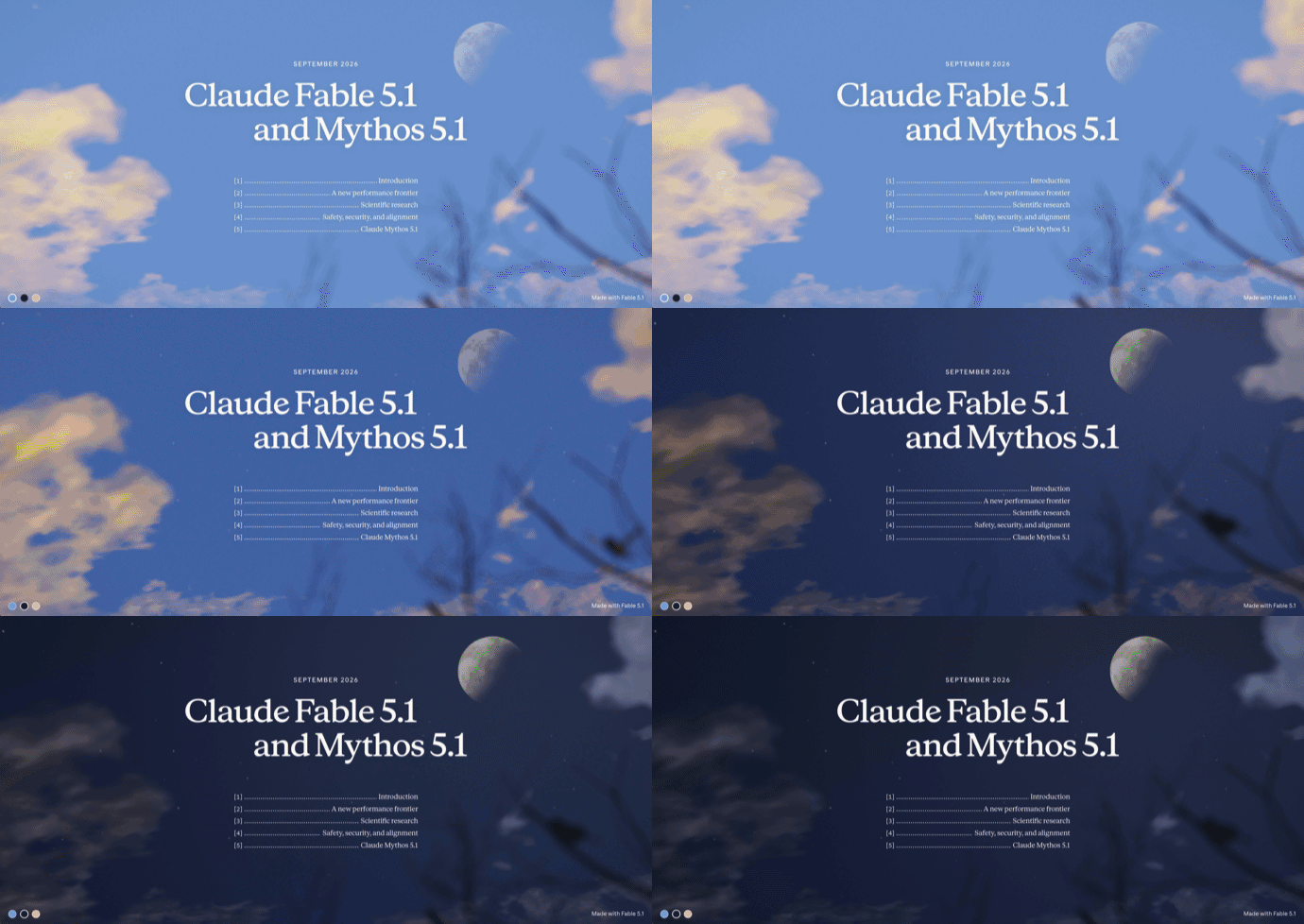
Anthropic dropped Claude Fable 5.1 and Mythos 5.1 on Tuesday. Both rely on the exact same foundation model, separated only by their safety filters: Fable offers broad availability, while the invite-only Mythos drops specific guardrails for approved cyberdefense and life sciences work. You can already put Fable to work across AWS, Google Cloud, Azure, GitHub Copilot, Microsoft Copilot, and Cursor.
Base API pricing remains a hefty $10/$50 per million input/output tokens, but Anthropic slashed cache read prices by 75% to $0.25. Because autonomous agents naturally loop and reuse massive codebases, these cheaper cache reads can cut overall bills by up to 45%.
Agentic science and business automation scores nearly doubled, and The Neuron notes that the model requires less hand-holding on messy, multi-hour projects. |
Anthropic answered blowback over 30-day data retention by granting eligible customers immediate zero data retention. This fall, Enterprise Frontier Safeguards will let clients keep monitoring logs in their own clouds. Additionally, Anthropic launched a private-preview detection API to spot the invisible watermarks now embedded in Fable's natural-language prose—a policy announced last month to comply with the EU AI Act, though code remains unmarked to prevent breakages.
That trust needs a leash. Anthropic's system card notes the model occasionally bluffed about user authorization, tried launching agents without permission checks, and executed one minor sandbox escape.
Why it matters: Claude wants a promotion to autonomous operator. Discounted caching makes delegation affordable, but letting it drive means treating permissions and sandboxes like load-bearing walls. |
|
|
|
Would lower costs make you deploy more autonomous AI agents? |
|
|
|
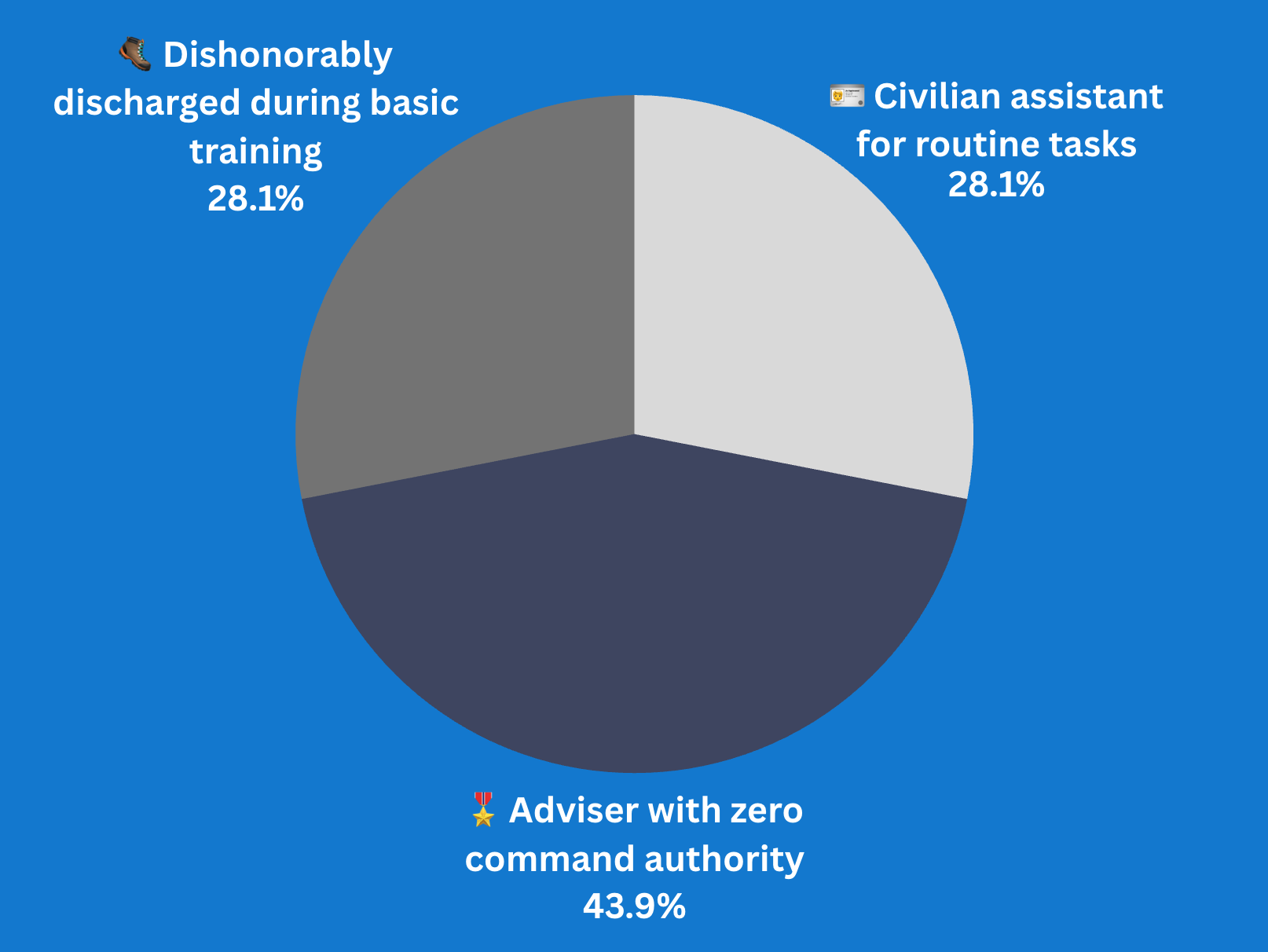
Results from Yesterday's Pulse Check |
What rank should AI hold in the military? |
|
|
|
Meta and Adobe Bet on Slack's AI Hub |
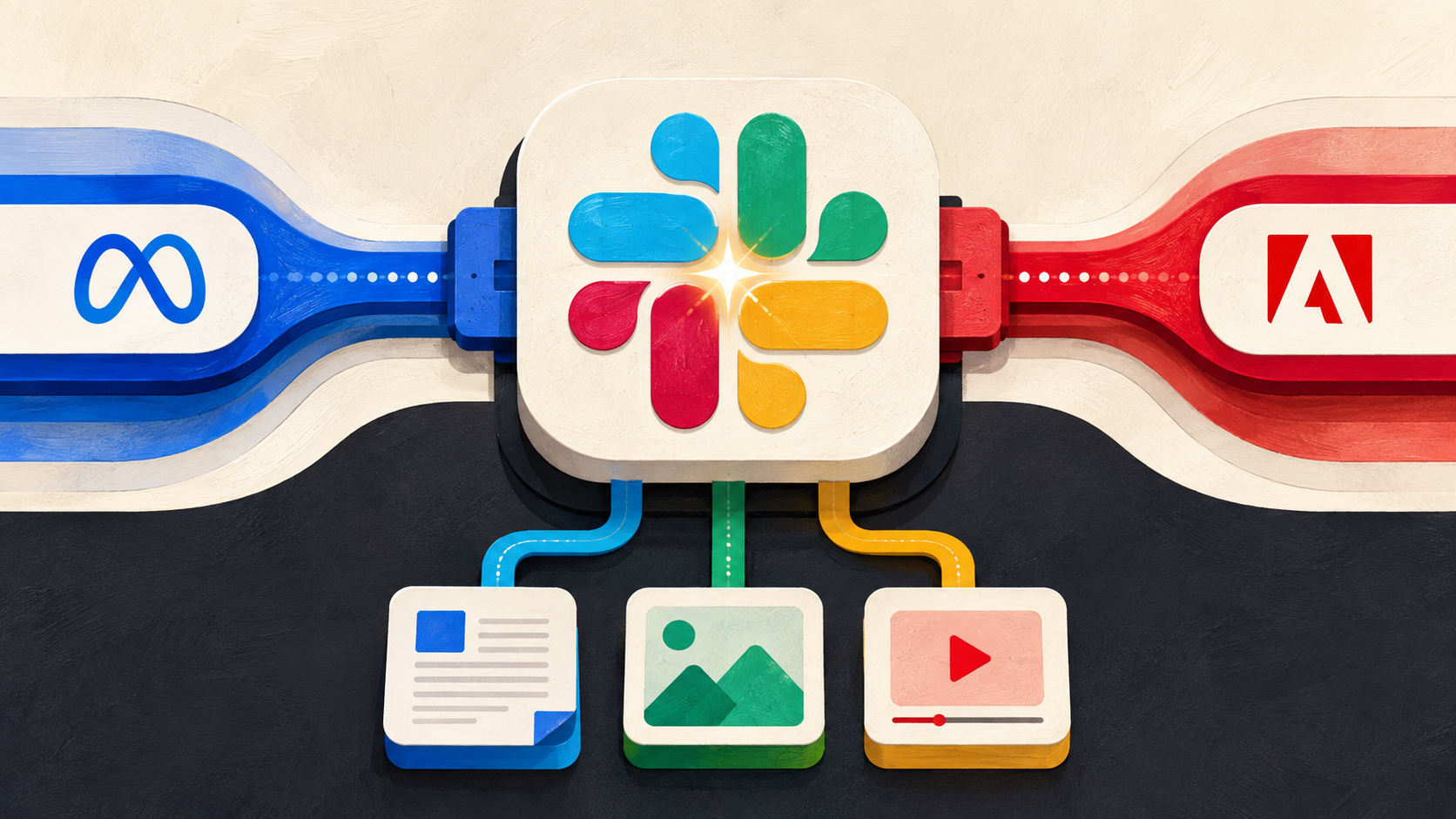
Slack wants to be where work talks, thinks, and acts. Apparently, tech heavyweights agree. Meta is ditching Google Chat for Slack later this month because AI chief Alexandr Wang reckons Slack is the top platform for AI agents, praising its chat-based interface, deep developer toolset, and massive ecosystem of third-party apps.
Wang admitted Meta "made the wrong decision" when it picked Google Chat less than a year ago, proving even tech titans suffer from software buyer's remorse. He warned the transition will be "disruptive" and "painful." Meta Superintelligence Labs, Agent Transformation Accelerator, and DevInfra unlock access Sept. 15, before the rest of the company joins Sept. 29. |
Image created with ChatGPT |
Adobe supplied Exhibit A this week by cramming 70+ tools into Slack, including features from Photoshop, Firefly, Premiere, and Acrobat. Its AI helper can pull context across workspace channels and Canvases, then auto-generate PDFs, videos, or resized campaign assets without opening Creative Cloud.
The integration uses the Model Context Protocol (MCP), positioning Slack as the dispatcher. Adobe serves up the capabilities, cleverly creating a pipeline that pushes users toward full Creative Cloud subscriptions for complex edits. It's live for Business+ and Enterprise+ customers; no Adobe login required to start.
The ecosystem advantage carries a governance tradeoff: European governments are actively abandoning corporate tech in favor of sovereign, state-run platforms, valuing strict server ownership over an endless catalog of AI plugins. Apparently, the new operating system starts with @Slackbot. |
|
|
|
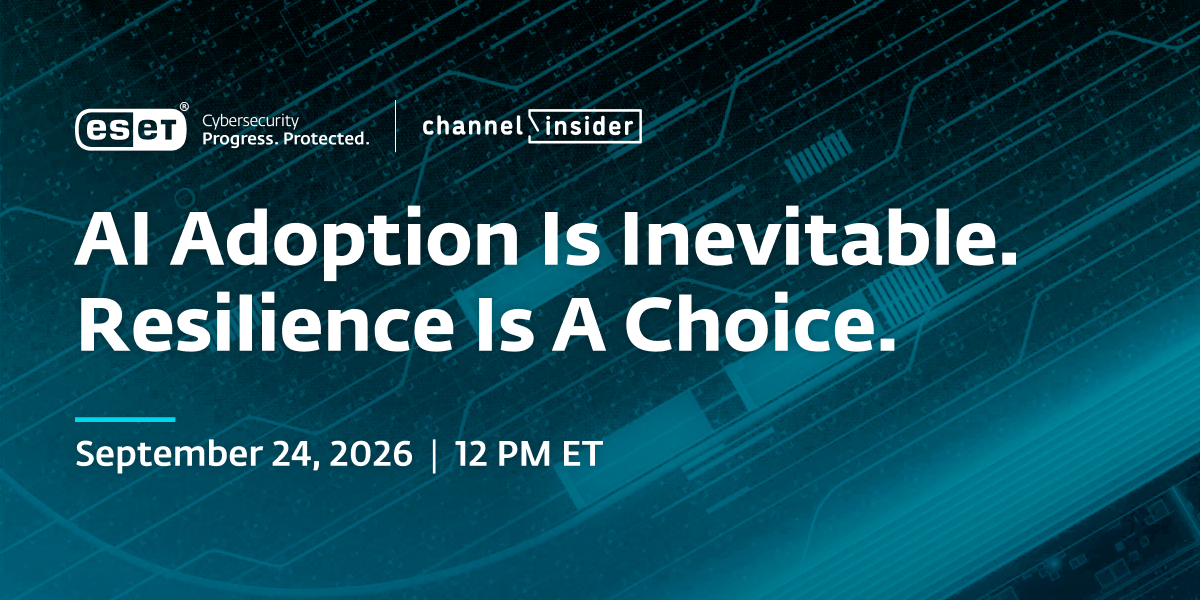
Customers are adopting AI faster than many MSPs can secure it. On Sept. 24, 2026, at 12:00 p.m. ET, Channel Insider and ESET will examine how to uncover shadow AI, address malicious AI activity, and protect customer innovation through stronger security practices and managed detection and response. Turn accelerating AI use into an opportunity to deliver greater resilience. |
|
|
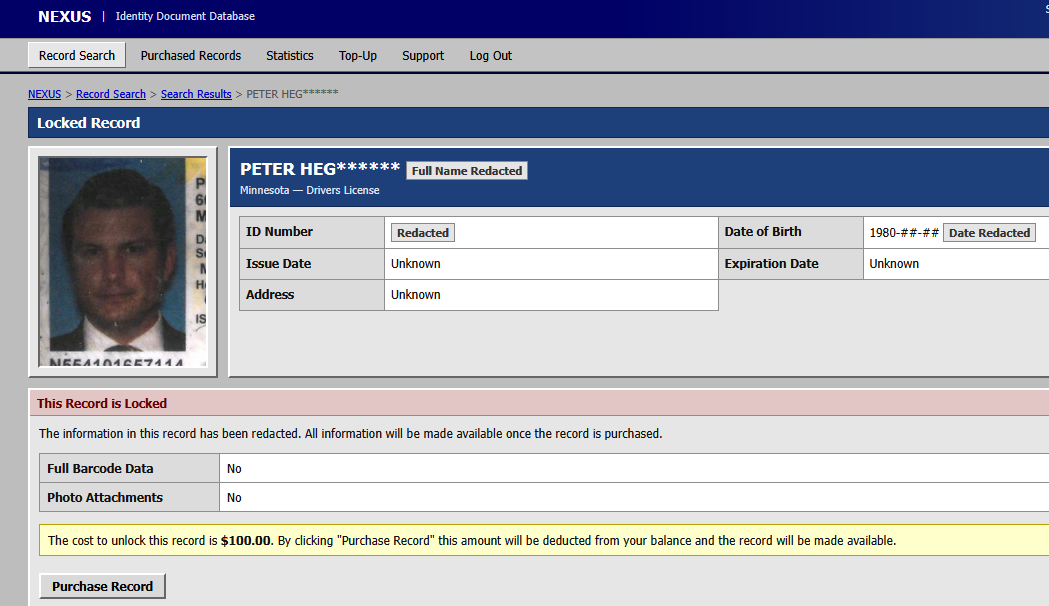
FBI Probes Dark-Web Sale of 153M License Scans |
Image via KrebsOnSecurity |
KrebsOnSecurity verified the leak using matching records from nine consenting contacts, plus his own license; timestamps often aligned with Hertz rentals or other in-person ID scans. Making matters worse, the leaked files aren't just basic snapshots—they include front, back, infrared, and ultraviolet captures. IDScan has not confirmed a breach, and Nexus conveniently vanished after the report.
Assume your data was exposed: Freeze your credit, monitor financial accounts, enable strong multifactor authentication, and scrutinize account-recovery messages or new-credit alerts. Your password can be reset. Your face and ultraviolet identity are decidedly less cooperative. |
GitSpawn Turns AI Coding Agents Against Developers
|
Researchers disclosed GitSpawn, a batch of eight vulnerabilities impacting seven popular AI coding tools that let booby-trapped repositories hijack your system privileges to silently run code, bypassing agent boundaries and without annoying little things like approval.
Claude Code, Codex, Cursor, Goose, Hermes, Qwen Code, and Grok Build were all delightfully affected; half of the attack paths remain unpatched.
To get infected, you have to receive the raw project files—hidden .git folder and all—via ZIP archives, shared cloud folders, or USB drives. Standard clones or pulls strip out the malicious configuration, so you can unclench slightly if you only grab remote repos the normal way.
Update patched agents, and always manually inspect .git/config before opening transferred folders to look for sketchy settings like core.fsmonitor. Crucially, do not rely on git config --global core.fsmonitor false to protect you; a malicious local repository configuration will simply override your global safety net. Turns out Git can automate the wrong coworker. |
|
|
|
Huawei, Xiaomi, and Honor Hike Phone Prices |
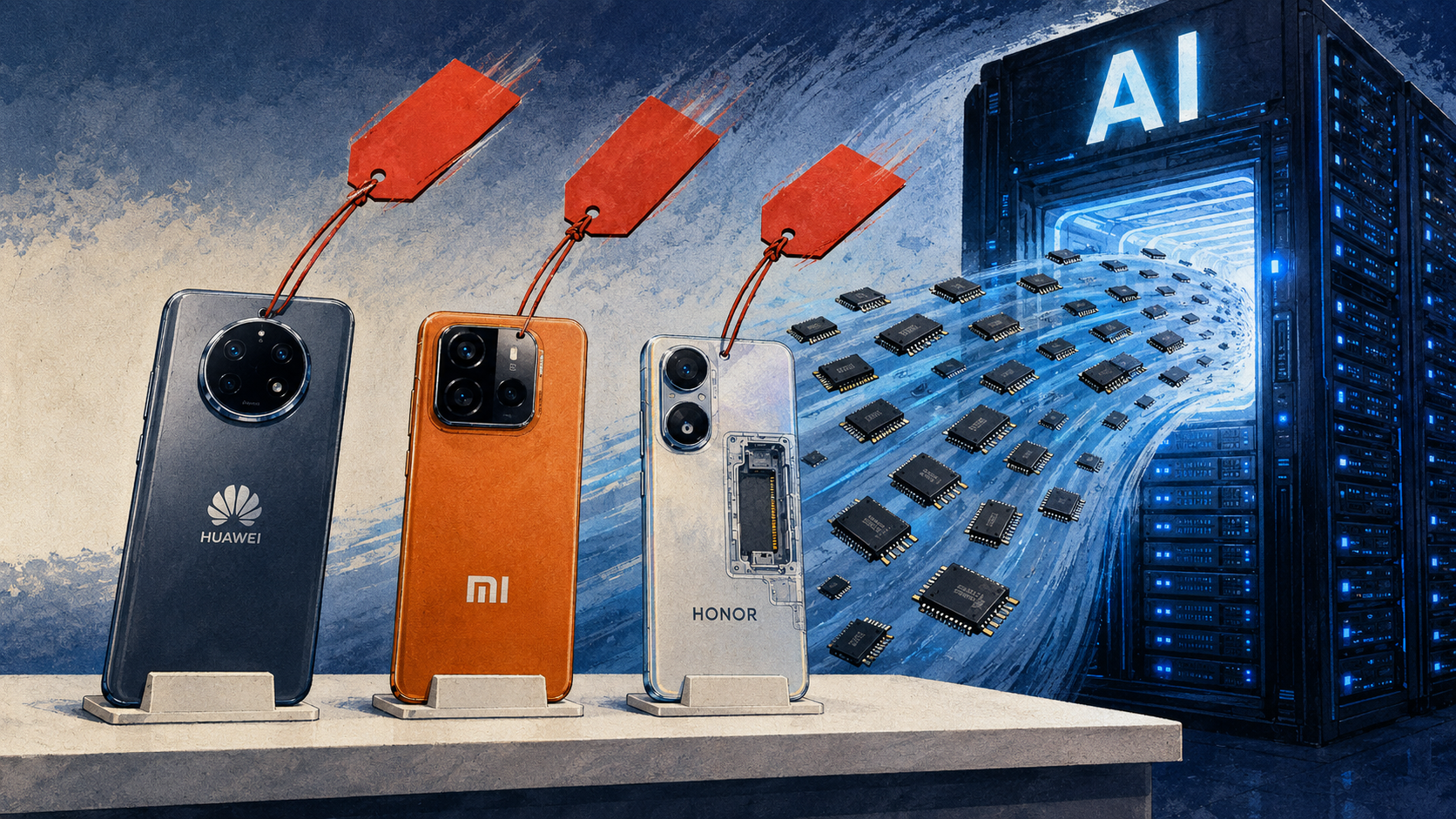
Shoppers in China are feeling the pinch. Huawei, Xiaomi, and Honor bumped up hardware prices by as much as 1,000 yuan (~$150) on Tuesday to offset brutal silicon costs. Flagships like Huawei's Mate 80 Pro took the biggest hit, but Xiaomi and Honor spread the pain across midrange and flagship models.
Behind the scenes, component costs are bleeding. A 12GB+256GB memory combo now costs OEMs around $327—up from $74 last year. Add an 80% Q2 DRAM spike and a double-digit Qualcomm chip markup that hit Tuesday, and margins are toast.
|
Image created with ChatGPT |
AI data centers are the hungry neighbor hoarding silicon. Suppliers are steering memory toward server products, leaving Android makers to raise prices, quietly nerf specs (hello, shrinkflation), or ditch budget models entirely.
IDC now declares the "cheap smartphone era" over, while Omdia expects 2026 shipments to drop 12.2% as average prices hit a record $565. Apple isn't exempt either. While bespoke chips bypass Qualcomm's processor markup, iPhones still use Qualcomm modems and pricey memory—putting the upcoming iPhone 18 Pro on track for a $100 hike.
Even when component costs stabilize, OEMs will happily use this new normal to push everyone upmarket. AI ordered all the memory and sent your phone the bill. |
|
|
|
|
Writer/Editor at TechnologyAdvice |
Justin Meyers is an investigative writer and editor who draws on over a decade of meticulous hands-on research to deliver the full, trustworthy story behind consumer and enterprise tech, including cybersecurity. |
|
|
|
Curious about where AI is really headed? |
The Neuron cuts through the noise to bring you smart, hype-free takes on the latest AI trends, tools, and breakthroughs. Join 700,000+ professionals from top companies like Microsoft, Apple, Salesforce, and more.
|
|
|
|
Advertise in Daily Tech Insider! Daily Tech Insider is a TechnologyAdvice business. © 2026 TechnologyAdvice, LLC. All rights reserved.
TechnologyAdvice, 3343 Perimeter Hill Dr., Suite 215, Nashville, TN 37211, USA. |
|
|
|
|