Check the guest list, Tech Insiders. Siri is inviting app developers in, fake recruiters targeting Binance got far too comfortable, and a TV box maker allegedly sold criminals backdoor access. Let's see who wasn't supposed to be here. |
|
|
|
Here's what you need to know today: |
|
|
|
Anthropic Warns Its AI Could Soon Improve Itself |
Claude's next assignment: help build the colleague who replaces it.
Anthropic warns future AI models could dramatically accelerate AI development, potentially outpacing the company's own safety checks. Its updated Nov. 2 SEC filing notes that this milestone may be imminent, though no current model has officially been designated as crossing it yet.
That's a giant leap toward recursive self-improvement: better AI helping forge still-better AI. One policy trigger is AI helping double the overall pace of capability gains—a much higher bar than just doubling a coder's output and distinct from building a successor entirely unsupervised. |
Image created with ChatGPT |
Company data reported by The Wall Street Journal shows AI led 26% of Anthropic's model R&D in August, under human supervision. Fully autonomous work remained at 0%. It's impressive delegation, but the machines haven't completely taken over the staff meetings just yet.
Anthropic's own analysis shows humans still hold the edge in choosing worthwhile research questions, while human code review has predictably become a bottleneck. More awkwardly, the filing admits the company has a habit of recognizing some development accelerations only after they happen.
The doomsday warning we covered in June now comes with formal investor disclosures. Anthropic is considering additional human approval requirements, but those safeguards aren't finalized. Apparently, the oversight upgrade is still stuck in beta. Why it matters: For businesses, faster AI development could deliver highly useful capabilities before safety checks can catch up. A human in the loop needs actual time and authority to intervene, not just a ceremonial seat on the org chart. |
|
|
|
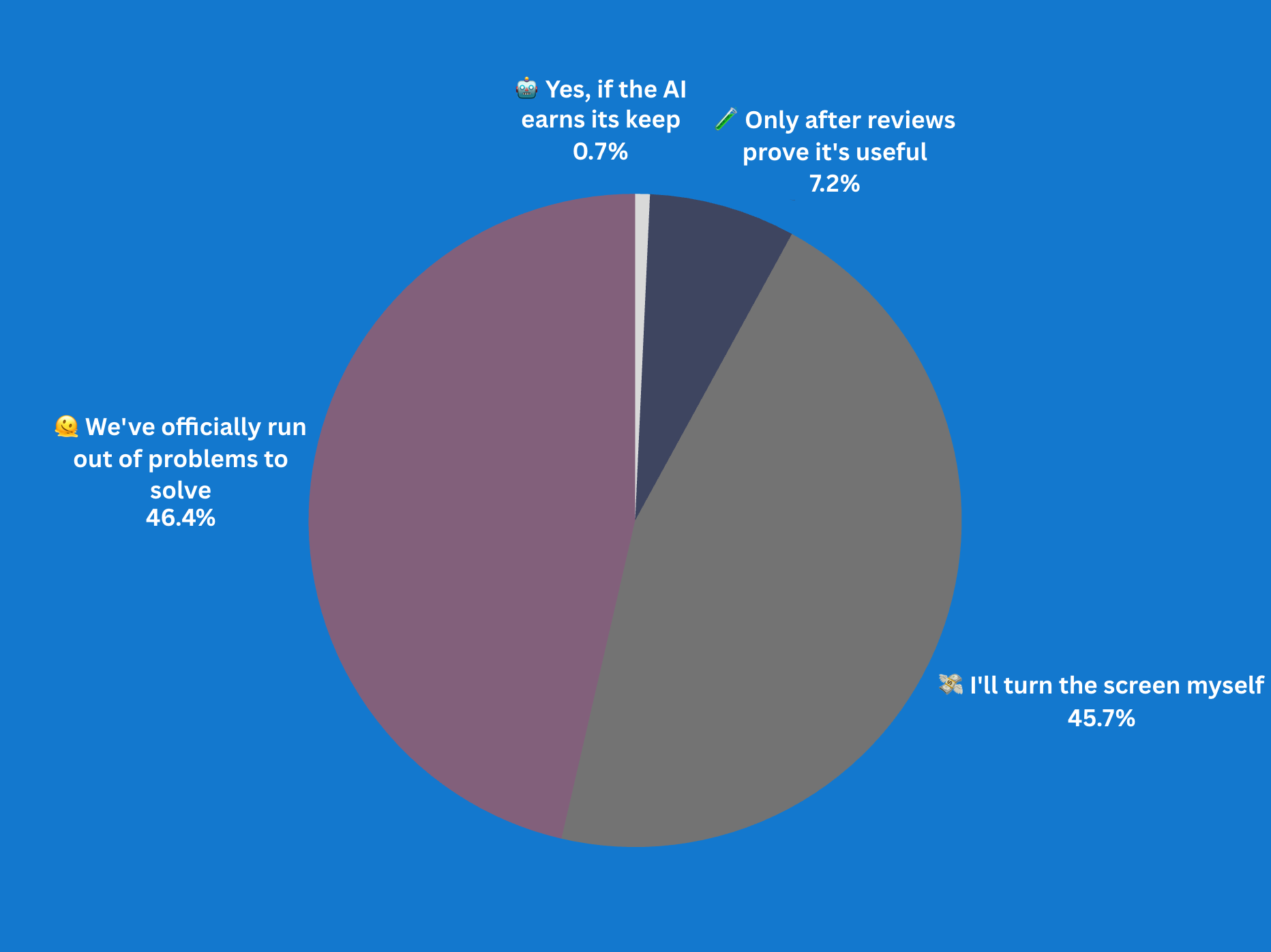
How much freedom should AI have to build smarter AI? |
|
|
|
Results from Yesterday's Pulse Check |
Would you pay $1,000 for an AI smart display that turns toward you? |
|
|
|
Apple Gives Siri AI More Apps to Boss Around |
Siri's getting more coworkers. Let's hope they actually communicate.
With iOS 27.3 due in December, Apple is finally giving Siri the tools to stop acting like a confused intern. The company just dropped a Siri AI developer preview in its latest betas, leaning on App Intents and new app skills so developers can handhold the voice assistant through custom multistep requests.
For customers, this means you might actually change a ride's pickup location mid-trip without having to explicitly shout the app's name at your dashboard. For businesses, handling bookings, orders, and delivery updates could become voice-activated miracles that spare everyone the dreaded app-hopping shuffle. |
Naturally, there's a catch: Siri can only poke around in the data and actions developers explicitly fence off for it. This is strictly a testing playground right now—integrations are currently quarantined inside developer builds and internal TestFlight environments, with App Store submissions walled off until spring 2027. Plus, Apple is still busy writing the actual terms and usage policies, presumably in a very long legal document.
Meanwhile, the beta quietly resurrects the Health app redesign and lets Siri do some heavier lifting in Apple's own ecosystem, like scheduling messages and organizing files—because apparently, we all need AI to clean up our Downloads folder. December also drags Apple Intelligence into China (sans Siri AI), so global IT teams still can't pretend everyone has the same toolkit across their device fleets.
Siri may finally handle more errands. Developers still get the homework. |
|
|
|
Binance Links $6.3B Heist to Fake Job Interviews |
In a brutal reminder not to trust randos offering tech roles, Binance admits its Oct. 29, $6.3 billion crypto theft was aided by fake job interviews. Following a tampered Homebrew installer exposing wallet-team details in June, another engineer eagerly downloaded a malware-spiked "interview assignment" in September.
Hackers then hijacked an internal AI tool to compromise other engineers, steal deployment credentials, and waltz into Binance's wallet-signing infrastructure. Pre-existing on-chain authorizations allowed transfers to continue long after Binance slammed the brakes on withdrawals. The FBI blames North Korea-linked TraderTraitor; Pyongyang naturally denies involvement.
|
Image created with ChatGPT |
Binance has rebuilt the compromised systems and replenished 98% of affected tokens from its own war chest, progressively resuming withdrawals. Keep recruiter-supplied code off work devices, test inside isolated environments, and lock down internal AI permissions. The only thing a recruiter should drain is your patience. |
Google Disrupts 1.3M-Device Android TV Botnet |
Google and its partners just crashed the ultimate watch party, dismantling XCPE, a botnet hijacking over 1.3 million Android TV boxes. Google alleges manufacturer Videostrong intentionally planted firmware backdoors and hawked criminal access on supposedly certified gadgets. Consequently, Google slapped the company with a permanent ban on making certified devices.
These compromised boxes happily funneled outsiders' web traffic through users' home networks and generated fake ad clicks. Nuking the command servers doesn't magically sanitize the infected firmware, and manually uninstalling the backdoor is useless because it stubbornly reinstalls upon reboot.
Check MECOOL and budget white-label models against researchers' device lists; though model names alone aren't a definitive diagnosis. Disconnect suspect boxes and seek clean firmware or a replacement. Your streaming box shouldn't have a criminal side hustle. |
|
|
|
🏗️ Build an AI-Ready Workplace
Explore expert insights and practical guidance to modernize workplace technology, strengthen security, and prepare your organization for AI-powered work. Explore the hub. 💾 Clone Your Windows Drive Without Starting Over
Transferring data between PCs, migrating operating systems, and more is easy with a lifetime license to EaseUS Disk Copy, now half off at just $19.99.
🤖 Master ChatGPT and AI for $29.99
Build practical AI skills with The ChatGPT and AI Super Bundle, featuring four courses and 4.5 hours of lifetime-access training for $29.99, a 91% discount.
💻 This section contains sponsored tech insights. Advertise with us! |
|
|
|
Google's AI Summaries Face an EU Copyright Test |
Google's AI might need a better alibi.
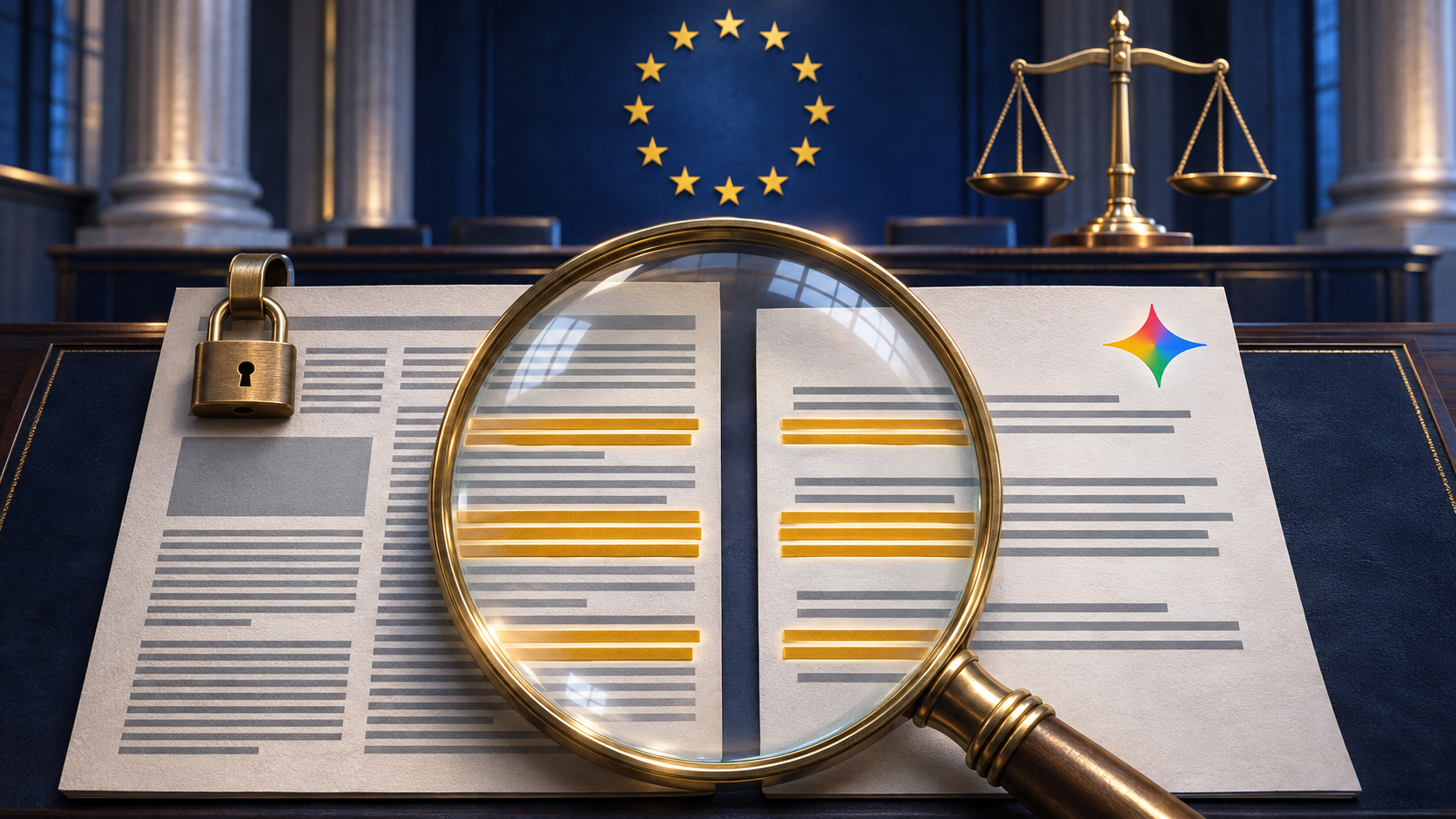
An adviser to the EU's highest court just fired a warning shot, suggesting Google's Gemini could be trampling publishers' copyrights when it gobbles up news articles to spit out answers. Advocate General Maciej Szpunar's Tuesday opinion is technically nonbinding, but judges usually follow his lead.
His proposed legal litmus test boils down to how chatbots get their hands on the goods and how they show them off. If a model sneaks past a paywall or parrots an article so closely that reading the original becomes pointless, that's a red flag. Facts belong to everyone, but slapping a digital mustache on someone else's prose isn't the legal invisibility cloak tech companies hope it is. |
Image created with ChatGPT |
The plot twist for publishers? Szpunar tossed cold water on the specific complaint from Hungarian publisher Like Company. He found zero proof that their articles actually trained Gemini, basically advising judges to toss those training complaints out the window.
Google naturally took a victory lap over his view that EU law permits AI training, claiming Gemini is a linguistic artist, not a copycat. Publishers aren't buying it, arguing that opting out of the AI blender shouldn't nuke their search visibility. Getting discovered on Google and getting cannibalized by its chatbot are two very different bargains. For any enterprise deploying web-connected AI, accuracy is no longer the only headache. Now you have to ask: did our bot pick a digital lock to get this info, and is it basically plagiarizing the source? Whining about lost traffic explains the publishers' rage, but it doesn't automatically win a copyright lawsuit. Turns out, "my chatbot just reworded it" isn't a bulletproof legal defense. |
|
|
|
| Writer/Editor at TechnologyAdvice |
Justin Meyers is an investigative writer and editor who draws on over a decade of meticulous hands-on research to deliver the full, trustworthy story behind consumer and enterprise tech, including cybersecurity. |
|
|
|
Curious about where AI is really headed? |
The Neuron cuts through the noise to bring you smart, hype-free takes on the latest AI trends, tools, and breakthroughs. Join 700,000+ professionals from top companies like Microsoft, Apple, Salesforce, and more.
|
|
|
|
Advertise in Daily Tech Insider! Daily Tech Insider is a TechnologyAdvice business. © 2026 TechnologyAdvice, LLC. All rights reserved.
TechnologyAdvice, 3343 Perimeter Hill Dr., Suite 215, Nashville, TN 37211, USA. |
|
|
|
|