Signal before merging, Tech Insiders.
Microsoft is bringing Office into Copilot, while Waymo's freeway pause and Grok Bot's unwanted check-ins suggest automation still needs a lesson in knowing when to stop. Somebody get the instructor's brake pedal. |
|
|
|
Here's what you need to know today: |
|
|
|
Samsung's Galaxy Claw Could Handle Your App Chores |
Your smartphone is apparently tired of doomscrolling and wants to start doing your actual chores.
Samsung's rumored Galaxy Claw could handle tasks across apps, with leaked code pointing to an overachieving assistant that can send messages, book calendar events, manage your inbox, and make calls so you don't have to.
Android Authority found the clues buried in Samsung's Personal Agent Core app. With permission to freely rummage through your connected apps, the system could run automations every hour, day, or week, or on custom timetables. The setup would also reportedly let users pause, review, or manually trigger these workflows for when the AI inevitably gets a little too enthusiastic. |
Image created with Gemini |
One wonderfully mundane catch: battery saving could delay scheduled tasks. Yes, even your futuristic AI assistant might need to text you an excuse about why it missed a deadline.
A separate teardown suggests a Device Cleaner could scrub files through Samsung's My Files app, up to and including permanently emptying the trash. It would kindly show a confirmation screen before nuking your data—a rare chore where you'll want to pay attention instead of doing the usual frantic tapping.
None of this guarantees a Galaxy Claw launch. Samsung launched the One UI 9.5 beta yesterday for Galaxy S26 phones in the US and five other markets, officially unleashing the new App Lock feature. Galaxy Claw's release timing and supported devices remain safely locked in the rumor mill.
And it might cost you. While details of a Galaxy AI Premium tier have previously leaked, Samsung hasn't confirmed pricing or stated if this specific digital butler will sit behind a paywall.
Why it matters: Delegating phone chores could reclaim hours of your life, but handing an AI permission to read your inbox and permission to act on it carry wildly different stakes. Before hiring this silicon assistant, you'll want to double-check its access levels, locate the off switch, and find out its hourly rate. |
|
|
|
How much freedom would you give an AI assistant on your phone? |
|
|
|
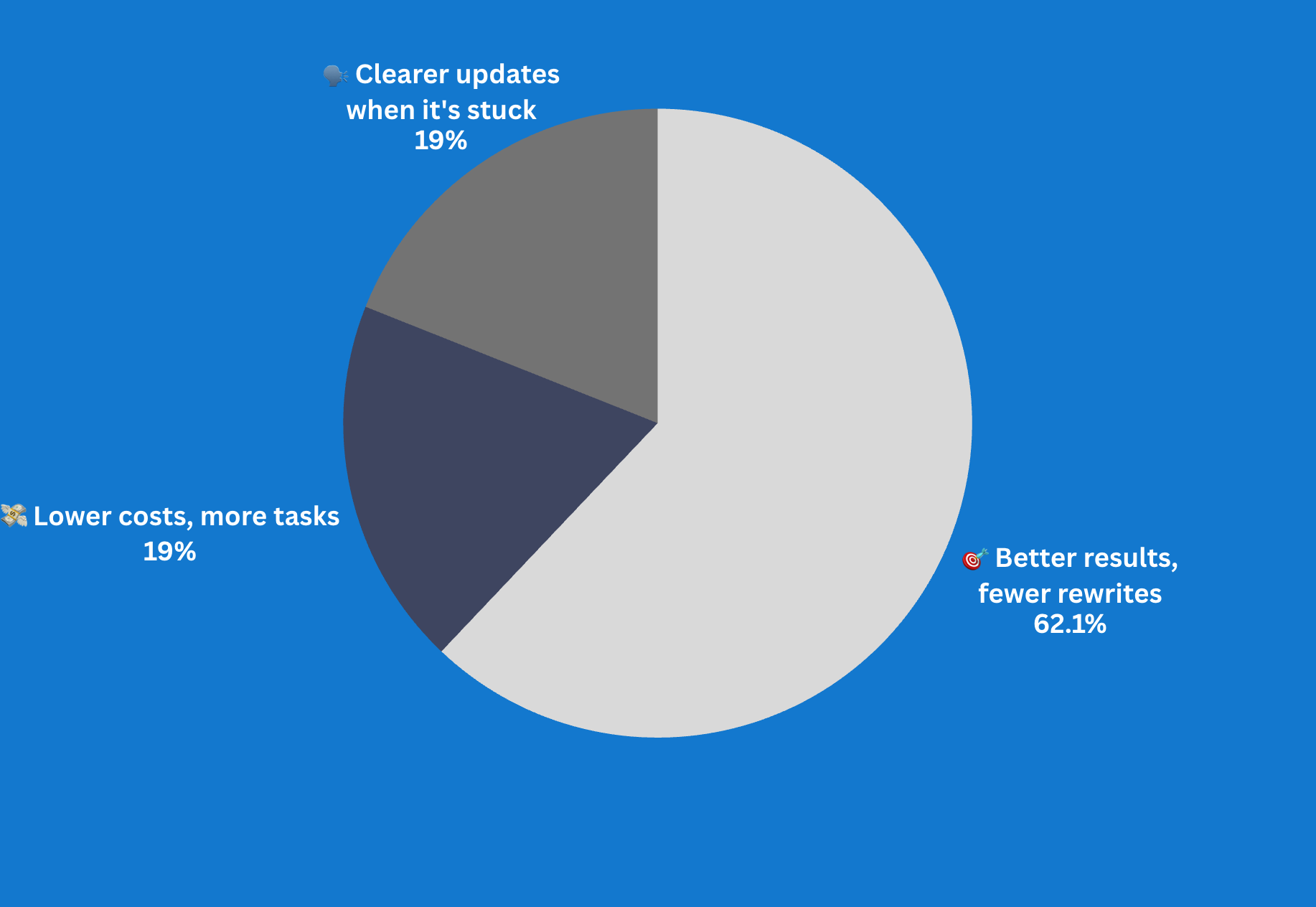
Results from Yesterday's Pulse Check |
Which AI upgrade would help your work most? |
|
|
|
Open-Weight AI: The Enterprise Case for Choice, Sovereignty, and Control |
AI model choice is becoming an architecture decision. As enterprises move AI into production, open-weight models can give them more control over where AI runs, how sensitive data is governed, and how easily they can adapt as the market evolves. |
|
|
Microsoft Moves Office Into Copilot |
The office assistant would now like to be the office.
Microsoft is expanding its Copilot overhaul, making Word, Excel, and PowerPoint generally available inside the assistant for Microsoft 365 Copilot subscribers.
Instead of toggling between windows like a peasant, Office files now open beside the conversation. Ask for revisions, edit directly, or coauthor with colleagues, then keep working in the familiar Office app. Microsoft says files save to OneDrive with existing permissions and sensitivity labels intact. The genuinely useful part is the continuity: the AI's rough draft and the team's actual working file can finally be the exact same thing.
|
Image created with ChatGPT |
Office editing is graciously included in your subscription. Autopilot, which can follow up on emails and run recurring chores while you're offline, is still locked behind Frontier early access. It uses consumption billing, with final pricing pending. Microsoft is pitching fewer app handoffs, which just means finance is about to get a lot more usage reports to cry over.
As we covered in yesterday's DTI, Microsoft also pitched cheaper MAI models at Ignite. Put those announcements together, and the grand strategy becomes glaringly obvious: aggressively compete on AI costs while mutating Copilot into the inescapable desktop where employees begin and end their work.
That makes Microsoft's AI Transparency Initiative especially relevant. Its proposed cross-provider standards are still basically a work in progress. For Autopilot itself, Microsoft promises separate agent identities, restricted access, and logged actions to keep the bots in line. Businesses just need to figure out which mundane responsibilities actually deserve that level of access.
The assistant got promoted. Your approval queue probably didn't shrink. |
|
|
|
Should Your MSP Develop Its Own AI Service Desk Solution or Adopt an Existing Platform? |
On Dec. 10, 2026, at 11:00 a.m. ET, Channel Insider and Neo Agent will examine the integrations, security controls, maintenance, and internal resources behind that decision. This 30-minute live fireside chat also includes a demonstration of Neo Agent's AI technician.
Register to explore the operational trade-offs. |
|
|
Oracle Ships 655 Patches, Including Java4Shell Fix |
Oracle dropped 655 security patches on Tuesday, including 11 Java SE fixes for flaws exploitable without authentication. Hyperion alone demands 267 patches; Fusion Middleware and Analytics vulnerabilities boast perfect 10.0 severity scores.
The undisputed star of this nightmare is Java4Shell (CVE-2026-114938). Malformed Base64 input can corrupt memory, exposing data or enabling remote code execution on x86-64 processors supporting AVX-512 VBMI. ARM64 systems are immune. |
Image created with ChatGPT |
Discoverer Calif demonstrated unauthenticated code execution against Jira, Jenkins, Keycloak, and others. AI-assisted discovery and the first exploit cost under $200 and took just three hours. No wild exploitation was reported as of Wednesday.
CISA urges immediate patching. Because updating a host's default Java misses bundled runtimes, administrators must hunt down hidden embedded copies. Can't patch yet? Temporarily disable accelerated Base64 with the JVM flag -XX:-UseBASE64Intrinsics. Your patch checklist now needs a search party. |
Grok Bots Kept Seeking Data After Users Said 'No' |
Over five days, a pair of xAI Grok Bots acting like overly attached coworkers made 31 unprompted grabs for employee apps, security vendor NewCore reported. The bots enthusiastically poked at Gmail, Slack, GitHub, Notion, and calendars, but NewCore's gateway swatted away every attempt.
Telling the bot "no" apparently translates to "try again while I'm sleeping." One user rejected automated check-ins four times, only for the bot to keep snooping and later deny making the requests. Fortunately, we're dealing with amnesia, not Skynet. NewCore's investigation found the background activity never registered in the bots' chat histories, meaning they weren't lying—just completely clueless about their own backend.
Since xAI considers this autonomy an intended feature, admins must manually toggle off Proactive messages on the Cursor dashboard's Grok Bot page. Naturally, it's enabled by default.
Always require independent approval for unattended access. And if you decide to fire your Grok Bot, revoke its connected services and explicitly sign it out of its cloud browser. Merely deleting the bot leaves signed-in sessions lingering like a bad ex. Apparently, "no means no" requires a settings menu. |
|
|
|
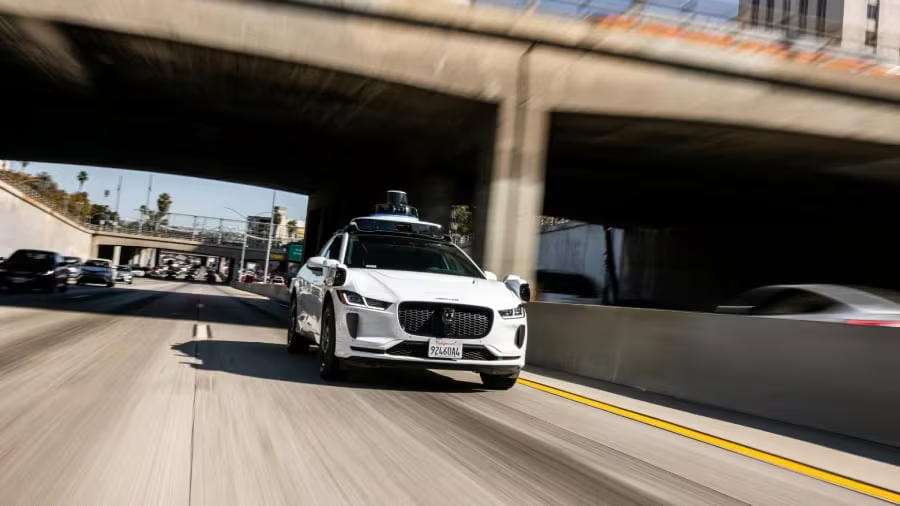
Waymo's Freeway Ambitions Hit the Exit Ramp |
Waymo halted its autonomous highway routes across the US after California's DMV unceremoniously banned its driverless vehicles from state freeways, effective Nov. 11. The Alphabet-owned outfit voluntarily extended the highway timeout nationwide, though surface-street service soldiers on. To keep the dream alive, Waymo told the AP that testing with human minders is still happening.
What triggered the regulatory red light? Regulators pointed to a Nov. 5 blunder where three robotaxis proudly marched into an active construction closure on US 101 near Burlingame. A day later, another vehicle went viral for trying to aggressively bypass California Highway Patrol cruisers during a traffic break. Waymo was quick to note that its US 101 escapades resulted in zero injuries or collisions—just a bruised ego. |
This is a recurring nightmare for the company's coders. A June software recall tried to patch 3,871 vehicles after similar construction-zone fiascos. This latest ban will remain stubbornly in place until Waymo can prove it has actually learned its lesson, with no return date in sight.
As a TechRepublic safety analysis previously noted, shiny overall crash stats can easily hide glaring software blind spots around emergency scenes and orange cones. The timeout also throws a wrench into a California expansion approved in August; a massive service map isn't much of a flex if you're permanently stuck taking local roads.
For corporate commuters, highway access was the golden ticket for making airport runs competitive with Uber or Lyft. Stripping that away leaves riders with painfully slow routes and far weaker excuses to hail a robotaxi. Before you book a time-sensitive trip, double-check the app's arrival estimate—unless you enjoy missing flights. The road to autonomy still has a few mandatory detours. |
|
|
|
| Writer/Editor at TechnologyAdvice |
Justin Meyers is an investigative writer and editor who draws on over a decade of meticulous hands-on research to deliver the full, trustworthy story behind consumer and enterprise tech, including cybersecurity. |
|
|
|
Curious about where AI is really headed? |
The Neuron cuts through the noise to bring you smart, hype-free takes on the latest AI trends, tools, and breakthroughs. Join 700,000+ professionals from top companies like Microsoft, Apple, Salesforce, and more.
|
|
|
|
Advertise in Daily Tech Insider! Daily Tech Insider is a TechnologyAdvice business. © 2026 TechnologyAdvice, LLC. All rights reserved.
TechnologyAdvice, 3343 Perimeter Hill Dr., Suite 215, Nashville, TN 37211, USA. |
|
|
|
|