





HP Inc. Sees Revenue Go Up by 10 Percent, but Profits Slip

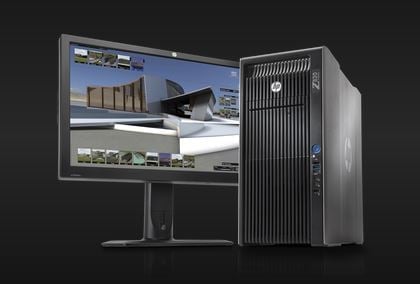
HP.workstation
Aug 24, 2017
2 minute read
eWeek content and product recommendations are editorially independent. We may make money when you click on links to our partners. Learn More

HP Inc., the one that produces workstations, printers, ink and other IT hardware, reported its Q3 2017 earnings Aug. 23, and they beat Wall Street expectations. So there was cause for celebration of sorts in Palo Alto.

Revenue increased by double digits for the first time in a long while; however, profits slipped noticeably from a year ago.

As often happens, investors took advantage of the news and went into a sell mode, sending shares on the Nasdaq index down about 3 percent (to $18.21) in the extended session after the market closed.

The veteran computer and printer manufacturer’s net income fell to $696 million, or 41 cents a share, compared to $783 million, or 45 cents a share, in the year-ago period. Revenue increased 10 percent to $13.1 billion from $11.89 billion in the year-ago period.

Analysts surveyed by FactSet had estimated adjusted earnings of 42 cents a share on revenue of $12.3 billion. Executives issued fourth-quarter adjusted earnings guidance of 42 cents to 45 cents per share.

The company’s Personal Systems division (PCs, laptops, mobile devices) brought in revenues of $8.404 billion, up 12 percent year over year. Commercial revenues increased 11 percent, while consumer revenues were up 14 percent. The company saw a 7 percent rise in total shipments, driven by a 12 percent increase in notebook unit shipment.

Desktop shipments and workstations were down 3 percent on a year-over-year basis.

Printing revenues were up 6 percent year over year to $4.698 billion, primarily due to a 10 percent increase in supplies revenues. HP’s total hardware unit sales went up 1 percent due to an increase of 1 percent in consumer hardware units. Commercial hardware units, however, remained flat on a year-over-year basis.

Regionally, revenues from Americas were up 8 percent year over year. EMEA revenues grew 14 percent, while the Asia Pacific and Japan region increased 15 percent year over year, all in constant currency.

Chris Preimesberger

Chris J. Preimesberger is Editor Emeritus of eWEEK. In his 16 years and more than 5,000 articles at eWEEK, he distinguished himself in reporting and analysis of the business use of new-gen IT in a variety of sectors, including cloud computing, data center systems, storage, edge systems, security and others. In February 2017 and September 2018, Chris was named among the 250 most influential business journalists in the world (https://richtopia.com/inspirational-people/top-250-business-journalists/) by Richtopia, a UK research firm that used analytics to compile the ranking. He has won several national and regional awards for his work, including a 2011 Folio Award for a profile (https://www.eweek.com/cloud/marc-benioff-trend-seer-and-business-socialist/) of Salesforce founder/CEO Marc Benioff--the only time he has entered the competition. Previously, Chris was a founding editor of both IT Manager's Journal and DevX.com and was managing editor of Software Development magazine. He has been a stringer for the Associated Press since 1983 and resides in Silicon Valley.

eWeek Logo

eWeek has the latest technology news and analysis, buying guides, and product reviews for IT professionals and technology buyers. The site's focus is on innovative solutions and covering in-depth technical content. eWeek stays on the cutting edge of technology news and IT trends through interviews and expert analysis. Gain insight from top innovators and thought leaders in the fields of IT, business, enterprise software, startups, and more.

Property of TechnologyAdvice. © 2026 TechnologyAdvice. All Rights Reserved

Advertiser Disclosure: Some of the products that appear on this site are from companies from which TechnologyAdvice receives compensation. This compensation may impact how and where products appear on this site including, for example, the order in which they appear. TechnologyAdvice does not include all companies or all types of products available in the marketplace.