







- Spiceworks Finds Old-Fashioned PCs Still Rule in Corporate Computing
- Desktops Top Laptops in Enterprises
- Tablets Are Hard to Find in Enterprises
- Tablets Have a Pulse
- Enterprises Plan to Keep Buying Laptops
- When Will Employees Use Mobile Devices First?
- What Are the Top PC Brands in Enterprises?
- Dell to Remain Top Brand in Corporate Purchasing for 2018
- The Most Important Purchase Factors
- Style Matters Little in PC-Buying Decisions
- PC Brand Reputations Are Important
Spiceworks Finds Old-Fashioned PCs Still Rule in Corporate Computing
Although smartphones and tablets are becoming increasingly important in the corporate world, a new study from Spiceworks, an IT services company and professional network, indicates that old-fashioned PCs—notebooks, laptops and even desktops—will continue to have an important role in corporate computing. With its study, which surveyed 1,000 IT professionals around the world, Spiceworks sought to learn what computer types and what brands are finding favor with enterprises these days. Spiceworks also asked what type of computers companies plan to buy in the next year. The study suggests enterprises are slowly changing their computer-buying behavior. But, computer reliability and performance matter as much today as ever. Read on to learn more about Spiceworks’ findings.
Desktops Top Laptops in Enterprises
Spiceworks looked at companies’ computer use as it stands this year and their plans for 2018. The survey found that for 60 percent of companies, desktops are the primary computer type, topping laptops at 27 percent. Only 5 percent of employees use thin clients as their primary computer type.
Tablets Are Hard to Find in Enterprises
Tablets are not prevalent in the corporate world today. In fact, just 3 percent of companies reported their employees use tablets as their primary computer. However, as the Spiceworks study shows, that could change soon.
Tablets Have a Pulse
Despite not being the primary device used by enterprise computer users, tablet use will grow next year. According to Spiceworks, a quarter of IT professionals will increase their tablet purchases in 2018, topping projections for desktops, smartphones and two-in-one hybrids. Just 3 percent of companies will reduce their tablet investments.
Enterprises Plan to Keep Buying Laptops
Laptops appear to have the best growth potential in the year ahead, according to the survey. A whopping 43 percent of IT professionals said they plan to increase laptop investment in 2018 and 45 percent will maintain the same investment level. Just 24 percent of IT professionals plan to increase investment in desktops next year.
When Will Employees Use Mobile Devices First?
Spiceworks asked IT professionals when they believed mobile devices will become the average employee’s primary product choice. Only 3 percent of IT professionals say it’s already happening and 2 percent think it will happen within the next year. The greatest number of professionals—53 percent—say it’ll never happen.
What Are the Top PC Brands in Enterprises?
So, which PC makers are currently dominating the enterprise? According to Spiceworks, 47 percent of companies use Dell machines, easily topping HP’s second-place finish with 21 percent use. Lenovo came in fourth place at 14 percent, followed by Apple and Microsoft at 4 percent and 3 percent, respectively.
Dell to Remain Top Brand in Corporate Purchasing for 2018
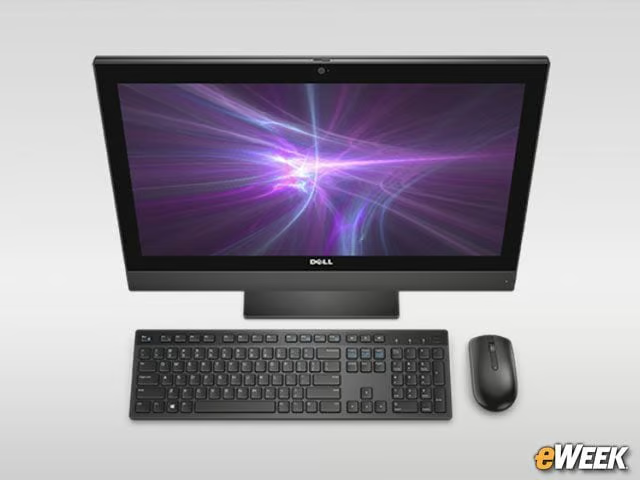
Dell looks poised to remain the corporate PC maker of choice next year. According to Spiceworks, 25 percent of companies will purchase more Dell machines in 2018 and 43 percent will maintain their investment levels. HP purchases will increase for 17 percent of companies. Interestingly, 15 percent of companies will increase Microsoft investment next year, nearly doubling Apple’s 8 percent tally.
The Most Important Purchase Factors

Reliability was cited as the most important factor for IT professionals when considering a new computer, with 87 percent of respondents saying it was critical. For 68 percent of respondents, performance was the most important factor in their buying decisions, followed by security at 62 percent. Cost was cited in 54 percent of cases.
Style Matters Little in PC-Buying Decisions
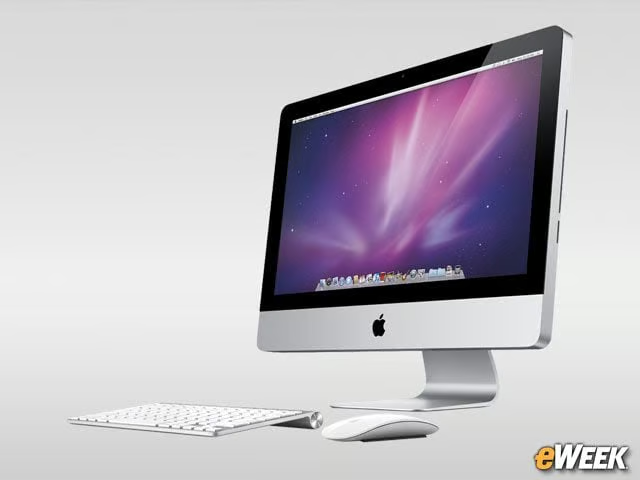
Industrial designers will be unhappy to hear that a computer’s “style” matters in only 4 percent of buying decisions, according to the Spiceworks study. Innovative features were cited in 9 percent of cases. However, “ease of repair” proved important among 37 percent of IT professionals.
PC Brand Reputations Are Important
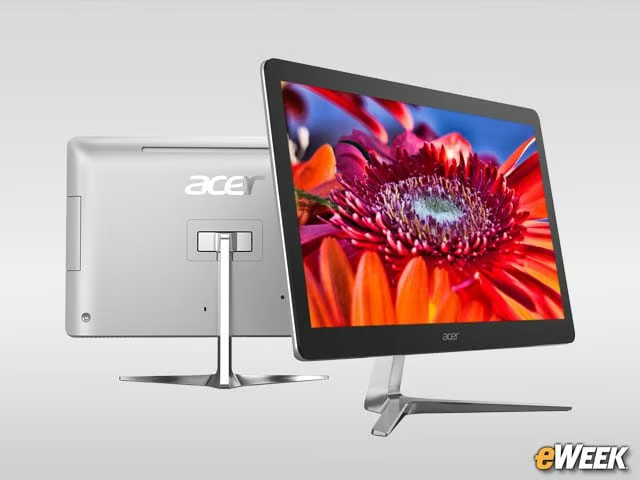
Spiceworks found that 32 percent of IT professionals believe Acer is the most “cost-effective” computer maker, beating out all others. Dell, meanwhile, was cited as most reliable by 34 percent of professionals. Apple earned the highest marks for style, with 31 percent of IT professionals saying it was tops in that respect.