








- Flappy Bird Clones Spread Malware as Ransomware Declines
- Total Volume of Malware Surges
- Digitally Signed Malware Continues to Grow
- Mobile Malware Marches Forward
- Beware of Flappy Bird Clones
- Ransomware Volume Is Declining
- Bitcoin Botnets Yield Small Returns
- Denial of Service Is the Most Common Network Attack
- The U.S. Is the Top Spam Host
Flappy Bird Clones Spread Malware as Ransomware Declines

By Sean Michael Kerner
Total Volume of Malware Surges
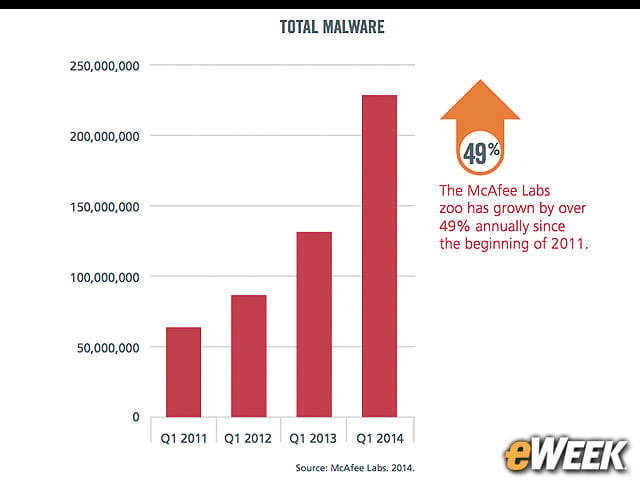
The steady rise in the total volume of malware continued in the first quarter of 2014, topping 200 million samples for the first time.
Digitally Signed Malware Continues to Grow
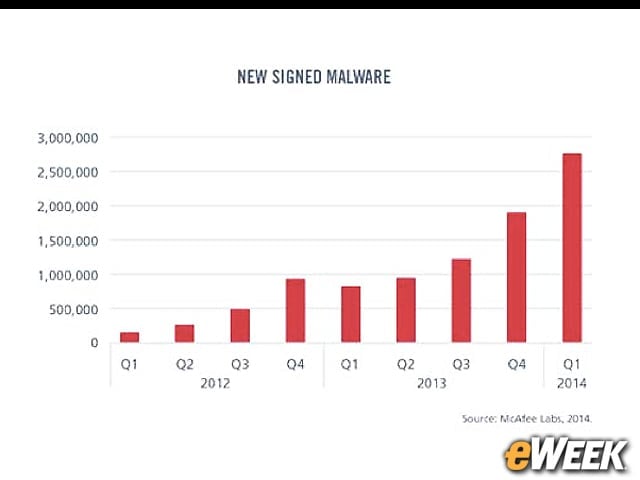
When a piece of software is digitally signed, there is a user expectation that it is more authentic and verifiable. It is that expectation that attackers are taking advantage of, as they continue to increase the use of signed malware.
Mobile Malware Marches Forward

On a year-over-year basis, mobile malware grew by 167 percent in the first quarter of 2014.
Beware of Flappy Bird Clones
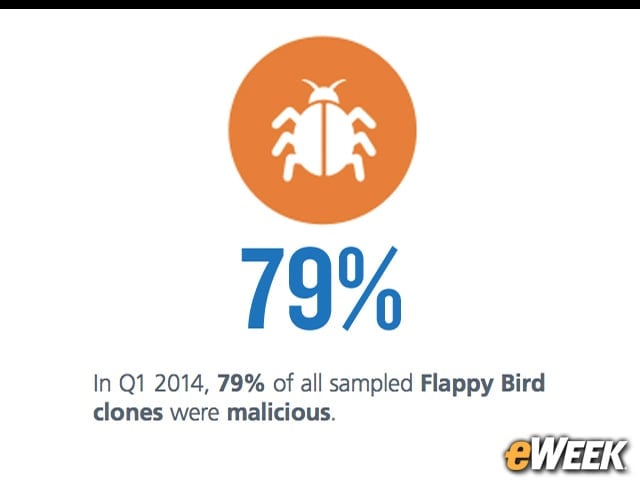
Mobile malware takes on many different forms and tends to leverage popular trends and apps. One of the most popular apps in recent months is the Flappy Bird game, which was widely cloned. During the first quarter, McAfee found that 79 percent of the Flappy Bird clones it sampled were malicious.
Ransomware Volume Is Declining
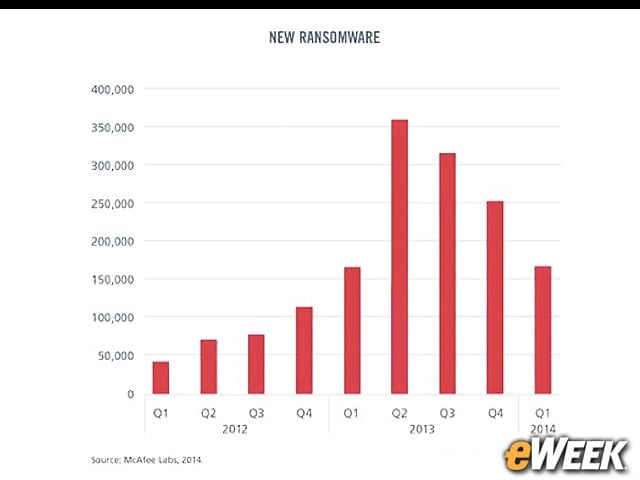
For the last three consecutive quarters, the volume of new ransomware samples detected by McAfee Labs has been declining.
Bitcoin Botnets Yield Small Returns

McAfee found that virtual currency mining is increasingly being bundled into malware toolkits used by botnet builders. Though the mining malware is common, McAfee Labs found that there it is a very resource-intensive process in order to generate profits.
Denial of Service Is the Most Common Network Attack
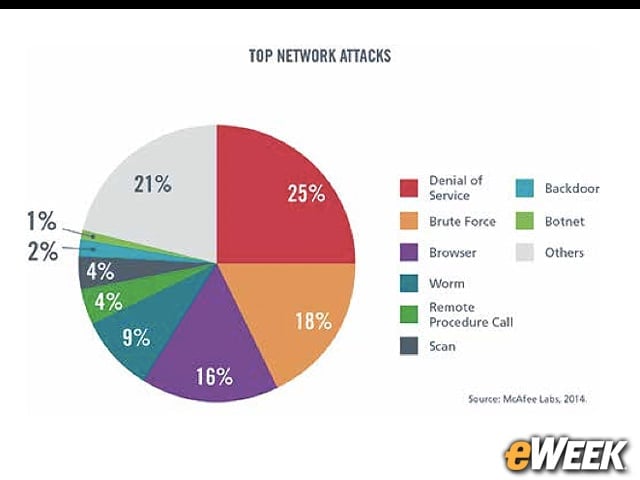
The top network attack during the quarter was denial of service (DoS), coming in at 25 percent.
The U.S. Is the Top Spam Host
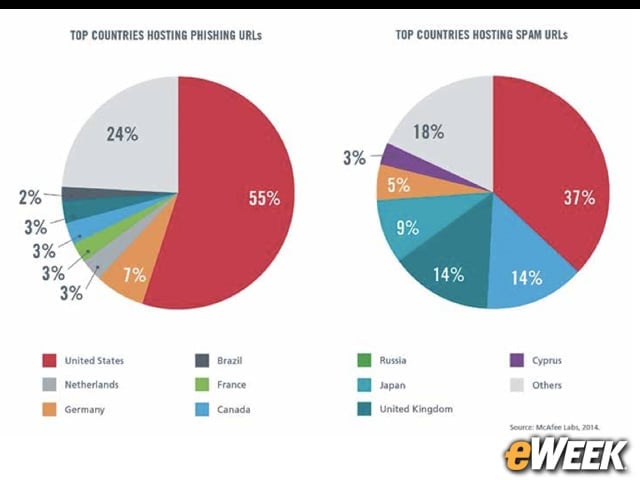
When it comes to the geography of spam and phishing Website addresses, the U.S. tops the list.