







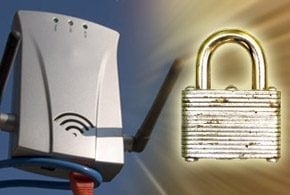
Once again, security researchers are pointing an accusing finger at small office/home office (SOHO) routers as being vulnerable to exploitation.
This time the research group is Team Cymru, and the report claims that more than 300,000 devices have been infected. The infected devices are mostly in Europe and Asia and involve overwritten DNS settings.
DNS (Domain Name System) is the technology that connects Internet addresses with Internet domains. When DNS is infected, an attacker has the ability to redirect traffic to an arbitrary destination.
According to the Team Cymru report, the compromised SOHO routers came from multiple manufacturers.
“We assess that consumer unfamiliarity with configuring these devices as well as frequently insecure default setting, backdoors in firmware and commodity-level engineering standards make SOHO-type wireless routers a very attractive target for cyber criminals,” the report stated.
Team Cymru isn’t the only one finding flaws in SOHO routers lately. A report from security firm Tripwire found that 80 percent of the top 25 best-selling SOHO wireless routers sold on Amazon have a security vulnerability.
Going a step further, Tripwire found that 46 percent of employees have not changed the default wireless password on their wireless routers. The Tripwire study also found that 59 percent of employees have not updated their router firmware. That means that even if the router vendor has updated for a security vulnerability, the users are still at risk.
The emergence of SOHO routers as being an injection point for attackers is not a new phenomenon.
Back in 2010, a security researcher at the Black Hat conference exposed how weakness in SOHO routers could be leaving millions of users at risk. Even further back, in 2002, Linksys routers were found to be at risk from flaws.
The risks of SOHO routers are nothing new, and yet attacks persist and are likely to continue to occur. The challenge of the modern IT security landscape is that no router is an island and any device can be easily discovered, making every device a potential target.
Yes, of course router vendors can and should ship routers that are secure by default. Router vendors should also enforce strong password policies and not allow users to keep default passwords.
It would also be a great idea if SOHO router vendors embrace the same patching methodology that Adobe, Microsoft and Google now offer their users, namely automatic updates.
The battleground that is modern IT security doesn’t stop on the enterprise or the data center; it reaches to our homes, too. The same care and rigor that goes into enterprise security should find its way into SOHO devices. If not, SOHO users are likely to encounter the same problems that enterprises have already solved.
Sean Michael Kerner is a senior editor at eWEEK and InternetNews.com. Follow him on Twitter @TechJournalist.