







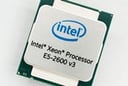
Intel has closed the $16.7 billion deal for programmable chip maker Altera in a move that officials expect will give a boost to the company’s efforts in such areas as the data center, Internet of things and intelligent systems.
Company officials announced the completion of the deal Dec. 28, almost seven months after they said Intel was buying Altera after months of on-again, off-again negotiations. Altera—Intel’s largest ever acquisition—will be a new business unit within Intel called the Programmable Solutions Group (PSG), which will be led by Dan McNamara, who had been general manager of Altera’s embedded products unit. He will be corporate vice president and general manager of PSG.
The new business group will not only work on enhancing Intel’s efforts around field-programmable gate arrays (FPGAs), but also will work with other Intel units, including the Data Center Group and Internet of Things Group, to develop offerings that are highly customized and integrated, company officials said.
The addition of Altera’s technology will enable Intel to create chips with greater capabilities, according to Intel CEO Brian Krzanich.
“We will apply Moore’s Law to grow today’s FPGA business, and we’ll invent new products that make amazing experiences of the future possible—experiences like autonomous driving and machine learning,” Krzanich said in a statement.
New Intel chips armed with Altera FPGAs should hit the market in the first quarter 2016. Intel officials said the plan is to continue the work Altera had going, including FPGAs for ARM-based systems-on-a-chip (SoCs).
Unlike traditional processors, FPGAs can be programmed and reprogrammed through software and are becoming increasingly popular as accelerators in cloud and Web-scale computing environments. The high-performance computing (HPC) space has used accelerators—such as GPUs—as a way of increasing the performance of their systems while holding down the power consumption. However, new workloads—from data analytics to embedded systems—are demanding faster processing, quicker results and more flexibility, which is driving the demand for accelerators like GPUs and FPGAs in more traditional computing environments.
Intel has partnered with Altera—which owns about 40 percent of the FPGA market—since 2013, and other system makers also are looking into expanding their use of FPGAs. IBM officials in November announced that the company is partnering with FPGA maker Xilinx to expand the use of programmable chips in Power and OpenPower systems to help speed up such workloads as big data analytics, machine learning, network-functions virtualization (NFV) and HPC.
In addition, Qualcomm has begun sampling ARM-based server chips that use Xilinx FPGAs, while Advanced Micro Devices, which is looking to grow its presence in the data center, also is looking at incorporating FPGAs into its Opteron chips.
Intel expects to see significant gains from the Altera acquisition. In June, Krzanich said that emerging cloud workloads in the data center continue to grow, and that by 2020, a third of all workloads run by cloud service providers will use FPGAs to reduce costs and more than double performance. The addressable data center market for a combined Intel and Altera is about $37 billion, he said when announcing the deal.
At the time the acquisition was announced, Altera had about 3,100 employees in more than 20 countries and 12,600 customers. The company generated about $1.9 billion in revenue and $500 million in net income during its fiscal year 2014.
“As part of Intel, we will create market-leading programmable logic devices that deliver a wider range of capabilities than customers experience today,” McNamara said in a statement. “Combining Altera’s industry-leading FPGA technology and customer support with Intel’s world-class semiconductor manufacturing capabilities will enable customers to create the next generation of electronic systems with unmatched performance and power efficiency.”