







- 7 Super Storage Technologies—and How They Could Backfire
- Green StorageWhat it is: The use of storage technologies to reduce the amount of power consumed by enterprises.Why its important: Companies are going green in their servers and in their data centers, so why not in their stor
- Hierarchical Storage Management in the ArrayWhat it is: Storage arrays that migrate data from Tier 1 storage to Tier 2 and Tier 3 storage based on a variety of criteria, including last access.Why its important: HSM has been a
- Adoption of SSDWhat it is: SSD, or solid-state disk, refers to memory used to store data, be it flash or DD RAM. The technology responds faster and consumes less power than standard hard drives.Why its important: Better perfo
- Application-Focused StorageWhat it is: Storage architectures managed by the business or infrastructure applications, not the SAN.Why its important: Application-focused storage shows four major benefits: better storage SLA
- Data DeduplicationWhat it is: Data deduplication technologies eliminate redundant data at the subfile level from backups.Why its important: Data deduplication can reduce the amount of storage consumed by as much as 20- or 3
- Thin ProvisioningWhat it is: A storage virtualization technique that provides enough disk capacity for applications to run efficiently, pooling the rest among applications.Why its important: Thin provisioning saves on powe
- Disaster RecoveryWhat it is: Traditionally, organizations deployed disaster recovery programs to only a subset of technologies within the organization. Now, disaster recovery products use continuous data protection to deliver affordable
- No Title
7 Super Storage Technologies—and How They Could Backfire
by Dave Greenfield
Green Storage
What it is: The use of storage technologies to reduce the amount of power consumed by enterprises.
Why its important: Companies are going green in their servers and in their data centers, so why not in their stor
What could be wrong about going green?
Hierarchical Storage Management in the Array
What it is: Storage arrays that migrate data from Tier 1 storage to Tier 2 and Tier 3 storage based on a variety of criteria, including last access.
Why its important: HSM has been a
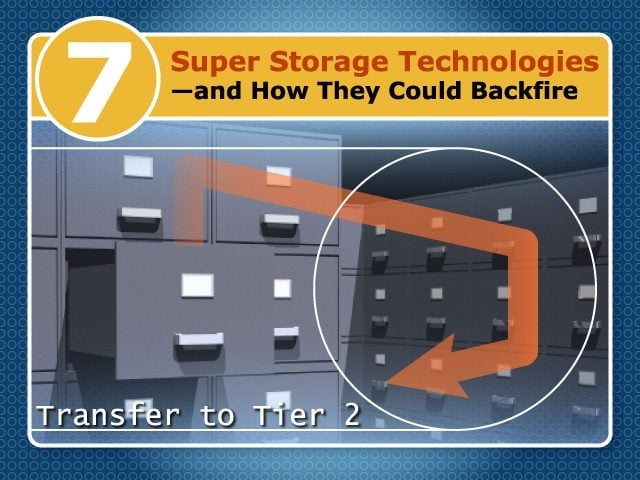
While there is nothing technically wrong with the concept, adding more value-added software on the array is little more than an effort of vendors to prop up the price of already overpriced gear, according to Jon Toigo, former storage system architect and now independent storage analyst and consultant, as well as author of the DrunkenData.com storage blog.
Adoption of SSD
What it is: SSD, or solid-state disk, refers to memory used to store data, be it flash or DD RAM. The technology responds faster and consumes less power than standard hard drives.
Why its important: Better perfo
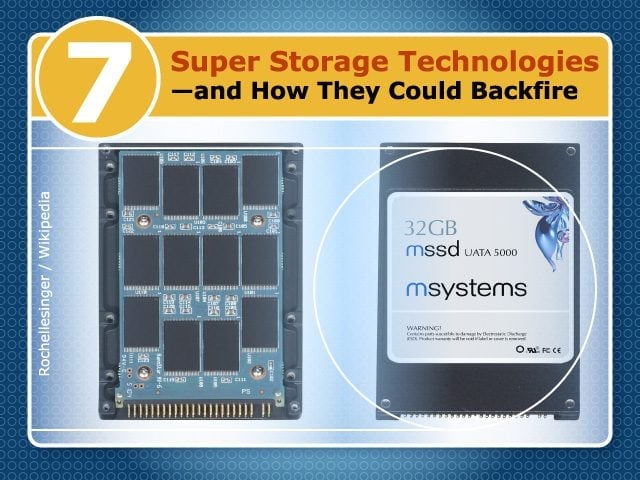
Cost. SSDs are more expensive than most hard-drive technologies right now.
Application-Focused Storage
What it is: Storage architectures managed by the business or infrastructure applications, not the SAN.
Why its important: Application-focused storage shows four major benefits: better storage SLA
Storage professionals could be seeing their critical resources taken over by the application people within the organization.
Data Deduplication
What it is: Data deduplication technologies eliminate redundant data at the subfile level from backups.
Why its important: Data deduplication can reduce the amount of storage consumed by as much as 20- or 3
For one, regulatory restrictions require that data be stored unaltered; data deduplication technically violates these mandates by replacing the duplicated data with pointers to the original data, according to Toigo. Also, data deduplication may not be effective in all scenarios. “Based on studies with our vendors, we do not feel deduplication will provide significant benefits,” said Melvin Ostrow, CIO at a leading legal firm. “Instead, our staff found an appliance vendor that reduced file size by about 40 percent.”
Thin Provisioning
What it is: A storage virtualization technique that provides enough disk capacity for applications to run efficiently, pooling the rest among applications.
Why its important: Thin provisioning saves on powe
Thin provisioning works fine in environments that are predictable, but where there are unexpected data surges, provisioning systems may falter, says Toigo.
Disaster Recovery
What it is: Traditionally, organizations deployed disaster recovery programs to only a subset of technologies within the organization. Now, disaster recovery products use continuous data protection to deliver affordable
Still requires a sizable investment.
No Title
Editor’s Note: This slideshow was edited to include attribution of some data.