







- To SAN or Not to SAN: 10 Questions to Ask Before You Commit
- How Much Does SAN Hardware Cost?
- Can I Create a Cluster in the Cloud?
- Will a SAN-based Cluster Provide Disaster Protection?
- Will a SAN-Based Cluster Slow Application Performance?
- Can I Protect High-Performance Storage With a SAN-Based Cluster?
- How Much Downtime Do SAN Clusters Require?
- Does a Specialist Need to Manage a SAN-Based Cluster?
- Can You Create a Multisite Cluster?
- What If a Data Center Already Has a SAN?
- What Benefits Can I Expect From a SAN-less Cluster?
To SAN or Not to SAN: 10 Questions to Ask Before You Commit

by Chris Preimesberger
How Much Does SAN Hardware Cost?
Traditional SAN-based clusters require a significant investment in both hardware and ongoing maintenance. More hardware also means more ongoing maintenance, power, cooling and rack space.
Can I Create a Cluster in the Cloud?
There are more options now than ever to configure data centers using Windows and Linux and any combination of physical, virtual and cloud (public, private and hybrid) environments. However, business-critical applications cannot be fully protected in a cloud, hybrid cloud or mixed configuration with a traditional cluster because shared storage is generally not available in those clouds. As a result, taking full advantage of the flexibility and cost savings possible in these environments may mean sacrificing availability and disaster protection.
Will a SAN-based Cluster Provide Disaster Protection?
A fully redundant SAN resides in a single location, making it a potential single point of failure that is vulnerable to a variety of threats, ranging from simple power failures to regional disasters. To add disaster protection to an existing SAN environment, an additional, identical SAN is required, not to mention all the SAN replication software add-ons. This can more than double hardware and software costs. Even with this investment, integration with clustering solutions may be difficult or even impossible.
Will a SAN-Based Cluster Slow Application Performance?
SAN-based cluster environments may not provide the performance needed to ensure that end users have fast, reliable access to business-critical applications and data. In a SAN environment, applications must access data over a network via iSCSI or Fibre Channel protocols, introducing latency. SAN performance can lag behind new, faster server CPUs, causing idle server time, slower application response times and a potentially costly loss of productivity.
Can I Protect High-Performance Storage With a SAN-Based Cluster?
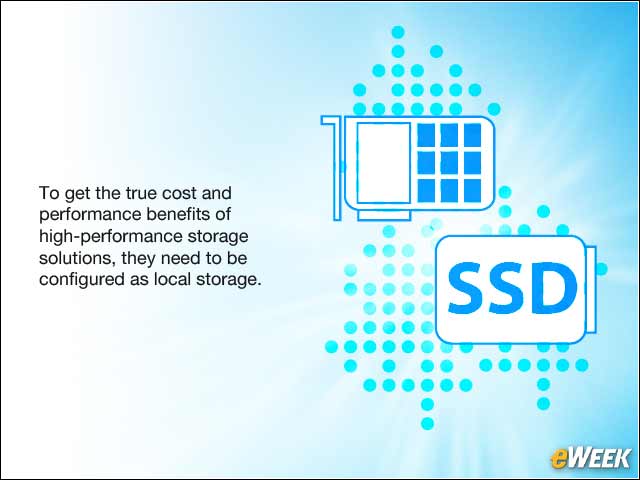
High-performance storage solutions, such as solid-state drives (SSDs) and PCIe-based flash devices, provide a cost-efficient way to significantly improve application response times. However, when SSDs are configured in a SAN, they can cause significant latencies in accessing storage, decreasing the effectiveness of these devices. Furthermore, the cost of SAN configurations with SSDs is very high. To get the true cost and performance benefits of SSD and PCIe-based flash devices, they need to be configured as local storage.
How Much Downtime Do SAN Clusters Require?
Any maintenance on a SAN requires planned downtime, which means downtime for dozens of physical and virtual servers, disruption to end users and productivity loss for the company.
Does a Specialist Need to Manage a SAN-Based Cluster?
SAN and traditional SAN-based cluster implementation and administration can be complex, requiring the specialized expertise of a SAN administrator.
Can You Create a Multisite Cluster?
Traditional SAN environments require identical SAN hardware configurations at the primary and backup environments. This means you’ll need to procure twice as much SAN hardware and networking gear and incur twice the cost for configuring and supporting the configuration.
What If a Data Center Already Has a SAN?
Data centers where the investment in SAN storage has already been made can continue to use it and protect business-critical applications with a SAN-based cluster. They may want to consider extending their SAN-based cluster to a multisite cluster using SAN-less data replication software as a cost-efficient way to add disaster protection.
What Benefits Can I Expect From a SAN-less Cluster?

SAN-less clusters lower hardware/software costs while eliminating the single-point-of-failure risk of shared storage. They deliver high availability and disaster recovery protection in high-performance SSD or PCIe-based flash storage environments. SAN-less clusters also provide the flexibility to use emerging data center configurations, such as cloud, hybrid cloud, and any combination of physical, virtual and cloud environment.