








- 10 Reasons Microsoft’s Mobile Business Has Failed to Take Off
- Microsoft Was Late to the Game
- The Nokia Deal Was a Nightmare
- Google Got Off to a Strong Start
- It’s Hard to Break Out of Apple’s Shadow
- Windows 8 Was Panned as a Mobile OS
- Microsoft Must Win More Device-Maker Support
- Microsoft Was Behind on Apps for Too Long
- Emerging Markets Didn’t Respond the Way Microsoft Hoped
- Carriers Haven’t Been Very Helpful
- Nadella Knows Microsoft Can Succeed in Other Ways
10 Reasons Microsoft’s Mobile Business Has Failed to Take Off
Microsoft’s future in the smartphone manufacturing business is uncertain. We examine why Microsoft has struggled to build a sustainable mobile device business.
Microsoft Was Late to the Game
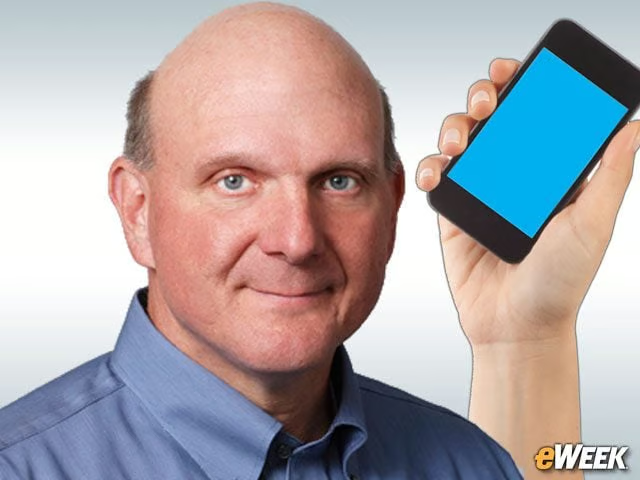
One of the main complaints about Steve Ballmer’s time as Microsoft chief executive was that he didn’t respond quickly enough to the massive shift to mobile devices and applications. While Apple and Google were starting to ramp up their efforts, Microsoft was largely in a holding pattern. By the time Ballmer reacted, Microsoft was too far behind to effectively challenges the enormous lead Apple and Google had achieved.
The Nokia Deal Was a Nightmare
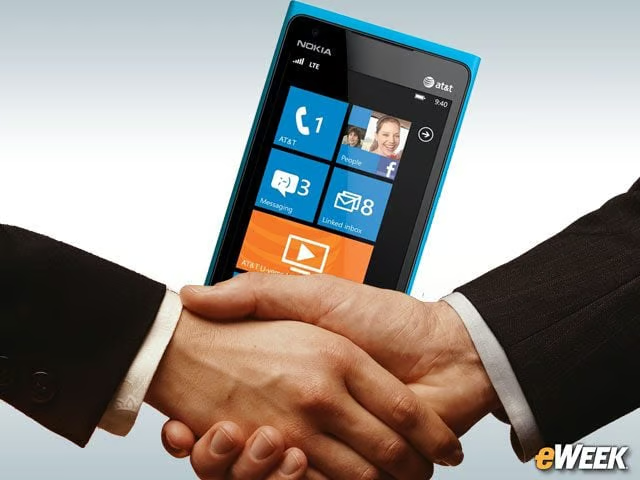
Microsoft’s decision to acquire Nokia’s mobile phone business for about $7.2 billion now looks like one of the company’s biggest blunders. After failing to get much value out of its Nokia assets, Microsoft last year was forced to write down $7.5 billion related to the transaction and cut 7,800 jobs. Nokia was supposed to be the company that would improve Microsoft’s market position. Instead, it became a financial millstone weighing down the company’s profitability.
Google Got Off to a Strong Start
Google took a page out of Microsoft’s book with Android. Rather than make its own devices like Apple, Google instead delivered its mobile operating system to device makers to help lower their costs of getting into the smartphone market. It was the same move that made Microsoft successful in PCs and ultimately helped Android achieve its leading position in the mobile market.
It’s Hard to Break Out of Apple’s Shadow
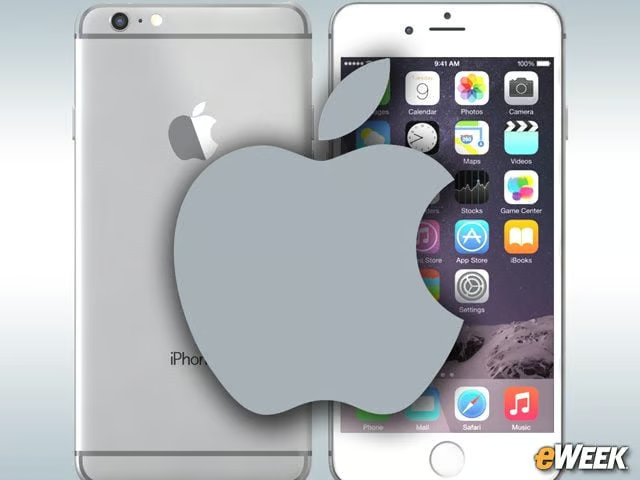
Microsoft and its hardware partners have, over the years, delivered some nice-looking devices, but none has been able capture smartphone buyer’s attention the way Apple’s iPhone has. Apple found a way to build a compelling brand and, coupled with its iOS platform, has sold tens of millions of iPhones quarter after quarter. Microsoft spent billions to try to generate that kind of market momentum but failed to move the needle.
Windows 8 Was Panned as a Mobile OS
While Windows 10 Mobile is a nice step up, users and reviewers widely panned the company’s previous mobile operating system versions. The user interface was a major departure from conventional mobile phone user-interface designs and reminded too many people of the despised tile-based interface of Windows 8. Software design has been widely cited by analysts as one of the main reasons for Microsoft’s struggles in the mobile business.
Microsoft Must Win More Device-Maker Support
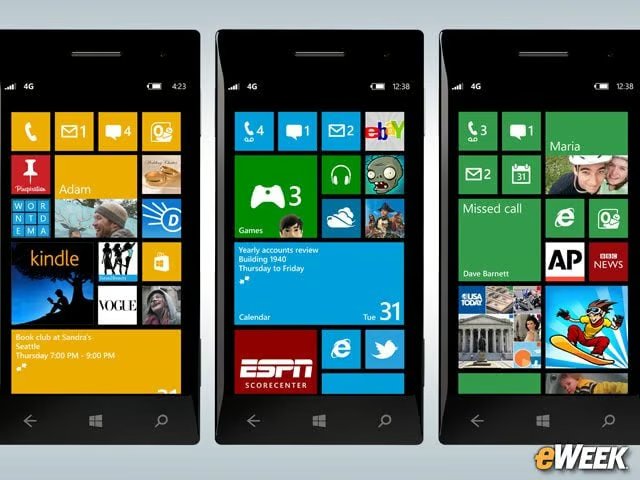
There is a staggering difference in the number of manufacturers producing Android devices compared to those making Windows smartphones. Google has done a fine job of attracting an increasing number of companies to build Android devices. While there are still some big names supporting Microsoft, such as Samsung, their best devices are typically Android-based. That’s an issue Microsoft must address if it hopes to turn things around.
Microsoft Was Behind on Apps for Too Long
Apps were one of the main drivers of smartphone adoption in the early days of smartphones with touch-screen interfaces. The more apps available on a mobile platform, the more likely people would buy a device running that operating system. Apple’s App Store and the Google Play marketplace have always been the top destinations for developers, leaving Windows far behind.
Emerging Markets Didn’t Respond the Way Microsoft Hoped

Microsoft acquired Nokia, in part, to build its presence in emerging markets with feature phones. The idea was to attract consumers in emerging markets where Nokia still had a strong presence and then encourage users to shift to a Windows-based device. However, the company didn’t anticipate that Asian devices makers, such as Xiaomi, Huawei and several smaller producers, would create mostly Android smartphones at budget prices. When given the choice between a Nokia feature phone and a budget-friendly smartphone, customers in emerging markets chose the latter, leaving Microsoft far behind. As a result, Microsoft’s market share declined, forcing the company to sell its entry-level phone business for $350 million.
Carriers Haven’t Been Very Helpful
Mobile Carrier sales support is critical to a device’s success. However, in recent years, carriers (at least in the United States) haven’t been very helpful to Microsoft. Rather than package commercials with Windows devices, they opted for iPhones and Android-based handsets. Even the deals that carriers offer, like buy-one-get-one-free specials, are delivered only on products they’d feel are most appealing to prospective customers. At least in recent memory, not a single one of those deals spotlighted a Windows device.
Nadella Knows Microsoft Can Succeed in Other Ways

It’s hard to talk about Microsoft’s mobile troubles without acknowledging that perhaps it all doesn’t matter as much to Satya Nadella as some might think. Microsoft is still committed to the “mobile-first, cloud-first” plan, which the company has followed through on by bringing Microsoft’s top mobile apps to iOS and Android. The company has added far more Skype, Cortana and Office users by being more iOS- and Android-friendly. Perhaps Nadella is realizing there’s more money to be made in getting more people to use his company’s software on multiple mobile device types than trying to convince them to buy Microsoft’s mobile hardware and operating system.