






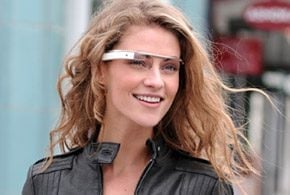


The Google Glass Explorer Edition will come to an end on Jan. 19, as Google drops its production and looks ahead to future versions of its eyewear-mounted computer concept. At the same time, the company has pulled the Glass project from its Google[x] development and research division and transformed it into its own stand-alone division under the Google nameplate.
“It’s hard to believe that Glass started as little more than a scuba mask attached to a laptop,” Google wrote in a Jan. 15 post on the project’s Google+ page. “We kept on it, and when it started to come together, we began the Glass Explorer Program as a kind of ‘open beta’ to hear what people had to say.”
Now, the project is undergoing what Google is calling a “transition” in which the Glass Explorer Program is ending “so we can focus on what’s coming next,” the company said in the post. Users will continue to be able to purchase Glass beta versions under the program for $1,500 only through Jan. 19, when sales of the devices will permanently end. “In the meantime, we’re continuing to build for the future, and you’ll start to see future versions of Glass when they’re ready. (For now, no peeking.)”
Actually, it may not be a huge surprise that Glass as we have known it is ending for now.
In December 2014, the latest round of Google Glass patent papers revealed a design for a more streamlined Glass device that could be the basis for a future version of Glass, according to an earlier eWEEK report. The patent drawings revealed that a new version of Glass could include slimmer components over the wearer’s ear and other refinements to make it sleeker and more unobtrusive.
In late November 2014, other changes were also being reported about Google Glass, including a move to Intel processors to replace the Texas Instruments CPUs that presently power the devices. The switch to Intel CPUs was seen as part of a plan by Intel to move further into the expanding world of wearable technology, and is reportedly slated for a new version of Glass that is expected sometime this year.
Eyewear-mounted computing has been a hot development area since Google Glass first arrived in 2012. The first Google Glass units began shipping in April 2013 to developers who signed up at the June 2012 Google I/O conference to buy an early set for $1,500 for testing and development. Google also then began shipping Glass units to lucky users who were selected in the #ifihadglass contest for the opportunity to buy their own early versions of Glass. Google Glass has since remained in beta testing and has never been released for retail sales to potential customers.
The potential uses of Glass, however, have changed often since the first appearance of Glass back in 2012. Since then, lots of different businesses in a wide variety of industries have been using Glass devices in their work, including hospitals, airlines, manufacturing companies and even schools.
In April 2014, Google began a “Glass at Work” program to encourage businesses to learn more about how Glass might be integrated in useful ways for their employees and business processes.
Each Google Glass device includes adjustable nose pads and a high-resolution display that Google said is the equivalent of a 25-inch high-definition screen from 8 feet away. The glasses also feature a built-in camera that takes 5-megapixel photos and video at 720p. Audio is delivered to wearers through their bones, using bone-conduction transducers.
“Explorers, we asked you to be pioneers, and you took what we started and went further than we ever could have dreamed: from the large hadron collider at CERN, to the hospital operating table; the grass of your backyard to the courts of Wimbledon; in fire stations, recording studios, kitchens, mountain tops and more,” the Glass team wrote in its post. “Glass was in its infancy, and you took those very first steps and taught us how to walk. Well, we still have some work to do, but now we’re ready to put on our big kid shoes and learn how to run.”