









- IBM Roadrunner Dusts Cray Jaguar in World’s Fastest Supercomputer Race
- 1. IBM Roadrunner
- 2. Cray XT5 Jaguar
- 3. Jugene – IBM Blue Gene/P
- 4. Pleiades – SGI Altix 8200 EX
- 5. IBM Blue Gene/L – eServer Blue Gene Solution
- 6. Kraken XT5 – Cray XT5
- 7. IBM Blue Gene/P – Argonne National Laboratory
- 8. Ranger – Sun Microsystems Sun Blade X6420
- 9. Dawn – IBM Blue Gene/P
- 10. Juropa — Sun and Bull
IBM Roadrunner Dusts Cray Jaguar in World’s Fastest Supercomputer Race
The Top500 list of the world’s fastest supercomputers was released June 23 at the International Supercomputing Conference in Hamburg, Germany. Sitting atop the list–again–was IBM’s Roadrunner system, which runs at the Department of Energy’s Los Alamos National Laboratory. The IBM BladeCenter system took the top spot a year ago and has held on since. Also for the second year in a row, Cray’s XT5 Jaguar supercomputer, which runs at the DOE’s Oak Ridge National Laboratory, came in a close second. According to the Top500 organization, which compiles the list every June and November, two new entries into the top 10 come from Germany. Those two are the only systems in the top 10 not from the United States, which is still the top consumer of HPC (high-performance computing) systems in the world, with 291 of the top 500 systems running in this country. Along with IBM and Cray, Sun Microsystems and SGI also have systems listed in the top 10.
1. IBM Roadrunner
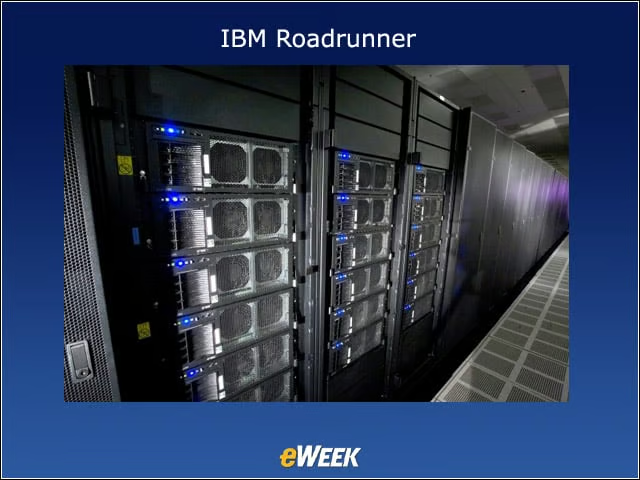
Based at the DOE’s Los Alamos National Laboratory, the BladeCenter cluster can process up to 1.105 petaflops per second (quadrillions of floating-point operations per second). The system in June 2008 became the first system ever to break the petaflop-per-second Linpack barrier, and is one of the most energy-efficient systems on the Top500, according to the list makers.
2. Cray XT5 Jaguar
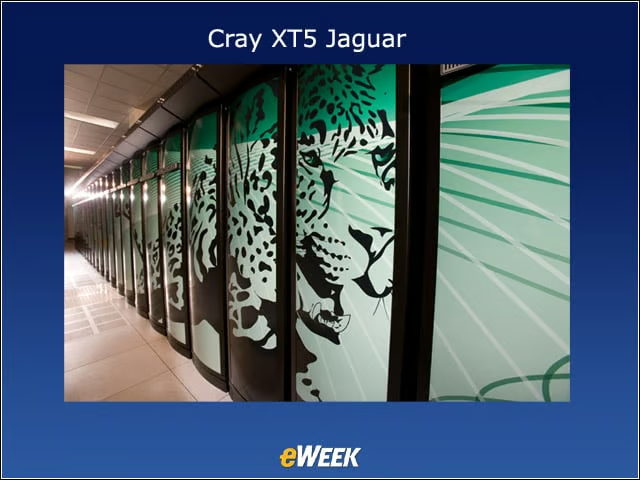
In second place for the second year in a row, the Cray system, running at the DOE’s Oak Ridge National Laboratory, hit 1.059 petaflops per second. The supercomputer is powered by Advanced Micro Devices’ Opteron processors.
3. Jugene – IBM Blue Gene/P
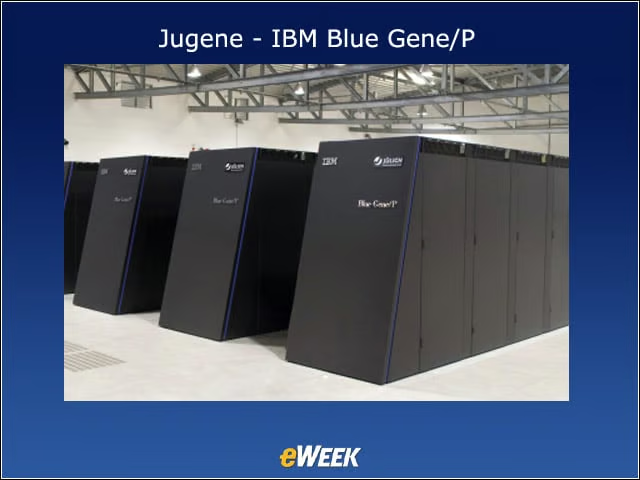
The IBM supercomputer is one of two German systems in the top 10. Installed at Forschungszentrum Juelich in Germany, the supercomputer has achieved 825.5 teraflops per second (trillions of floating-point operations per second) and has a theoretical peak performance of just above 1 petaflop per second, according to the Top500 list.
Photo courtesy of the National Center for Computational Sciences, Oak Ridge National Laboratory
4. Pleiades – SGI Altix 8200 EX

Located at NASA’s Ames Research Center in Mountain View, Calif., the SGI supercomputer can process up to 609 teraflops per second. The Pleiades system is powered by Intel’s quad-core “Harpertown” Xeon chips.
5. IBM Blue Gene/L – eServer Blue Gene Solution
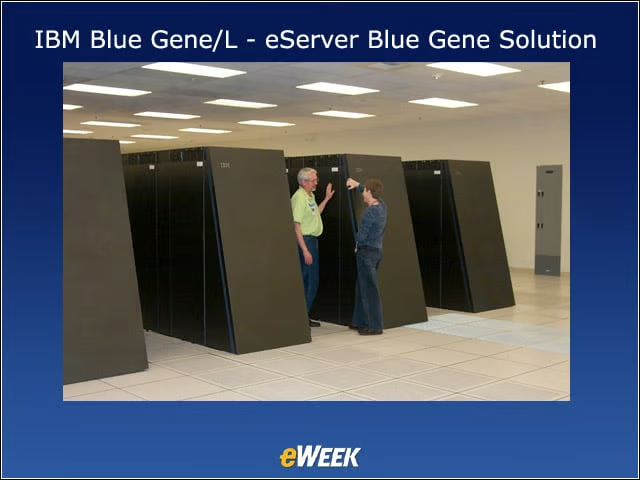
The IBM supercomputer, at the Lawrence Livermore National Laboaratory’s Terascale Simluation Facility, has hit 478.2 teraflops per second.
6. Kraken XT5 – Cray XT5
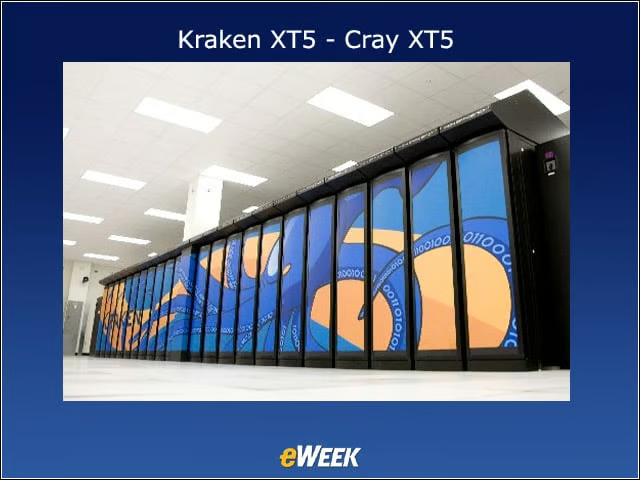
The second Cray XT5 supercomputer in the top 10, this one at the National Institute for Computational Sciences, which is managed by the University of Tennessee, has achieved a level of 463.3 teraflops per second.
7. IBM Blue Gene/P – Argonne National Laboratory
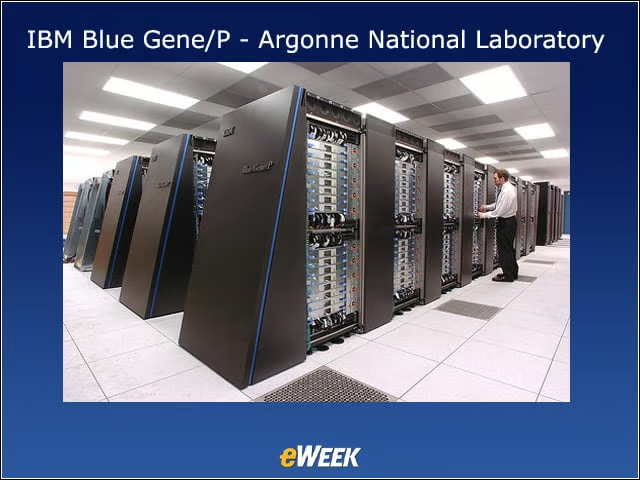
The IBM supercomputer, at the DOE’s national lab in in Argonne, Ill., can process 458.61 teraflops per second.
8. Ranger – Sun Microsystems Sun Blade X6420
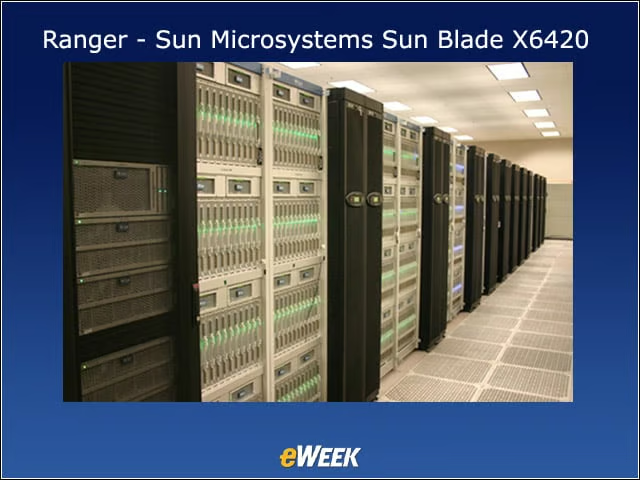
The Sun Microsystems supercomputer, at the Texas Advanced Computing Center at the University of Texas in Austin, can process 433.20 teraflops per second. The supercomputer has 62,976 AMD Opteron processor cores in 3,936 nodes.
9. Dawn – IBM Blue Gene/P
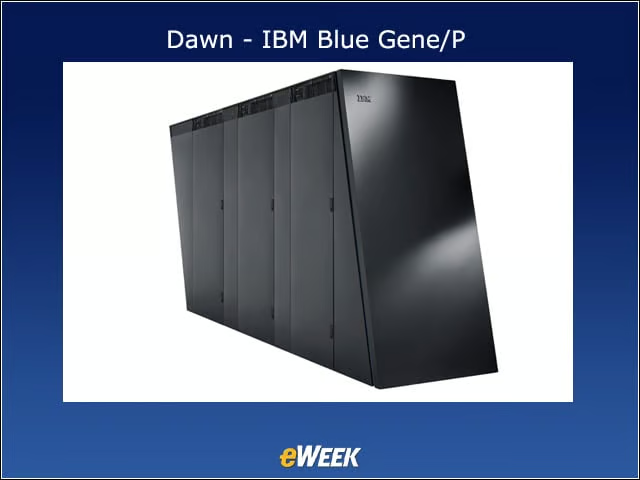
The supercomputer runs at the Lawrence Livermore Lab, and can process 415.70 teraflops per second. IBM engineers are using Dawn as the groundwork for its upcoming next generation of Blue Gene systems.
10. Juropa — Sun and Bull
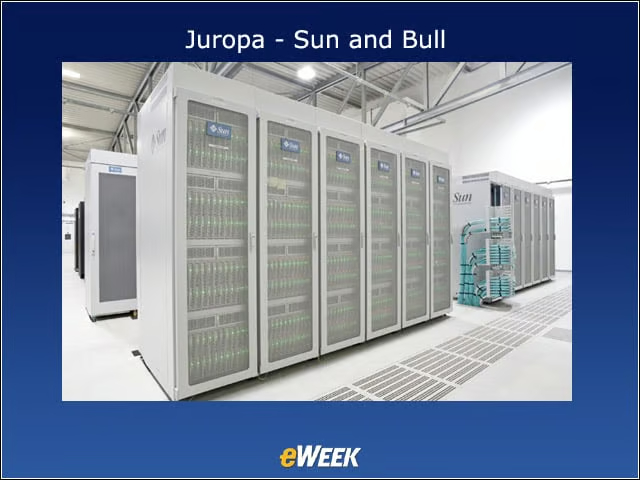
Also at the Forschungszentrum Juelich in Germany, the system is a combination of SunBlade X6048 servers and NovaScale systems from Bull. The SunBlades are powered by Intel’s quad-core “Nehalem EP” quad-core Xeons. The supercomputer has a performance of 274.8 teraflops.