







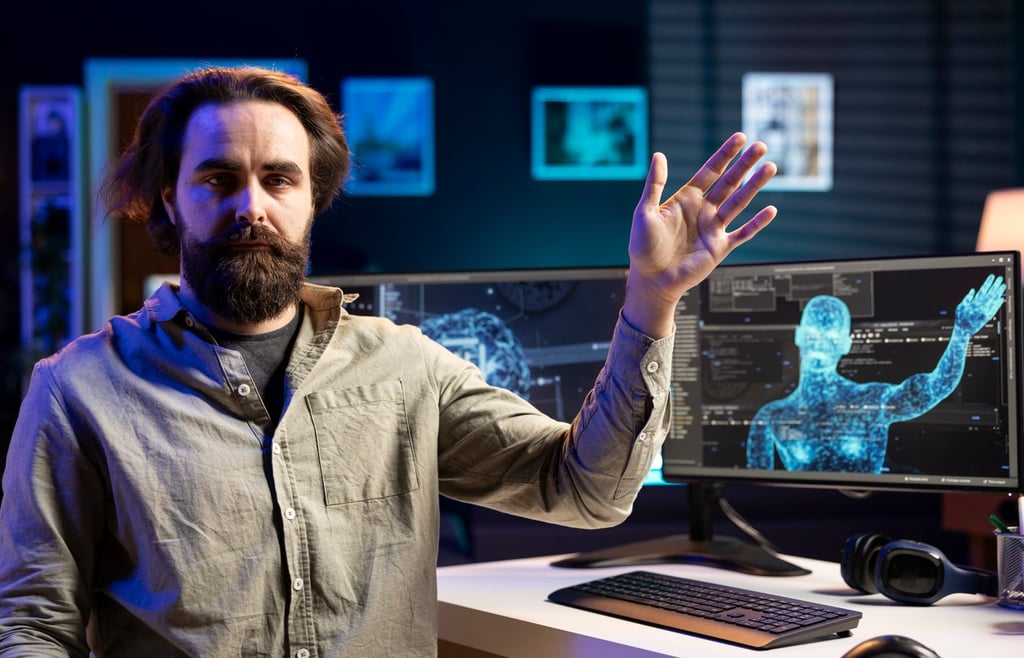
Researchers from Stanford University, Northwestern University, Washington University, and Google DeepMind found that artificial intelligence can replicate human behavior with 85 percent accuracy. A study showed that letting an AI model interview a human subject for two hours was sufficient for it to capture their values, preferences, and behavior.
Published in the open access archive arXiv in November 2024, the study used a generative pre-trained transformer GPT-4o AI, the same model behind OpenAI’s ChatGPT. Researchers did not feed the model much information about the subjects in advance. Rather, they let it interview the subjects for two hours and then construct digital twins.
“Two hours can be very powerful,” said Joon Sung Park, a PhD student in computer science from Standford, who led the team of researchers.
How the Study Worked
Researchers recruited 1,000 people of different age groups, genders, races, regions, education levels, and political beliefs and paid them each $100 to participate in interviews with assigned AI agents. They underwent personality tests, social surveys, and logic games, engaging twice in each category. During the tests, an AI agent guides subjects through their childhood, formative years, work experiences, beliefs, and social values in a series of survey questions. After the interview, the AI model creates a virtual replica, a digital twin that embodies the interviewee’s values and beliefs.
The AI simulation agent replicas would then mimic their interviewees, undergoing the same exercises with astonishing results. On average, the digital twins were 85 percent similar in behavior and preferences to their human counterparts. Scientists could use such twins for studies that might otherwise be too costly, impractical, or unethical when done with human subjects.
“If you can have a bunch of small ‘yous’ running around and actually making the decisions that you would have made,” Park said, “that, I think, is ultimately the future.”
However, in the wrong hands, this type of AI agent could be used to develop deepfakes that spread misinformation and disinformation, perpetrate fraud, or scam people. Researchers hope that these digital replicas will help fight such malicious use of the technology while providing a better understanding of human social behavior.