







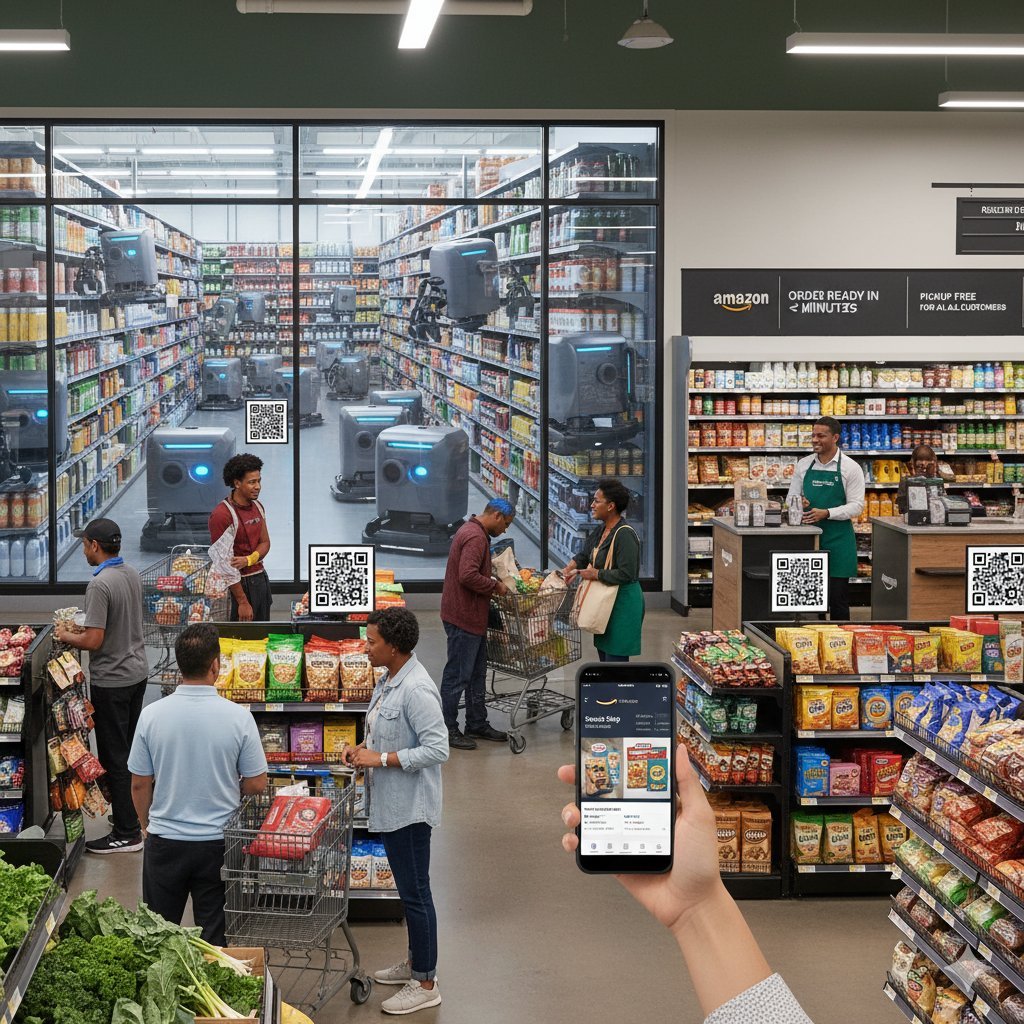
Shoppers at a Whole Foods Market in Plymouth Meeting, Pennsylvania, are getting a glimpse of Amazon’s latest grocery experiment: a store within a store powered by robots.
The new setup lets customers pick up organic kale and Kraft Mac & Cheese in a single trip, marking Amazon’s latest move to fuse technology, convenience, and premium grocery shopping.
The entire operation relies on a hidden, automated 10,000-square-foot micro-fulfillment center built right into the back of the existing store. This center holds over 12,000 unique items, everything from organic produce to common brands like Tide detergent and Pepperidge Farm Goldfish crackers.
Shoppers browsing the aisles at Whole Foods will find QR codes scattered throughout the store. If they want a non-Whole Foods item, they simply scan the code with their smartphone, order from the expanded Amazon selection in the app, and continue their shopping.

Image: Amazon
The order is then processed behind the scenes by autonomous “ShopBot” robots, which were developed by Silicon Valley robotics company Fulfil specifically for grocery fulfillment. The items are retrieved and prepared for pickup at a designated Amazon Pickup & Returns Counter.
Amazon claims the whole process is quick and the order is often ready “in less than 10 minutes.”
Balancing brand identity with convenience
The concept gives Amazon the opportunity to integrate its extensive grocery catalog with Whole Foods’ premium image without cluttering the store with mainstream brands.
“At Whole Foods Market, we’ve always taken pride in offering a wide selection of natural and organic products, but we understand our customers appreciate the convenience of one-stop shopping,” said Jason Buechel, vice president of Amazon Worldwide Grocery Stores and CEO of Whole Foods Market, in a statement published on Amazon’s blog.
He added, “We’re making grocery shopping more convenient for customers by thoughtfully blending our grocery offerings and leveraging new fulfillment capabilities in creative ways.”
Amazon has not specified when this model might become available elsewhere, but the company confirmed plans to “refine and expand” the concept based on customer feedback.
The experiment marks one of Amazon’s most integrated retail efforts since acquiring Whole Foods in 2017 for $13.7 billion. It follows years of grocery experimentation, from Amazon Go’s cashierless stores to the expansion of Amazon Fresh and a plan to expand same-day grocery delivery to more than 2,000 US cities by 2026.
Amazon says pickup for all customers is free, and Prime members can use existing delivery options, including a $9.99 monthly subscription for unlimited delivery on orders over $25.
This news comes days after Amazon and OpenAI agreed to a $30 billion partnership, granting the ChatGPT creator access to hundreds of thousands of Nvidia processors through Amazon Web Services.