






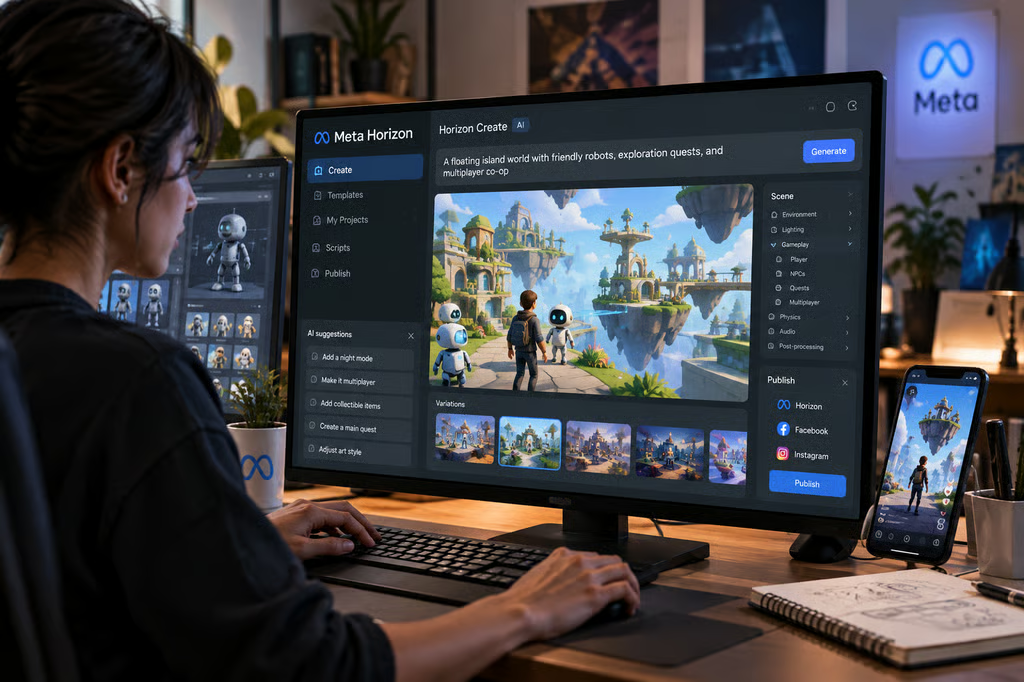


Building a game usually starts with a game engine, enough technical know-how to use it, and time spent turning an idea into something playable. Meta wants to compress that opening stretch into a sentence typed into a phone and let AI attempt the first build.
The social media giant has unveiled Horizon Create, a mobile app for building games with AI prompts, as well as browser-based Horizon Studio for editing and publishing them. Access is opening gradually through a waitlist.
A generated game is only the beginning. Creators still have to refine it, prepare it for publication, and find out whether anyone wants to keep playing.
A prompt can build more than the scenery
Creators can begin with a written idea or one of Meta's templates. Horizon Create keeps generation running in the background, so users can start multiple builds and return to earlier versions instead of waiting on a single attempt.
Generated output covers both presentation and gameplay. Meta says Create can generate playable 2D or 3D games with environments, characters, progression systems, difficulty settings, and multiplayer support.
After playing a build, creators can use natural-language prompts to change story details, art direction, or other parts of the experience. Compared with earlier AI-assisted game development focused on individual assets or code, Meta is putting several parts of the build into one prompt-driven workflow.
Early access remains limited. The company is initially testing Create and Studio with members of its creator community.
Horizon Studio moves generated games toward publication
Horizon Studio gives creators finer control over a project in the browser. Scene tools can change layouts and replace assets, with script parameters available when prompts do not produce the desired adjustment. Projects retain their assets and iteration history as creators move between Create and Studio.
Publishing connects finished projects with Meta's distribution system. Eligible games can appear across Facebook, Instagram, and Horizon, including experiences players can enter from an Instagram clip without installing another app first. Engagement and repeat play are among the factors the company uses when deciding which games receive more discovery.
Revenue remains partly unresolved. In-game monetization and the Meta Horizon Creator Fund are available within the ecosystem, but additional monetization details for the new tools have yet to be released. Games also go through content-safety checks and receive automated age ratings before publication.
What eWeek found: Meta has spent years preparing Horizon for mobile
Horizon spent years closely associated with Quest headsets, but phones were taking on a much bigger role by 2026. Earlier this year, Meta removed individual Horizon Worlds from the Quest Store shelves, saying its theory that the listings would improve headset retention had not been proven.
Mobile use was heading in the opposite direction. According to Meta, Horizon’s mobile monthly active users grew more than fourfold in 2025, while the number of mobile-only worlds rose from zero to more than 2,000. By February 2026, four creators had passed $1 million in lifetime revenue, and nearly 100 had earned six figures during 2025.
AI creation now tackles another part of Meta's mobile strategy. The company spent last year growing the audience for Horizon on phones. Its new creation tools could increase the supply of games available to that audience by letting many more people attempt a build without starting in a conventional game engine.
Meta continues to invest in Quest, but it is shifting Horizon Worlds toward mobile. Prompt-built games could expand that catalog faster; the test is whether players find enough of them worth returning to.
More AI news: An AI-assisted intelligence error reportedly sent US military aircraft into the air before officials discovered the assessment of a Chinese ship was wrong.