







Meta's newest AI agent is getting a second visit from most first-time users.
About 73% of people who installed Muse returned the following day, according to September 2026 Sensor Tower data shared on X by Menlo Ventures partner Deedy Das.
ChatGPT started behind but pulled ahead in the second week. For businesses considering AI agents, those return rates indicate engagement, but they do not establish task accuracy or time saved.
ChatGPT pulls ahead in the second week
Muse maintained its lead through the first week, but OpenAI's chatbot gradually caught up. ChatGPT recorded 41.3% next-day retention and overtook its competitor between Days 8 and 9.
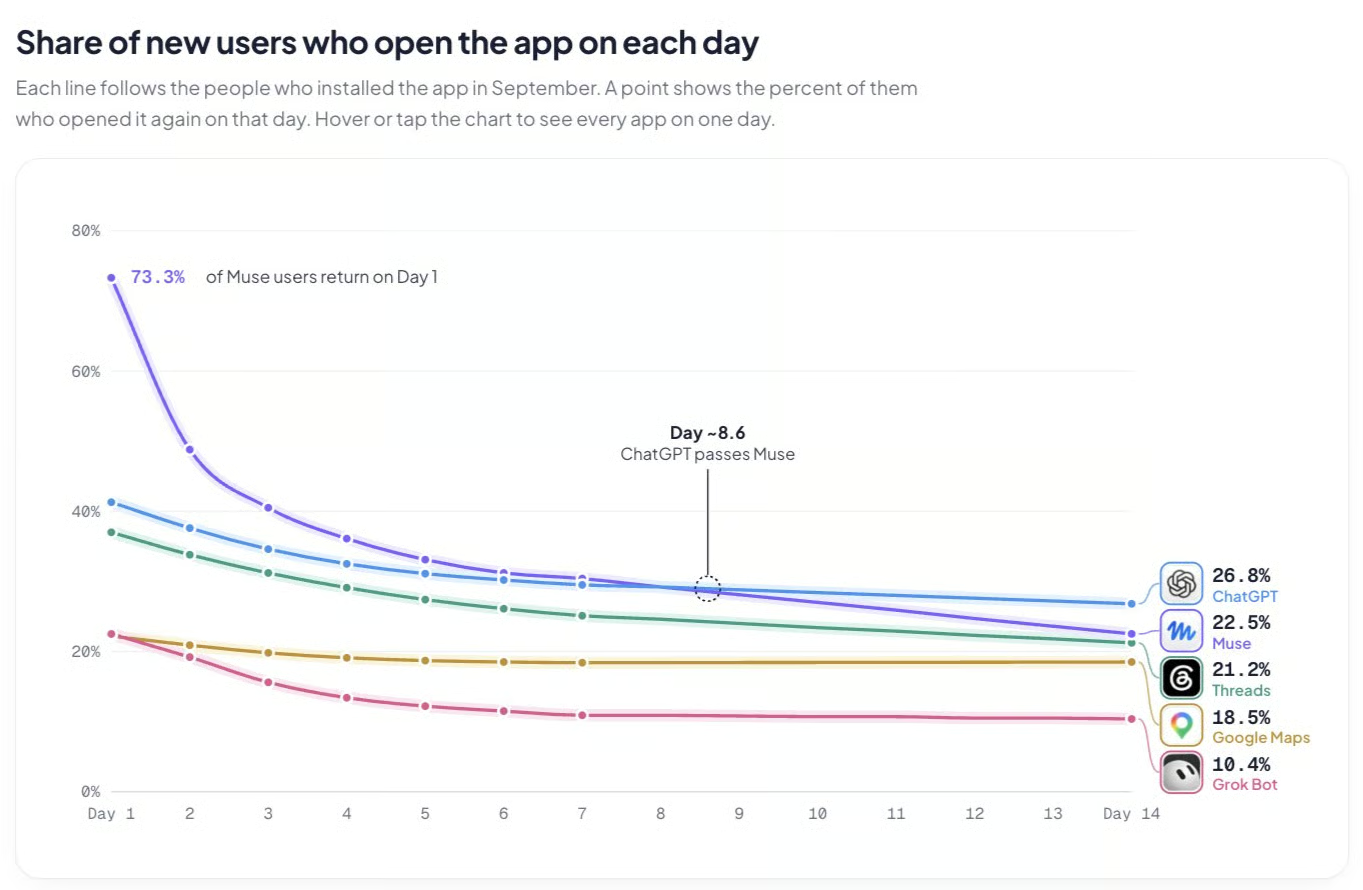
By Day 14, 26.8% of new ChatGPT users were returning, compared with 22.5% for Muse. Sensor Tower's analysis tracked new mobile app installations across 81 countries, comparing retention at different points during the first two weeks.
Muse gains millions of users as business tools expand
Launched on September 8, the assistant attracted more than 4 million weekly users by the end of the month, according to internal figures obtained by The Information.
Meta has also introduced business capabilities alongside the consumer experience. Meta’s Sept. 29 small-business announcement listed connectors for Shopify, Intuit QuickBooks, Slack, and other tools businesses use to manage their operations.
Business activities include reviewing sales figures and preparing customer communications. Developers have a separate offering in Muse Code, extending the company's agent products into software development. Both offerings are part of growing interest in AI agents that work across applications.
What eWeek found: Repeat visits do not establish productivity
Meta’s Muse documentation says the agent can continue working after someone closes the app and request approval before sensitive actions, including sending an email or making a purchase.
That workflow gives users several possible reasons to return: assigning new work, reviewing results, or approving a pending action. The retention figures alone cannot distinguish between those activities.
For businesses, a repeat visit could reflect useful ongoing work or time spent checking and correcting results. Evaluating Muse therefore requires measuring task accuracy and employee review time alongside continued use.
Test Muse on your team's work before adopting it
Retention rates indicate the share of new users who return on specific days after installing an app. If you're considering Muse for your business, check how reliably it completes recurring assignments and how much employee time goes into reviewing the results.
A business owner might ask Muse to prepare customer emails in the morning, then return later to review and approve them. Completing that process in minutes could save time. Spending an hour correcting inaccurate drafts would tell a different story.
Companies testing the agent can evaluate three areas before expanding its use.
- Continued use after the first week. Run a two-week trial and track how often employees assign new work. Muse's early performance against ChatGPT illustrates why first-day interest alone cannot establish lasting adoption.
- Successful task completion. Record how frequently assignments are finished accurately without extensive corrections. Enterprise AI benchmarks have found that convincing outputs do not always produce correct outcomes.
- Employee time and approvals. Measure how long staff spend checking completed work and authorizing actions. Compare those hours with completing the same assignments manually, and maintain human approval controls for sensitive activities.
Muse's strong return rate gives businesses a reason to examine the technology. Accurate results and net time saved, with appropriate approval controls, would provide a stronger basis for making Muse part of regular operations.
Want to learn more AI tips, tricks, and prompting techniques? eWeek readers get free 7-day access to The Neuron Academy, our practical learning platform designed to help professionals use AI more confidently at work. Browse all lessons →
Let us teach you How to Talk to AI for free! Try our six-minute course at The Neuron Academy and learn a few simple ways to write better prompts and get more useful results from AI, or browse our other AI course for free for seven days. Check out all the lessons here →