







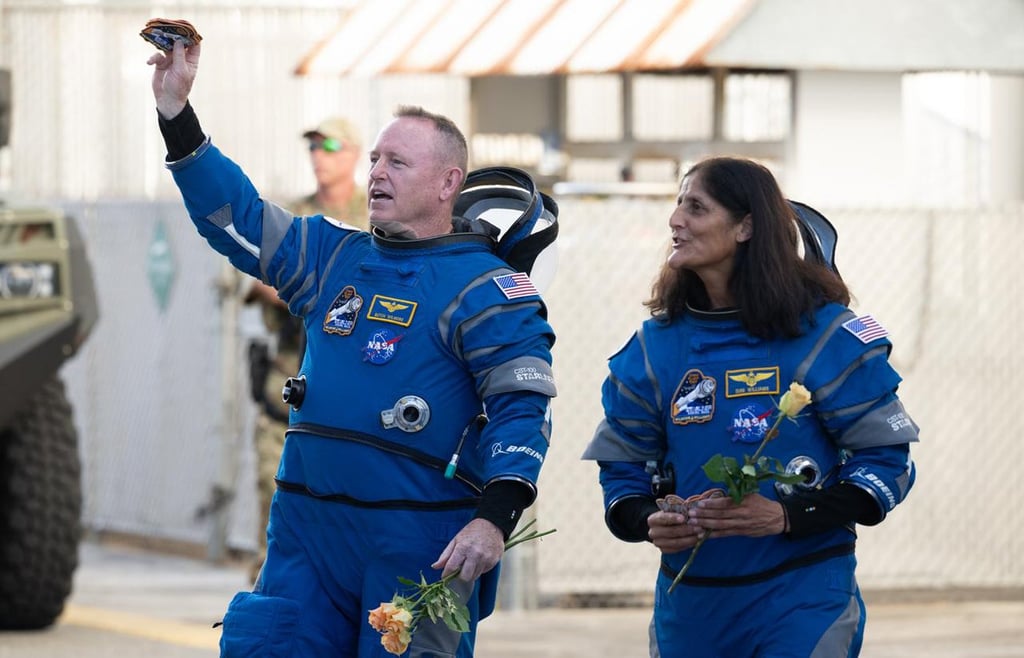
The safe return of NASA astronauts Butch Wilmore and Suni Williams on March 18 highlights just how unpredictable and complex space flights can be. Originally planned as an eight-day test mission aboard Boeing’s Starliner, their journey turned into an unexpected nine-month stay due to multiple helium leaks and issues with the reaction control system thrusters.
This raises an important question: Should we be sending AI-powered robots instead of human astronauts to explore the final frontier?
The challenges of prolonged space exposure
While the idea of venturing into space is thrilling for many people, the human body isn’t built for extended periods beyond Earth’s atmosphere. Astronauts experience muscle atrophy, bone density loss, weakened immune function, and radiation exposure the longer they stay in space. Even with rigorous exercise and medical monitoring, these effects can be irreversible. Sending robots instead of humans could eliminate these risks. AI robots don’t need food, oxygen, sleep, or gravity for their body to function properly, making them ideal for long-term exploration.
Why AI robots aren’t ready yet
Despite the advantages, AI-powered robots aren’t quite ready to replace human astronauts. AI relies on massive computational power to process information and make decisions. The problem? Latency and power consumption.
Most AI systems use cloud computing, which introduces delays even here on Earth. Now imagine trying to operate an AI robot millions of miles away with stars, planets, and space debris in between. The time it would take to receive and process instructions would be inefficient, if not dangerous. Additionally, AI consumes significant energy to generate an output, and space missions have limited power resources.
A joint effort: AI and human collaboration in space
Instead of replacing human astronauts, AI is being developed to enhance human-robot collaboration in space missions. The Chinese Shenzhou 19 crew has already taken steps in this direction by testing an AI flight robot designed to assist astronauts. The robot is integrated with human-robot collaboration software to improve interactions between astronauts and robotic systems. The Shenzhou crew has conducted experiments on:
- Human-robot relationships: Understanding how astronauts and AI systems can work seamlessly together.
- Robot behavior characterization: Analyzing how AI robots respond to various tasks and conditions.
- Multimodal interaction technologies: Improving communication methods between astronauts and robots.
These studies are laying the groundwork for AI-assisted missions. In the future, this AI-powered robot is expected to handle in-cabin inspections and resource management, reducing astronauts’ workload. Instead of replacing astronauts, AI can augment human capabilities, making missions more efficient and reducing risks.