







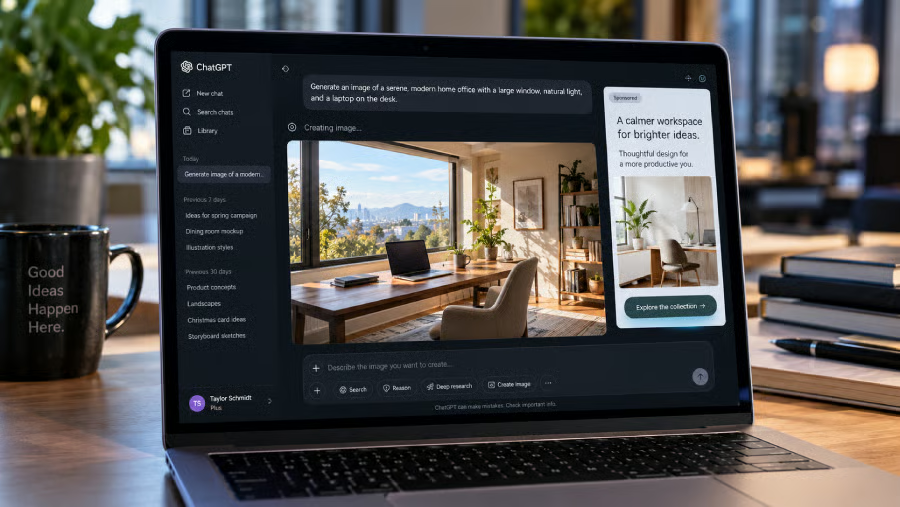
ChatGPT’s next advertising experiment is moving into image generation.
OpenAI plans to begin testing a visual ad format in the US later this month with an initial group of advertisers. Sponsored imagery will appear during image-generation activity but remain separate from the images users create.
The bigger question is whether image-generation prompts carry enough commercial intent to make the format useful to advertisers. A user designing a product mockup may be closer to a purchase decision than someone generating personal artwork, which gives brands a new variable to test.
Sponsored images stay separate from generated results
OpenAI says visual ads will be labeled and kept separate from images users generate. Earlier ChatGPT ad tests can use conversation context to determine when sponsored content may be relevant.
Image generation gives the system a different type of context to interpret. One prompt may involve a product mockup, marketing asset, or client project, while another may be purely personal or creative.
Billo CEO Donatas Smailys sees commercial intent as the central uncertainty. “Search ads work because they meet people at the moment they're looking for something,” he said. “Someone generating an image in ChatGPT is not shopping.”
OpenAI has not published performance data for the new format. Brands participating in the test will need to learn which types of image-generation activity produce enough engagement to justify continued spending.
Advertisers get more ways to measure results
New measurement integrations can send conversion data from company systems into ChatGPT Ads. Outside partners can also support attribution and incrementality studies, with separate services handling brand-suitability checks.
Campaigns can count conversions such as purchases or sign-ups, including some actions completed after an impression without a click. Commerce can also happen inside ChatGPT through services such as Instacart shopping, so clicks alone may not capture every outcome associated with an ad.
ChatGPT now reaches about 1.2 billion weekly users, up from 900 million weekly users. Advertiser reach is below that total because Plus, Pro, Business, Enterprise, and Edu accounts do not receive ads. Eligible Free users can also choose an ads-free version with lower limits.
Smailys advised brands to start with modest budgets and establish their own benchmarks before increasing spending. Companies joining the visual test should judge it on campaign-specific results instead of assuming performance from existing ChatGPT placements will transfer.
What eWeek found: OpenAI had image-ad guidance before the new test
eWeek compared the Oct. 5 announcement with previous ChatGPT ad specifications, and found that standard units could contain image assets before the image-generation format was introduced. Existing units can pair an image with branding, copy, and a destination link.
Earlier creative guidance for ChatGPT Ads also covers how advertisers should select imagery and coordinate it with the accompanying message. OpenAI is entering the upcoming trial with established guidance for visual ad creative.
Neither the existing ad specifications nor the creative guidance provides format-specific guidance or performance benchmarks for the new placement. No published evidence yet shows that imagery prepared for standard units will deliver similar results there.
The test will ultimately hinge less on whether OpenAI can display attractive ads and more on whether image-generation sessions produce enough commercial intent to justify advertiser spending.
Early campaign data should reveal whether the new placement behaves like an extension of existing ChatGPT ads or requires its own creative strategy.
More OpenAI news: OpenAI’s Mac buying spree shows how computer-use agents are creating demand for hardware beyond traditional GPU-heavy AI infrastructure.