







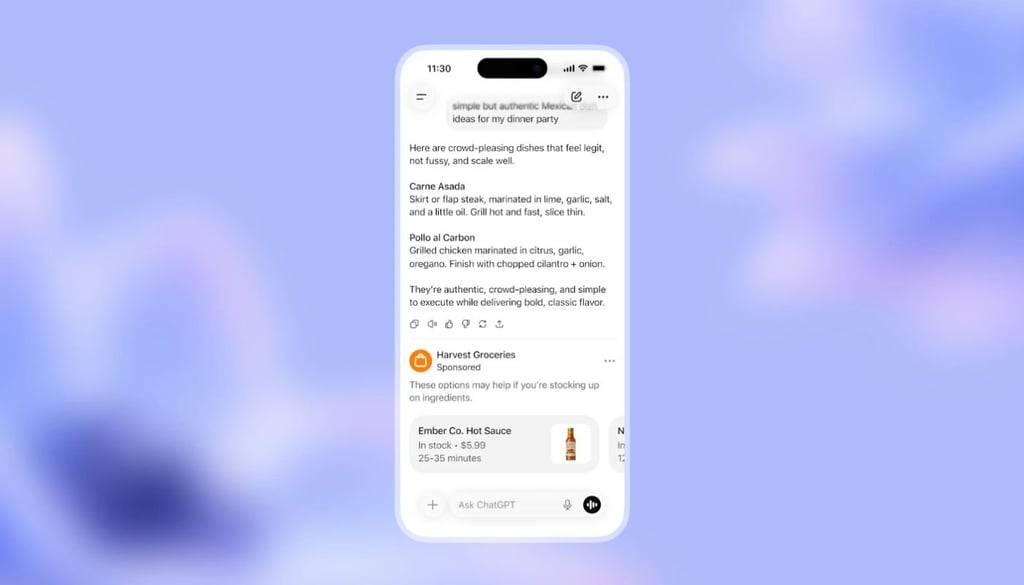
Someone needs more money as ads are coming to ChatGPT.
OpenAI will begin testing advertising in ChatGPT’s Free and Go tiers in the US, opening the door to a new revenue model inside its most widely used product.
In its announcement, OpenAI said the tests will roll out within weeks, with ads clearly labeled and displayed separately from responses as the company experiments with bringing advertising into ChatGPT.
What ‘separate and labeled’ looks like in practice
OpenAI said ads in ChatGPT will be clearly separated from the AI tool’s answers, both visually and structurally. Sponsored content will not appear inside the text of a response or alter how ChatGPT replies to a question. Instead, ads are designed to sit apart from the core answer and be explicitly labeled as sponsored, avoiding any confusion about what is generated by the model versus what is paid placement.
In initial tests, OpenAI plans to place ads at the bottom of responses only when a relevant product or service is connected to the conversation. Each ad will include labeling, an explanation of why it appeared, and options to dismiss it or provide feedback.
The AI company noted that this structure is meant to preserve trust in ChatGPT’s answers while introducing advertising in a way that is visible, optional to engage with, and clearly distinct from the AI’s output.
Guardrails before scale
OpenAI is setting strict rules before expanding ads more widely inside ChatGPT. According to the announcement, ads will not influence responses, and conversations will not be shared or sold to advertisers, as ad testing begins on a limited basis.
Users will also have control over ad personalization, including the option to turn it off, and ads will be excluded from sensitive or regulated topics such as health, mental health, and politics. OpenAI said ads will not appear for users under 18 as testing rolls out.
Sam Altman reinforced those limits in a post on X, saying OpenAI “will not accept money to influence the answer ChatGPT gives you,” and that conversations remain private from advertisers.
Subscriptions alone aren’t enough
OpenAI said subscriptions alone are not enough to support the scale of demand ChatGPT is seeing, especially from users who rely heavily on the free version. The company cited the growing use of ChatGPT’s most advanced features and the cost of running those systems as it looks for ways to keep access open without tightening limits or pushing everyone into paid plans.
Altman addressed that reality more directly, writing that many people “want to use a lot of AI and don’t want to pay,” and that ads may offer a way to support that usage at scale. He also said paid tiers will remain ad-free.
OpenAI has also launched ChatGPT Translate, a standalone alternative to Google Translate.