







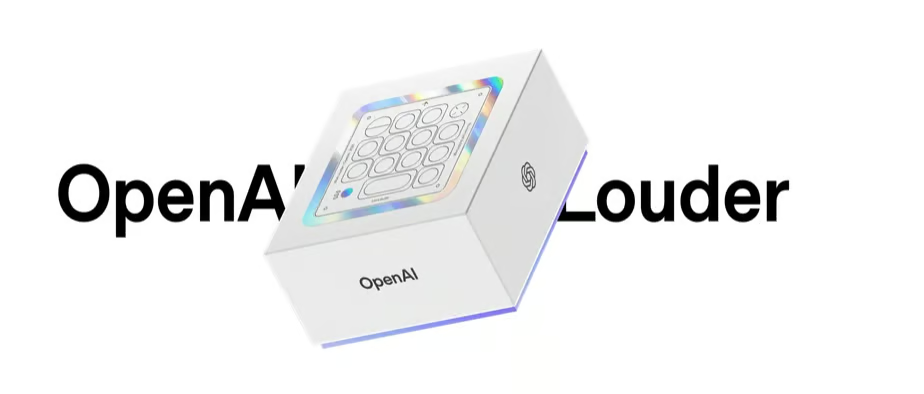
OpenAI's first hardware product isn't the AI companion device everyone has been anticipating.
Instead, it's the Codex Micro, a $230 desktop keypad developed with mechanical keyboard maker Work Louder for developers using OpenAI's AI coding assistant, Codex. Less than 24 hours after orders opened, the limited-run accessory was already sold out.
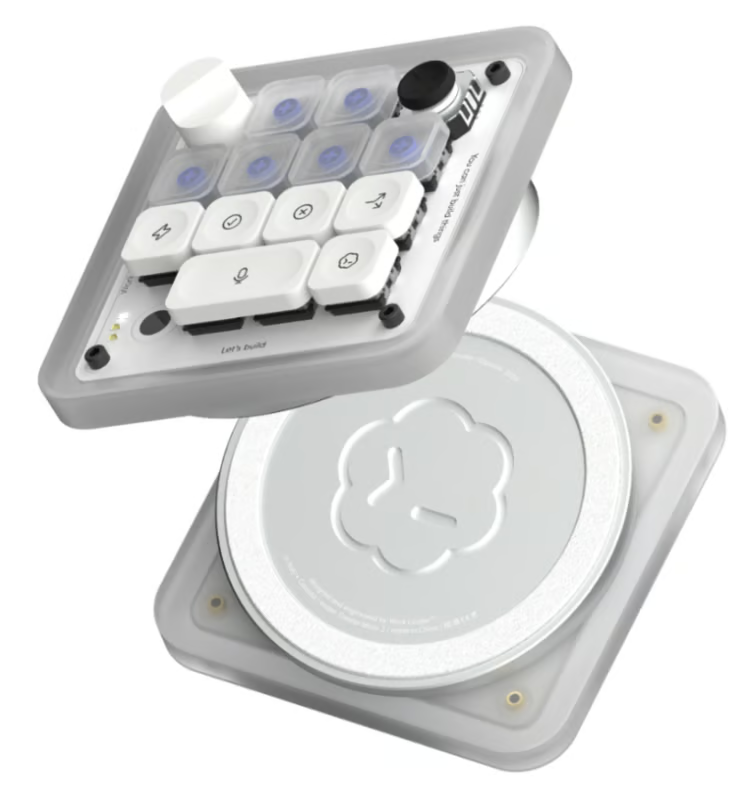
The compact controller is designed to serve as a command center for Codex users managing multiple AI coding agents. It features 13 mechanical keys, a joystick, a rotary dial, a touch sensor, and customizable keycaps tailored for Codex workflows.
According to OpenAI, six RGB-lit Agent Keys display the live status of AI agents, allowing users to see whether an agent is thinking, waiting for feedback, running, has finished a task, or has encountered an error without switching windows.
Built for developers using AI agents
The Codex Micro integrates with the ChatGPT desktop app and lets users trigger common actions through dedicated controls.
Developers can use command keys to accept or reject changes, start a new chat, activate push-to-talk, and more. The joystick launches common Codex workflows, such as debugging or reviewing pull requests, while the rotary dial adjusts an agent's reasoning level based on task complexity.
OpenAI describes the device as a "command center for agentic work." The hardware closely resembles Work Louder's existing Creator Micro lineup, though the Codex edition adds Codex-specific software integration, branded keycaps, and live agent monitoring.
Separate from OpenAI's larger hardware plans
The Codex Micro is not the long-rumored consumer device OpenAI is developing with former Apple design chief Jony Ive.
Several reports, including Bloomberg, have suggested that the project is a screenless AI companion or smart speaker powered by ChatGPT. That product remains under development and has recently drawn attention after Apple filed a lawsuit alleging trade secret theft involving former Apple employees now working on OpenAI's hardware efforts. OpenAI has denied the allegations.
Unlike that broader initiative, OpenAI says the Codex Micro is a limited-run collaboration with Work Louder rather than a mass-market product.
A sign of where AI tools are heading
The launch shows that AI companies are beginning to experiment with dedicated hardware to manage autonomous software agents, rather than relying solely on desktop and mobile interfaces.
Rather than introducing another chatbot, the Codex Micro targets developers who routinely run multiple coding agents simultaneously. Physical controls and visual status indicators could make it easier to monitor long-running tasks without constantly checking a screen.
That also limits its audience. At $230, the keypad is aimed squarely at Codex power users rather than casual ChatGPT users, and many of its functions remain available through software alone. For most people, the accessory is a convenience rather than a necessity.
Still, the rapid sellout suggests there is early interest in hardware built specifically for AI workflows, offering OpenAI a small but notable first step beyond software as it prepares for more ambitious consumer devices.
Also Read: ChatGPT for families could become OpenAI’s next consumer push, with privacy, safety, and shared access becoming central design challenges.