







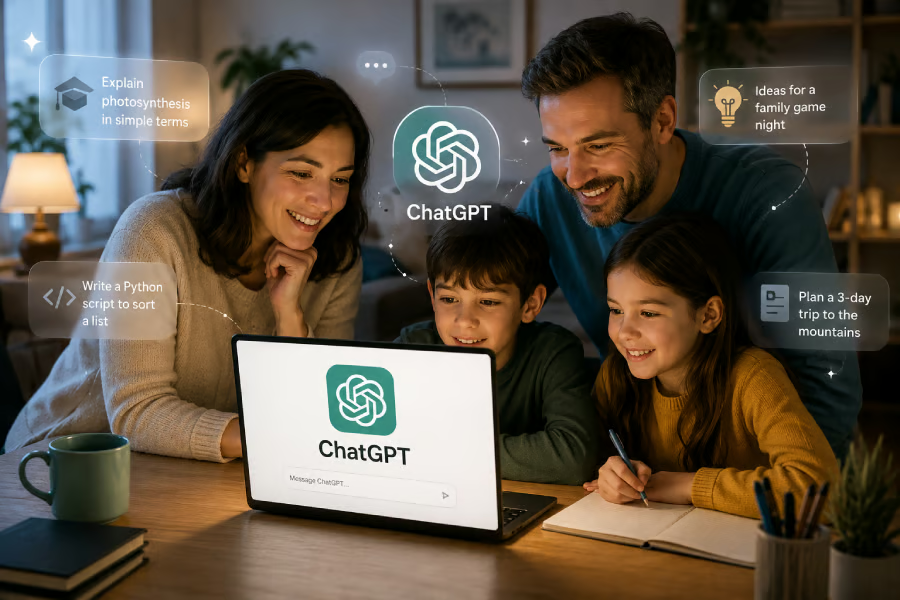
ChatGPT may soon become less of a personal assistant and more of a family one.
OpenAI is hiring a product manager to build ChatGPT experiences for families, parents, caregivers, and older adults, signaling a push beyond workplaces and individual users. The role focuses on trust-sensitive experiences where privacy, safety, and shared access become central design challenges.
The move suggests OpenAI sees the next stage of AI adoption happening inside homes, where a single service could help multiple family members with everyday tasks. While the company has not announced any family-specific products, the hiring effort offers one of its clearest signals yet about where ChatGPT’s product roadmap is heading next.
Preparing ChatGPT for family life
TechCrunch first reported the job posting, noting that the ChatGPT maker is seeking a “dedicated Product Manager” in San Francisco who has experience building products used by parents and families. According to the report, the Product Manager will bring that expertise to OpenAI, helping the company build a kind of ChatGPT for families, caregivers, and older adults.
While many of the hiring details remain unknown, the effort suggests that OpenAI sees households as its next consumer opportunity after gaining broad adoption among individual users and enterprises. According to TechCrunch, rather than encouraging new behavior, the company appears to be building on existing ones as families increasingly use AI for tasks such as tax preparation, household planning, and even shopping.
Sensor Tower data, cited by TechCrunch, points to a shift in who uses ChatGPT. Users aged 35 and older made up 31% of the platform's audience in the second quarter of 2026, compared with 26% last year, while the 18-to-25 age group dropped from 34% to 29%. That changing audience may help explain why OpenAI is now targeting families.
Why households require a different kind of ChatGPT
TechCrunch's report highlighted trust-sensitive consumer experiences. That hints at a broader challenge than simply updating ChatGPT for more user demographics. Unlike an AI assistant used by a single person, a household chatbot would account for multiple age groups with different needs, expectations, and levels of access.
That raises product design questions around privacy, parental controls, permissions, and accessibility, particularly when children, caregivers, and older adults may all interact with the same AI service. Solving those issues could prove just as important as improving the underlying AI models if OpenAI wants ChatGPT to become a trusted household tool.
A new battleground for consumer AI
OpenAI's hiring plans also reflect a broader change in how AI companies compete. Early competition centered on building the most capable models, followed by a race to attract enterprise customers. Increasingly, however, companies are looking beyond offices and into everyday life — a destination that the robotics sector is now targeting as well.
That shift could make homes the next major battleground for consumer AI. A service used by multiple family members creates more frequent engagement than one used only for work, while also increasing user retention across households to ChatGPT as rivals intensify competition.
Related News: AI can boost productivity, but it also raises privacy risks. Learn the biggest concerns—and the best practices for protecting sensitive data when using AI tools.