








AI can already find more bugs than many open source teams can handle.
OpenAI is trying to turn that flood of findings into fixes.
The company introduced Patch the Planet, a Daybreak initiative built with Trail of Bits to help open source projects handle security flaws. The program uses OpenAI’s security models and Codex Security, but its main pitch is human review: security engineers validate findings, develop patches, and build workflows before maintainers are asked to act.
According to TechCrunch, OpenAI is working with Trail of Bits on the initiative, with HackerOne and Calif also involved. The goal is to help maintainers deal with security findings without adding another pile of AI-generated reports to already crowded queues.
Patch the Planet adds human review
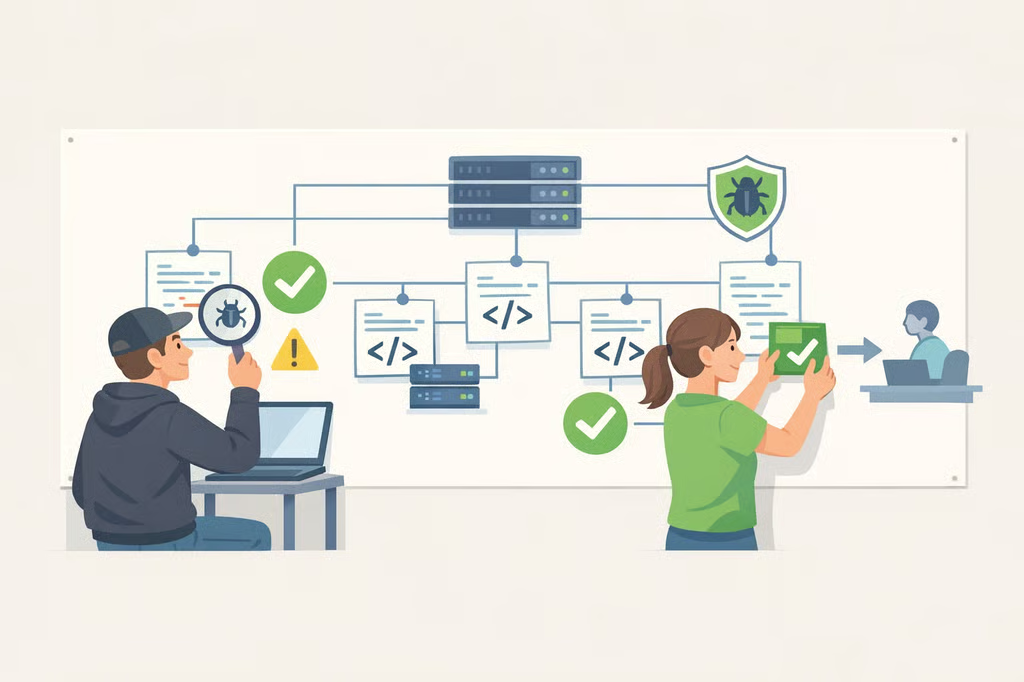
OpenAI said Patch the Planet starts with maintainer consultation. Security engineers work with each project to decide what help is most useful, whether that means validating vulnerabilities, writing patches, improving CI/CD pipelines, or building long-term security workflows.
The review layer does work the model alone cannot. AI can quickly identify potential bugs, but maintainers still need to know whether a finding is real, whether the severity is correct, and whether a proposed fix fits the project.
OpenAI said Trail of Bits researchers reproduce evidence, check findings against project documentation and threat models, remove duplicates, and prioritize confirmed issues before submission.
The program builds on OpenAI’s broader Daybreak cyber defense work, which uses Codex Security to help teams find, validate, and fix software flaws. Patch the Planet narrows that idea to open source software, where many projects are widely used but lightly staffed.
Cloud services, developer tools, cryptography libraries, package repositories, and web servers often depend on projects maintained by small teams. Improved patch support for those projects can reduce software supply chain exposure for companies that rely on them.
Early results are useful but limited
The first sprint covered 19 active projects, including cURL, NATS Server, pyca/cryptography, Sigstore, aiohttp, Go, freenginx, Python, and python.org, according to OpenAI. Trail of Bits said the first week produced hundreds of discovered bugs, 64 pull requests, and 51 filed issues across 19 projects. The firm also said 37 patches had already been merged.
The first-week numbers show momentum, but not proof that the model scales. The next test is whether maintainers keep accepting the patches, whether the fixes hold up in production, and whether the program can support smaller projects that do not have the same visibility as Python or cURL.
Patch the Planet is also arriving after Anthropic’s Claude Mythos flagged thousands of potential open-source security flaws, adding pressure to a patching system that already depends heavily on volunteer and small-team labor. More discovery is useful only if someone has time to triage, test, and merge the fixes.
Reusable infrastructure may outlast the first batch of pull requests. OpenAI said the sprint produced fuzzing harnesses, historical CVE analysis workflows, differential testing systems, threat models, and expanded test suites that projects can keep using after the first round of outside help.
Scale remains unresolved. AI tools can expose buried software flaws faster than organizations can patch them, but Patch the Planet still depends on expert review, maintainer trust, and enough funding to keep the work going.
The first sprint shows that AI-assisted security can produce fixes, not just findings. The next phase will show whether that model can reach open source projects that need help but receive little public attention.
Also read: Cognition’s $26 billion valuation puts fresh attention on Devin and the market for AI coding agents.