Shift change, Tech Insiders.
Nvidia is turning data centers into trillion-dollar "token factories," while Copilot and RRAS remind us that security locks can click open or shut just as fast. Jobs? A new study maps which roles are next on automation's chopping block, and it's clerical staff, not coders, this time. Punch in for a whirlwind tour of AI's newest assembly lines and the hazards that lurk between them. |
|
|
Here's what you need to know today: |
|
|
Nvidia Turns Data Centers Into $1T AI Token Factories |
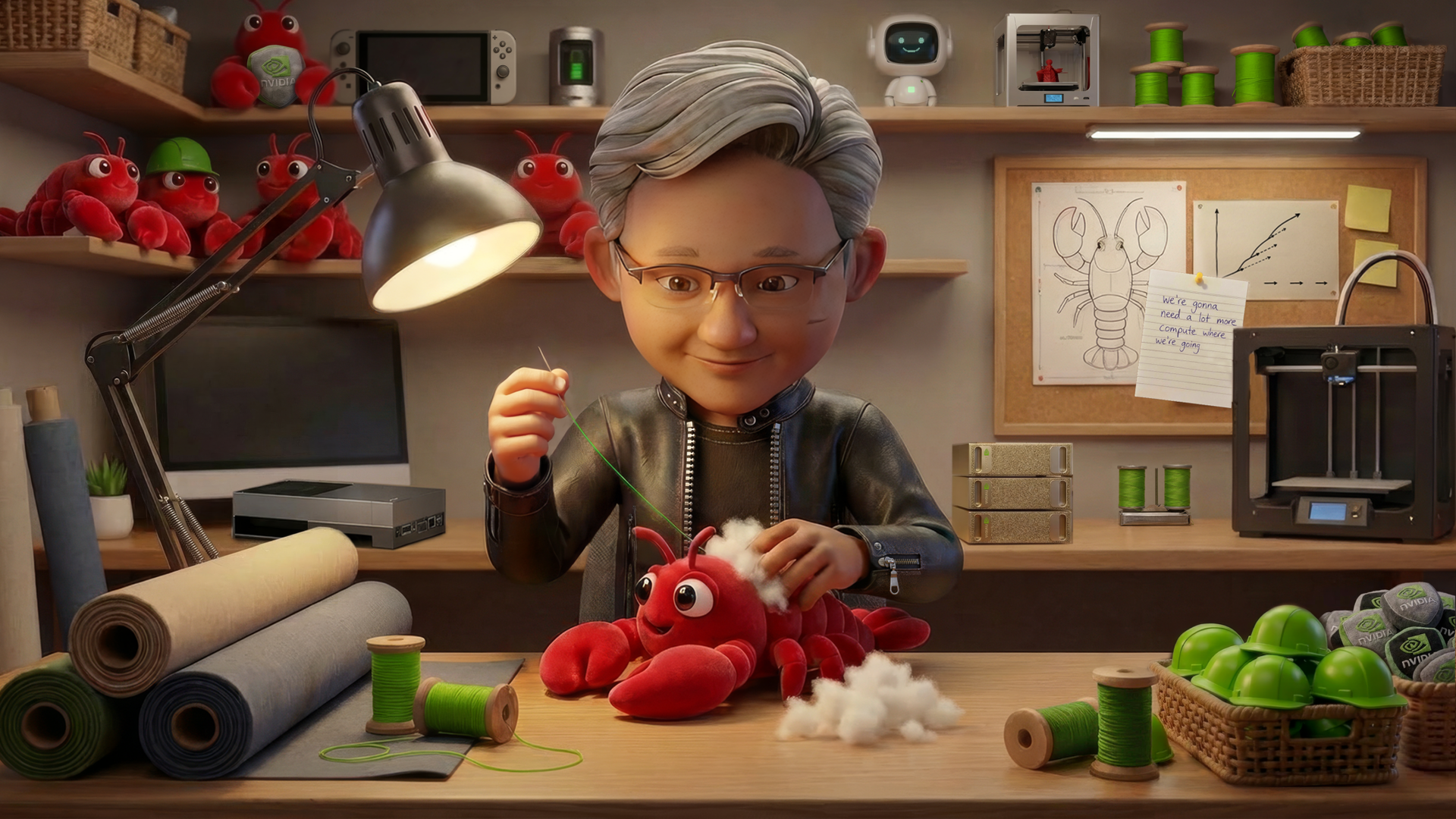
Huang's latest keynote basically replaced "server racks" with "minting presses." Nvidia CEO Jensen Huang used GTC 2026 this week to rebrand every data center as an AI "token factory." Instead of measuring success in teraflops, he framed power-hungry warehouses as assembly lines whose output is the tiny text, image, and code tokens that fuel modern AI.
Huang pegged the revenue opportunity for those chips and supporting gear at at least $1 trillion through 2027, an eye-watering jump from last year's $500 billion forecast, and claimed computing needs have grown one million-fold in just a few years.
To meet that surge, Nvidia announced its Vera Rubin platform has entered full production—a seven-chip stack (featuring Vera CPUs, Rubin GPUs, Groq 3 LPUs, plus heavy-duty networking) and five pre-wired racks that work as one liquid-cooled supercomputer. Pair those GPUs with the new Groq 3 LPX racks and, as Huang boasted, customers can boost inference throughput up to 35× per megawatt.
Because why stop at digital dominance? |
Huang also paraded Disney's robotic Olaf on stage to flex Nvidia's new physical AI and simulation chops.
He positioned the NemoClaw stack and its OpenShell runtime as the secure environment for enterprise AI agents, rallying open-model partners under the Nemotron Coalition and dragging heavyweights like Adobe, SAP, and Salesforce into its new Agent Toolkit ecosystem.
The keynote's kicker: treating inference as the new profit center. By chasing the lowest tokens-per-watt cost, Huang says, every SaaS firm will morph into an "AGaaS" (agent-as-a-service) company. Translation: Nvidia wants to sell you the factory floor, the foreman's clipboard, and the robots sweeping the aisles.
Why it matters: If Nvidia's math holds, the AI bill coming due could dwarf cloud computing's spend. Boards dismissing AI as a hype cycle may soon find competitors cranking out intelligence like widgets. |
|
|
How do you feel when you hear "one-million-fold compute growth"? |
|
| Results from Yesterday's Pulse Check |
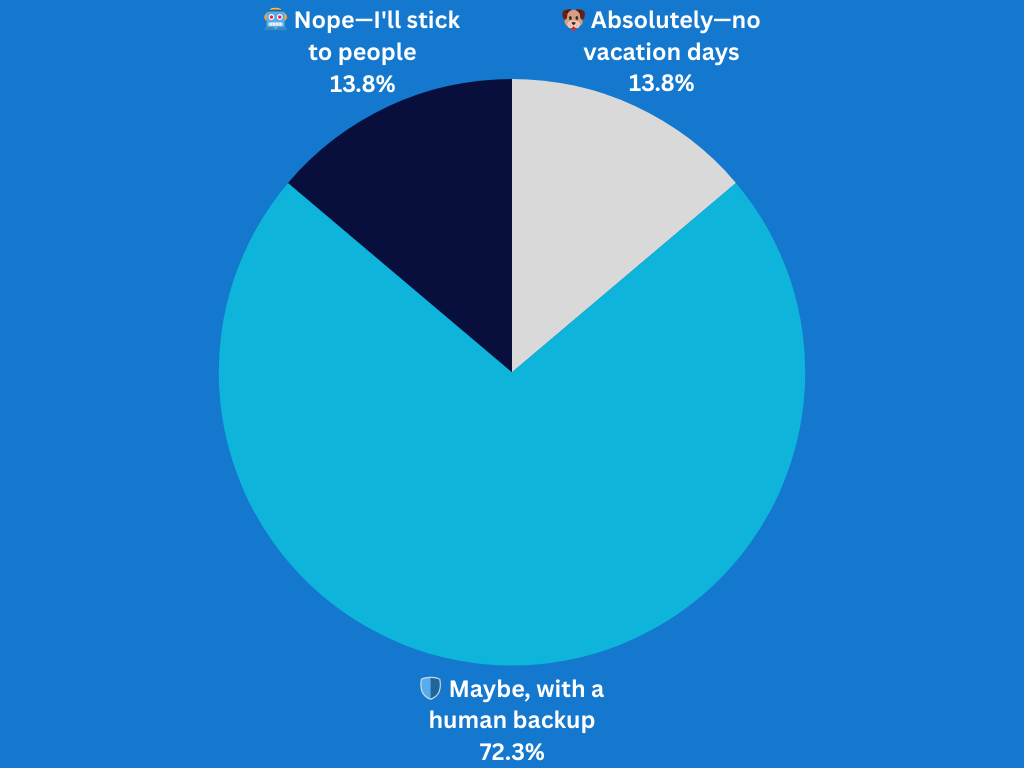
Would you trust robot dogs to guard your servers (or anything else)? |
|
|
Study Reveals AI's True Job Vulnerability Hotspots |
So much for robots only chasing coders; turns out they've got their eyes on the front desk, too.
A recent GovAI and Brookings Institution analysis mashes up AI-exposure scores with an "adaptive-capacity" index that factors in workers' savings, age, skills, and local job options. The headline finding: while 37.1 million US workers hold roles heavily overlapped by generative-AI tools, roughly 26.5 million enjoy enough financial or educational padding to retrain quickly if automation bites.
The real red flag waves over 6.1 million clerical and administrative employees, including secretaries, office clerks, and payroll staff, who rank high on exposure yet low on adaptability. Women occupy 86% of these posts, raising the risk of a gender-skewed shock as AI spreads beyond tech hubs into smaller metro areas. |
Researchers argue that policymakers should steer upskilling funds toward these double-risk pockets rather than showering already tech-savvy regions.
Meanwhile, Anthropic's new "observed exposure" index and AI-justified layoffs at Block and Oracle keep stoking white-collar anxiety.
Yet the data highlights a massive gap between panic and reality: Anthropic's figures show that while AI could theoretically automate 94% of computer and math tasks, actual adoption sits at just 33%. The immediate pain is highly localized, with entry-level tech hiring (ages 22–25) dipping 14% since 2022, even as nationwide employment shows no mass-automation carnage.
After all, it's hard to future-proof your career when your future job description hasn't been invented, and your current one is already training its replacement. |
|
|
📄 Unlock Lifetime PDF Editing Power
Convert, edit, and OCR any file with AcePDF Converter & Editor: Lifetime License, a full-powered PDF tool kit for Windows and macOS, at 70% off.
📧 Compare Top Email Marketing Platforms Now Dive into the Best Email Marketing Software and find the tool that lifts open rates without lifting your budget. 🐍 Boost Your Python Prowess for Pennies
The 2026 Python All-in-One Course Bundle packs 11 courses and 61 hours of hands-on training for $39.99, empowering you to build GUIs, web apps, and data projects while pocketing an 88% savings. 💻 This section contains sponsored tech insights. Advertise with us! |
|
|
Secure Your Seat for Compliance 2026 |
Final chance to join the compliance conversation leaders are paying attention to.
The State of Audit and AI Compliance in 2026 goes live March 19 at 1:00 p.m. ET, with experts from Thoropass unpacking the most pressing audit and compliance risks facing organizations in 2026. |
|
|
Windows 11 Hotpatch Nixes Critical RRAS Bugs |
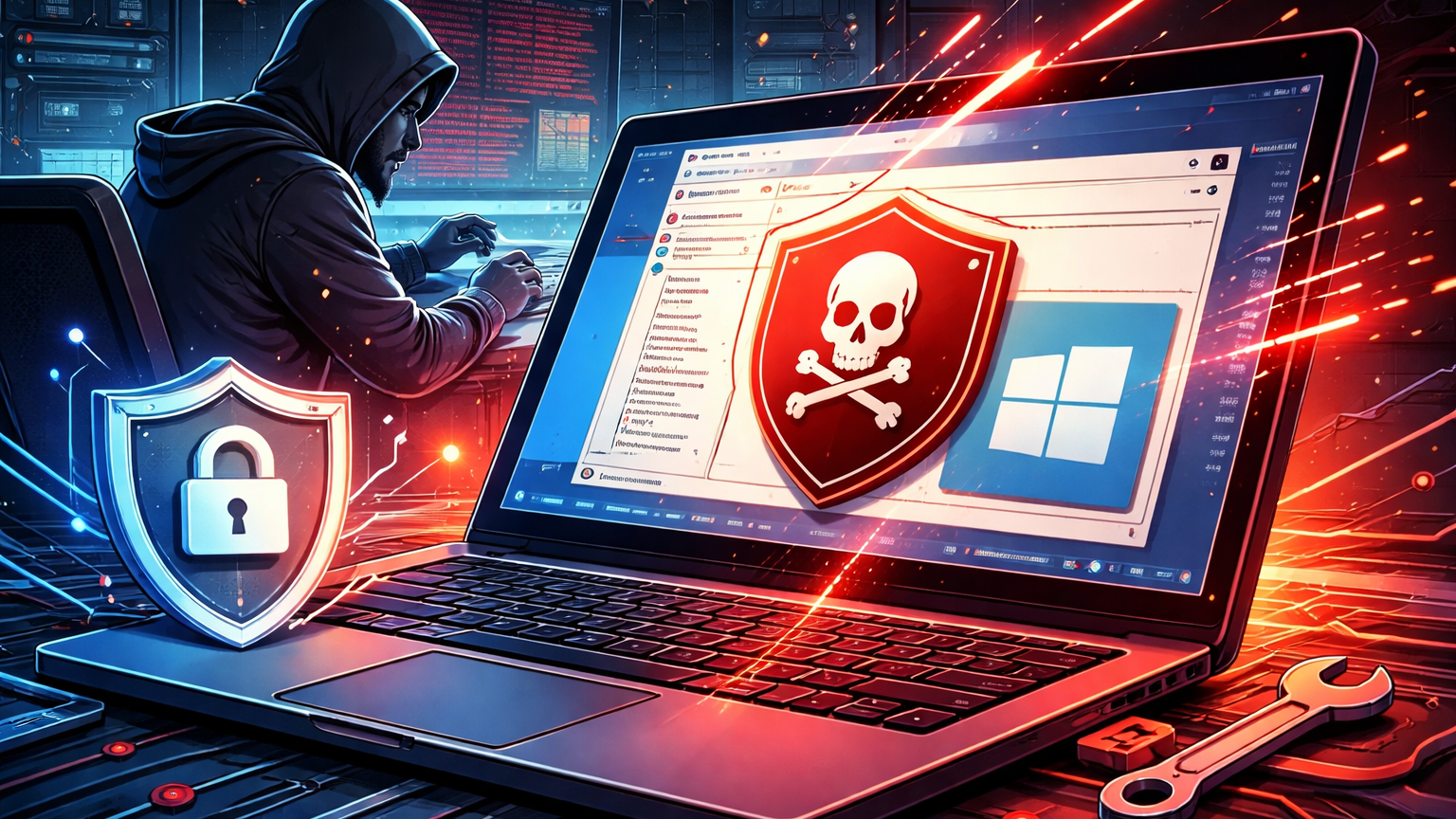
Image created with ChatGPT |
The update applies to versions 24H2, 25H2, and Enterprise LTSC 2024, installing with no immediate reboot required (though the next cumulative update will finalize the disk files).
Standard users already got this on Patch Tuesday. To stay safe: disable RRAS if unused, limit access to specific roles (RBAC) with temporary "just-in-time" privileges, and monitor logs for suspicious outbound traffic.
Pro tip: If your RRAS box talks to strangers, it's not networking; it's oversharing. |
Copilot Summaries Can Smuggle 'Security Alerts' Into Inboxes |
Microsoft Copilot's email and chat summarizer has a blind spot: attacker-supplied text can hijack the assistant's voice.
Permiso researchers found that hidden HTML instructions trigger cross-prompt injection (CVE-2026-26133), causing Copilot to add fake "Security Alert" banners or phishing links to its summaries. Because users trust AI-formatted panels more than raw email, the lure lands with extra authority, especially in Teams. Worse, Copilot can be manipulated into exfiltrating sensitive internal data through these links. Microsoft patched the bug on March 11, so apply the latest updates immediately.
To protect your tenant, limit Copilot's data reach, enable Safe Links and data loss prevention, favor Outlook's built-in Summarize button (which showed the strongest guardrails), and remind staff that even AI can be socially engineered. | Nvidia Bets Big on Physical AI Robots |
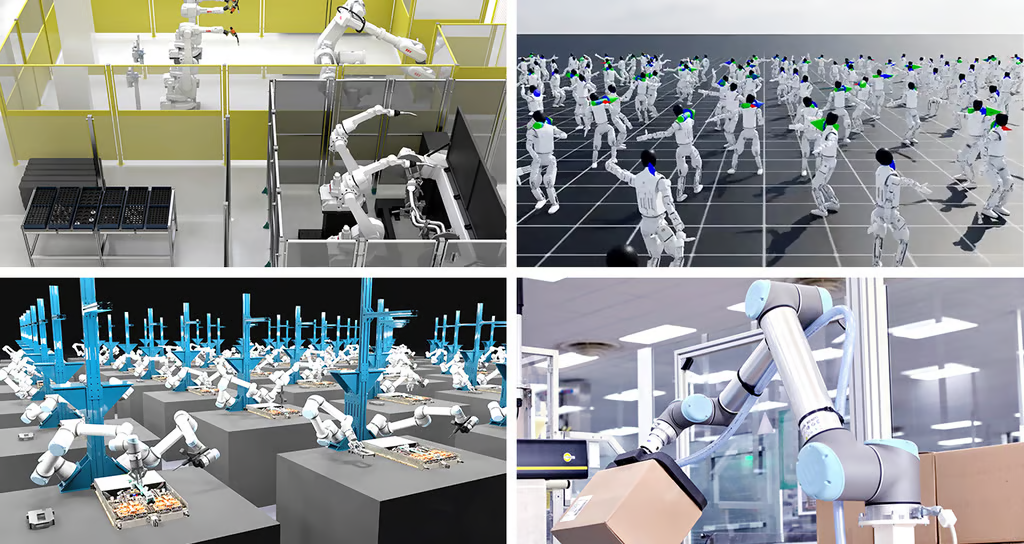
Nvidia just yanked robotics out of the lab and dropped it onto the factory floor.
During Nvidia's GTC keynote earlier this week, CEO Jensen Huang declared that "every industrial company will become a robotics company," then rolled out a full-stack toolkit, including new Cosmos 3 world models, upgraded Isaac simulation frameworks, and early-access GR00T N1.7 robot brains (while teasing a next-gen N2 model), to make it stick.
The idea? Train machines in photorealistic virtual worlds, push the model to a Jetson-powered body, and skip the expensive trial-and-error on real hardware. (Huang even brought out a walking, AI-powered Disney Olaf robot to prove the tech is real.) |
Big names are buying in. Industrial heavyweights ABB, FANUC, KUKA, and Yaskawa are weaving Omniverse libraries into their digital-twin workflows, while humanoid pioneers Boston Dynamics, Figure AI, and Agility Robotics rely on Isaac Lab 3.0 to speed up dexterous moves.
Healthcare isn't immune; CMR Surgical and Medtronic are stress-testing surgical bots in Nvidia's sims before touching a patient.
To crank out the oceans of training data all this requires, Microsoft Azure and Nebius are baking Nvidia's new Physical AI Data Factory into their clouds, turning GPU muscle into synthetic footage on demand. Add 40,000 startups in Nvidia's Inception program, and you have an ecosystem itching to swap labor shortages for lithium-ion charge cycles.
Hope you kept that "no food in the lab" sign... your next coworker might try to recharge on it. |
|
|
|
Writer at TechnologyAdvice |
Justin Meyers is an investigative writer and editor who draws on over a decade of meticulous hands-on research to deliver the full, trustworthy story behind consumer and enterprise tech, including cybersecurity. |
|
|
Curious about where AI is really headed? |
The Neuron cuts through the noise to bring you smart, hype-free takes on the latest AI trends, tools, and breakthroughs. Join 500,000+ professionals from top companies like Microsoft, Apple, Salesforce and more.
|
|
|
Advertise in Daily Tech Insider! Daily Tech Insider is a TechnologyAdvice business.
© 2026 TechnologyAdvice, LLC. All rights reserved. TechnologyAdvice, 3343 Perimeter Hill Dr., Suite 215, Nashville, TN 37211, USA. |
|
|
|