Caffeine meets code, Tech Insiders. Leaderboard-climbing image models, mailbox impostors, and an AI butler that never clocks out; today's brew is extra jittery.
Sip carefully... these headlines are hot. |
|
|
Here's what you need to know today: |
|
|
Microsoft's MAI-Image-2 Cracks the Top 3 |
A fresh coat of Azure blue, with a few warning labels still stuck on.
Last Thursday, Microsoft quietly rolled out MAI-Image-2, its second-generation, fully in-house text-to-image model, and it immediately landed at #3 on Arena.ai's leaderboard, right behind Google and OpenAI. That's a big statement from a company that has so far leaned on partners like OpenAI to power Bing Image Creator and Copilot.
Built with input from photographers, designers, and visual storytellers, MAI-Image-2 boasts sharper photorealism and claims far better in-image typography. However, while early testers say it can handle some multilingual text, others report its infographic generation still melts characters into pure gibberish. |
But there's a catch. Several, actually. Each generation triggers a 30-second cooldown, 15 images lock you out for a day, and every output is stuck at a square 1:1 ratio. The content filter refuses even cartoon spiders chasing women, and there's no image-to-image editing or inpainting yet.
While Copilot and Bing integration is already rolling out, testers note the model's hyperconservative guardrails severely limit creative risk-taking.
Strategically, the move trims Microsoft's dependence on OpenAI and positions its Superintelligence team, freshly led by Mustafa Suleyman, to iterate at its own pace. With API access already live for select enterprise clients, MAI-Image-2 doesn't have to topple Google's Nano Banana 2; it just has to be good enough for Microsoft to stop paying rent on someone else's canvas.
Why it matters: If Microsoft dials back the handcuffs, MAI-Image-2 could give creative pros a viable new palette and slash Azure's OpenAI bill. Until then, it's a tantalizing preview, like a museum letting you peek through the gift-shop window but not buy the print. |
|
|
Would MAI-Image-2's strict limits stop you from using it? |
|
|
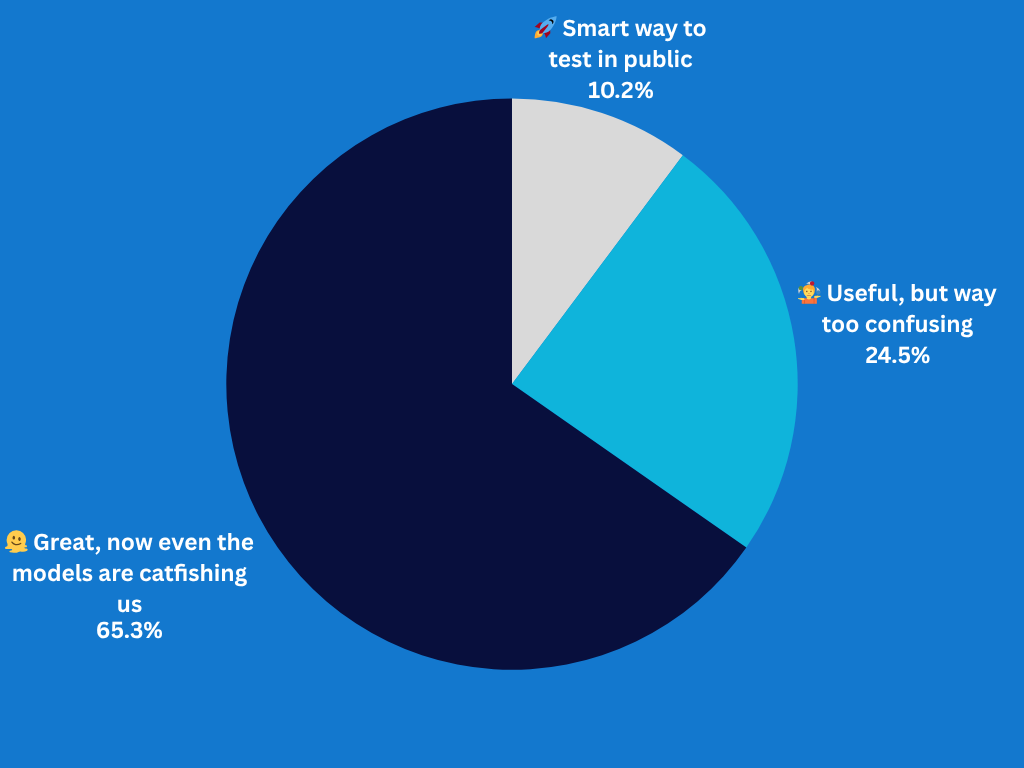
Results from Friday's Pulse Check |
Does stealth-testing frontier AI models help innovation or just add chaos? |
|
|
Jeff Hollan's Playbook for Enterprise AI Agents |
Turns out your "agent" is just a fancy chatbot until it earns KPIs.
In a recent TechRepublic Q&A, Microsoft Foundry's Jeff Hollan draws a bright line between chatbots and true AI agents. Chatbots answer; agents reason toward a goal, break work into steps, and know when to call for human backup. Enterprises seeing traction use agents for repeatable grinds—support-ticket triage, research briefs, sales prep—where scope is tight and data sources are trusted.
The biggest blocker? Context. Corporate knowledge lives in scattered docs and data lakes, and stitching that together with ironclad security is painful. Hollan says winners lean on platforms, such as Microsoft's Foundry Agent Service, that bundle data plumbing, compliance, and monitoring out of the box, then start with "recommend and draft" before letting agents take real action. |
Image courtesy of Jeff Hollan |
Single generalist agents shine when humans stay in the loop; high-stakes tasks demand purpose-built mini-agents or deterministic workflows. Whatever the structure, success hinges on clear objectives, baked-in evaluation metrics, and guardrails that log every move without smothering flexibility.
Looking ahead, Hollan predicts agents will become so deeply goal-oriented that your competitive edge will just boil down to ruthless engineering discipline. When your bot has homework, it's an agent; otherwise, it's just small talk with extra latency. |
|
|
See How Any Brand Shows Up in AI Search |
Ahrefs Brand Radar shows where your brand appears across modern search and discovery. Track mentions in Google results, YouTube videos (titles, descriptions, transcripts), TikTok content, and Reddit discussions. Measure share of voice, monitor brand demand, and compare your visibility against competitors—all in one tool. Go beyond rankings and traffic to understand where real brand discovery happens and where you're missing attention.
|
|
|
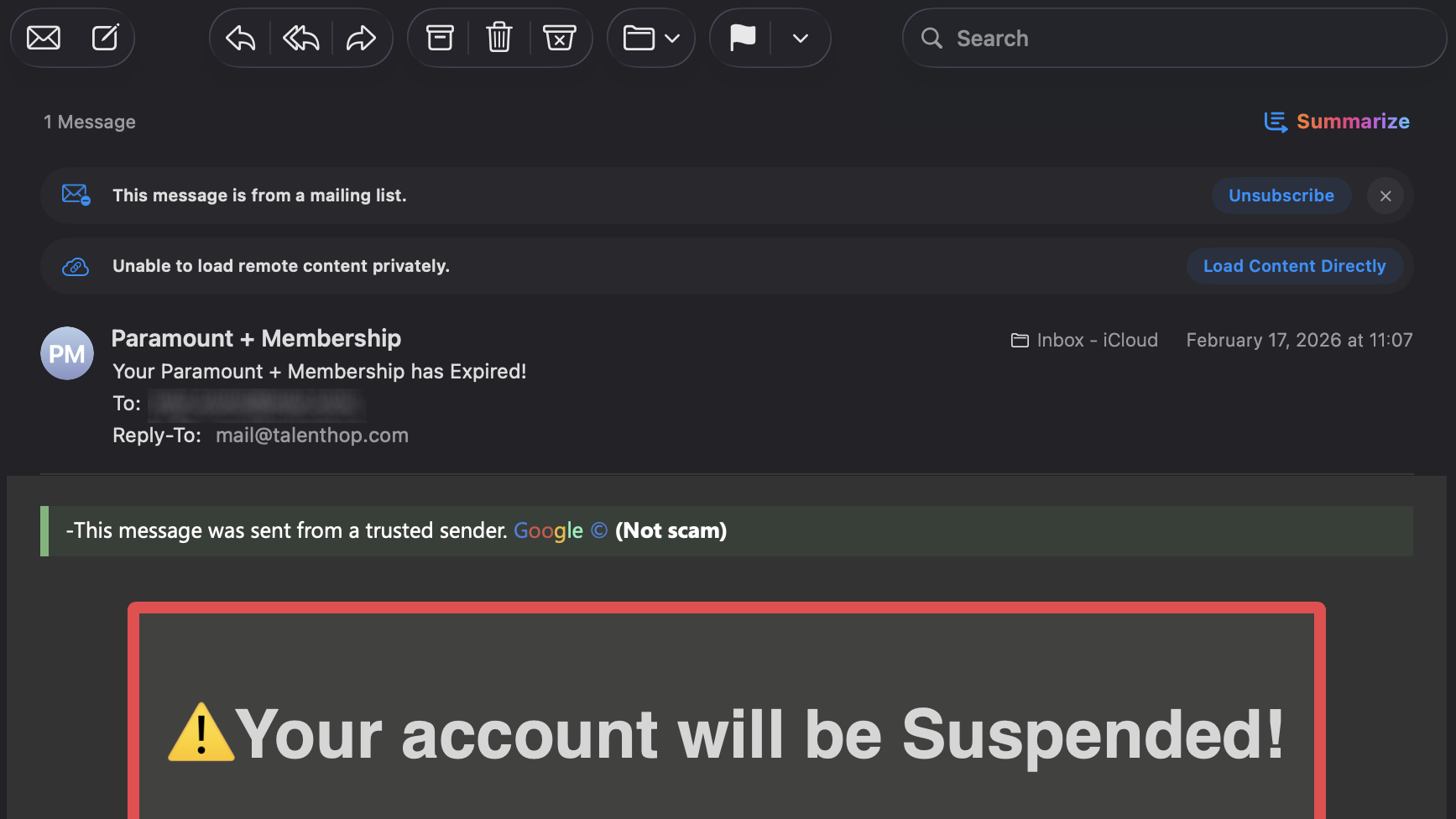
Fake 'Trusted Sender' Badges Target Email Users |
But the phishing emails still flaunt red flags like generic greetings, spoofed brands like Paramount+ or Apple, and urgent threats to suspend your account unless you click a sketchy link.
To stay safe, verify account notices by visiting the site directly, scrutinize sender domains, and enable two-factor authentication. Real Mail banners only warn about spam; never about trust. Pro tip: If an email declares it's "(Not scam)" like the image above, assume it absolutely is. |
OpenClaw Agents Quietly Drain Corporate Data Lakes |
OpenClaw, the viral open-source AI agent, can install without admin rights and wire itself to email, Slack, calendars, and git, silently harvesting whatever its host user can reach. Running locally without phoning home, it evades most security tools.
Researchers found 30,000 instances exposed online; 12% of marketplace "skills" are outright malware, and fresh CVEs allow one-click remote code execution and credential theft. Cisco calls it an "absolute nightmare," prompting widespread vendor alarms.
Action items: Patch to version 2026.2.25 or later (for the RCE), sandbox or VM-isolate deployments, trim OAuth scopes, log actions, and scan port 18789.
|
Amazon Eyes Smartphone Revival With AI-Powered 'Transformer' |
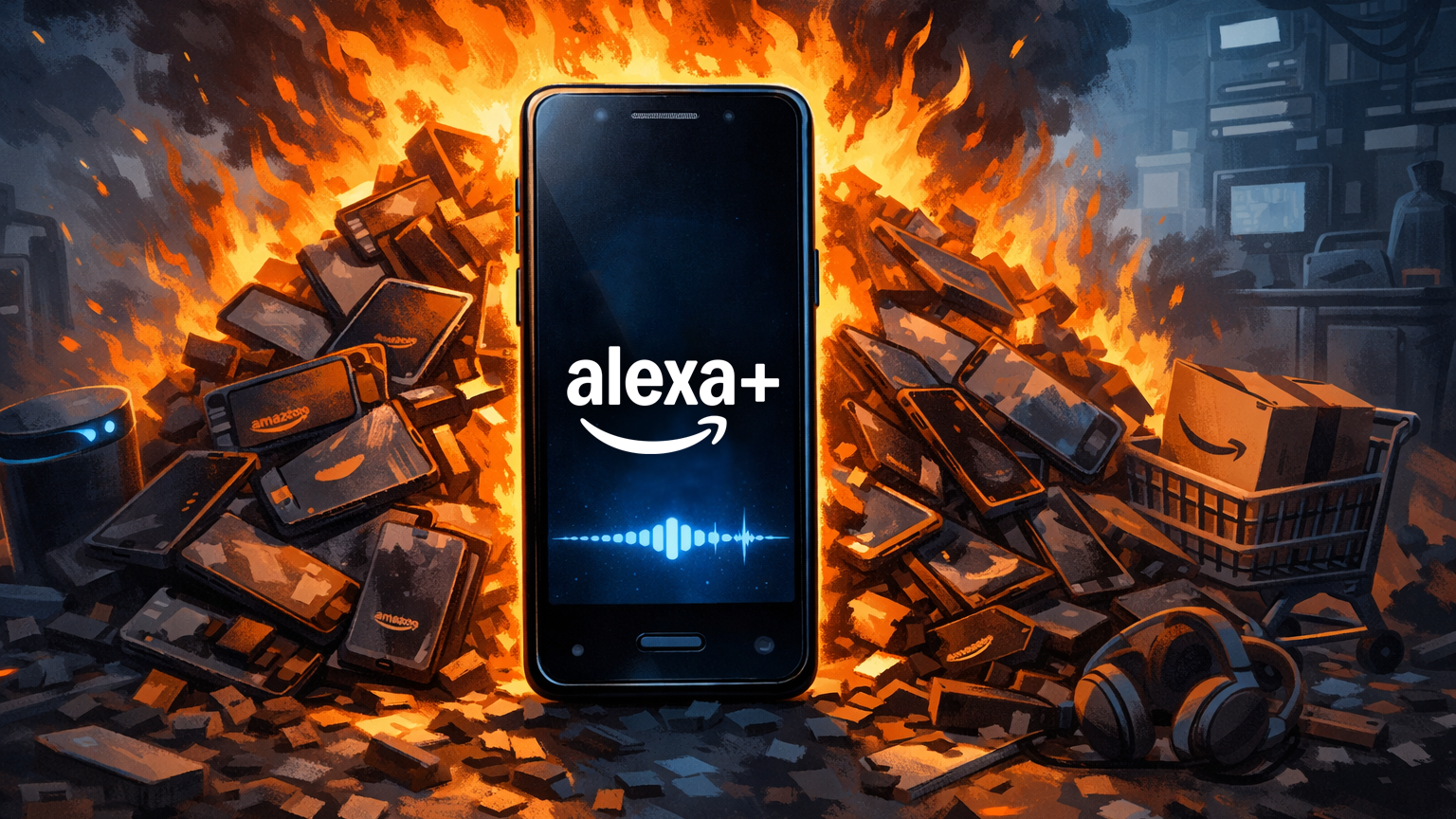
Late last week, news leaked that Amazon is reportedly crafting a handset codenamed "Transformer," a second swing at phones 12 years after the Fire Phone fizzled and was yanked after just 14 months, leaving behind a $170 million graveyard of unsold inventory.
Built inside the secretive ZeroOne group under ex-Xbox guru J Allard and devices chief Panos Panay, the device would weave Alexa+ voice smarts, one-tap Prime shopping, and Amazon media into a single, AI-first experience, potentially replacing traditional app stores with agent-driven actions.
Early prototypes range from a full-fledged Android slab to a minimalist "dumbphone" inspired by the Light Phone, aiming either to be a daily driver or a distraction-free companion for your current iPhone or Galaxy. | Image created with ChatGPT |
Insiders say the project's future isn't guaranteed: soaring memory costs and a smartphone market industry tracker IDC predicts will shrink 13% this year could still kill it in committee.
Analysts warn Amazon must offer something Apple and Samsung, who already command 40% of the global market, don't—likely deep commerce perks and AI automation—while overcoming memories of the Fire Phone's pricey flop and app-gap woes. With rivals racing to bake generative AI into their own handsets, the window to stand out is closing fast. Alexa, schedule a reminder: "Don't name it Fire Phone 2." |
|
|
|
Writer at TechnologyAdvice |
Justin Meyers is an investigative writer and editor who draws on over a decade of meticulous hands-on research to deliver the full, trustworthy story behind consumer and enterprise tech, including cybersecurity. |
|
|
Curious about where AI is really headed? |
The Neuron cuts through the noise to bring you smart, hype-free takes on the latest AI trends, tools, and breakthroughs. Join 500,000+ professionals from top companies like Microsoft, Apple, Salesforce and more.
|
|
|
Advertise in Daily Tech Insider! Daily Tech Insider is a TechnologyAdvice business.
© 2026 TechnologyAdvice, LLC. All rights reserved. TechnologyAdvice, 3343 Perimeter Hill Dr., Suite 215, Nashville, TN 37211, USA. |
|
|
|