Papers ready, Tech Insiders.
OpenAI's passport-only cyber model, Snap's downsizing flight, and WhatsApp's secret-handle lounge mean every stop now requires fresh ID. Keep your boarding pass handy; we're taxiing to today's gates. |
|
|
Here's what you need to know today: |
|
|
OpenAI Locks GPT-5.4-Cyber Behind Verified Gates |
A new model so sharp OpenAI put childproof caps on it.
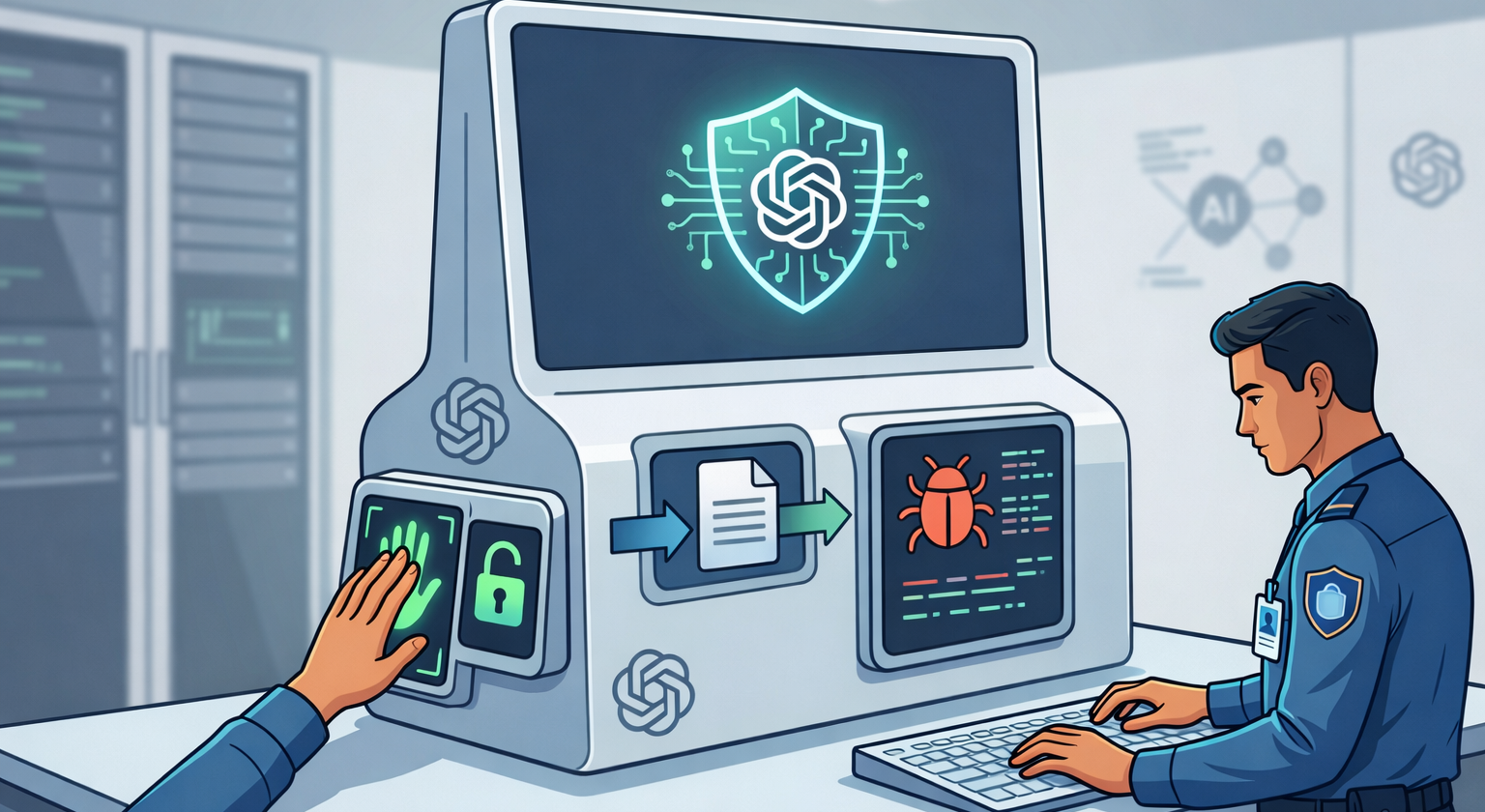
OpenAI has rolled out GPT-5.4-Cyber, a fine-tuned cousin of its GPT-5.4 flagship built to help security teams hunt bugs, reverse-engineer malware, and stress-test code—all with far fewer "Sorry, I can't help with that" refusals. Access, however, is anything but open.
The company is funneling would-be users through its Trusted Access for Cyber (TAC) program, which relies on automated KYC identity checks and tiered permission levels to unlock the model's most potent capabilities.
Initially, only hundreds of vetted vendors, researchers, and blue teamers get the keys, but OpenAI says thousands will follow in the coming weeks. GPT-5.4-Cyber's biggest party trick is binary reverse engineering. Simply feed it a compiled executable, and it spits back structured insights on potential malware hooks or exploitable flaws—no source code required. |
Image created with Google's Nano Banana |
The gated launch doubles as a rebuttal to Anthropic's Mythos preview, which landed last week with an even tighter ~40-organization VIP list. While Anthropic treats its AI like nuclear launch codes, OpenAI is betting that identity verification scales better than secrecy. (Though notably, OpenAI is currently withholding GPT-5.4-Cyber access from US government agencies).
Early numbers from its companion Codex Security agent, which has so far patched 3,000+ critical and high vulnerabilities, aim to prove the strategy works.
Why it matters: If GPT-5.4-Cyber delivers, defenders get an AI sidekick that crunches weeks of reverse engineering into minutes, just in time for the next ransomware blitz. But with great power comes great paperwork: the verification queue may be longer than the list of zero-days it finds. |
|
|
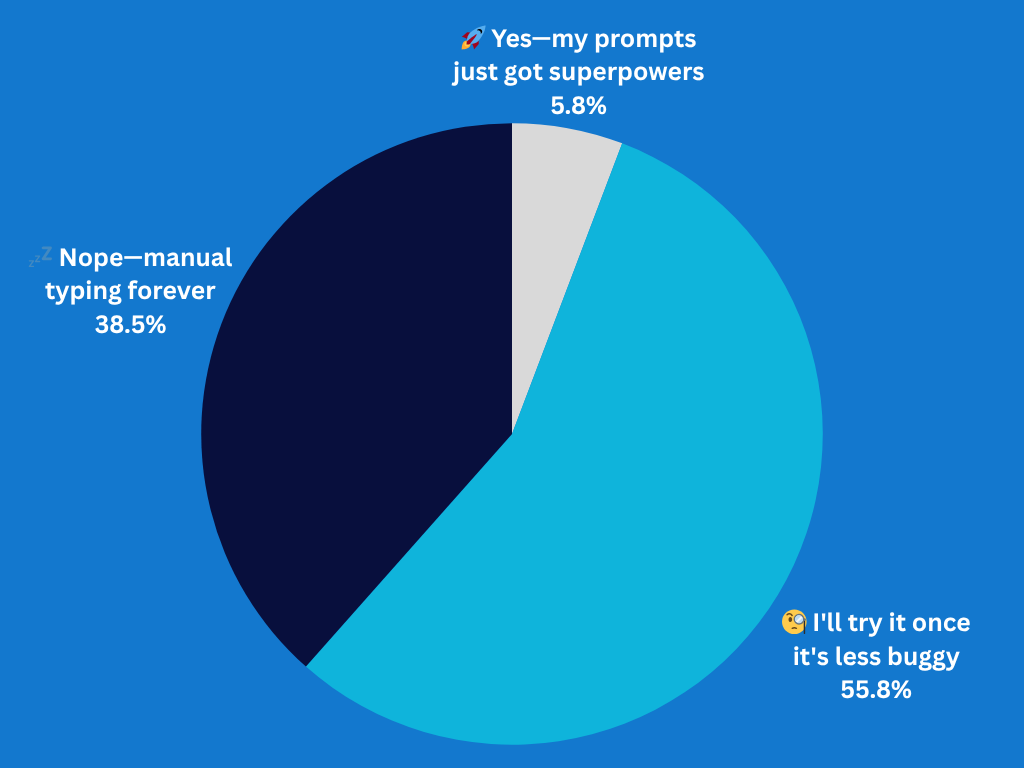
If an AI could instantly spot hidden malware in your files better than AV software, would you let it scan your laptop? |
|
|
Results from Yesterday's Pulse Check |
Will you put Chrome's new Skills to work? |
|
|
Gemini Robotics-ER 1.6 Teaches Robots to Reason |
Think of it as a GPS for robot common sense, minus the "recalculating" voice.
Google DeepMind's new Gemini Robotics-ER 1.6 lets bots understand surroundings, plan tasks, and verify completion. Acting as a high-level strategist instead of handling direct motor control, the upgrade muscles up spatial skills so a robot can merge camera feeds to find the right widget.
Industrial chores get a boost from a brand-new, officially supported trick codeveloped with Boston Dynamics: instrument reading. While older models blindly guessed gauge numbers with a dismal 23% success rate, ER 1.6 spits out a 93%-accurate reading, thanks to "agentic vision" pairing visual logic with code execution.
|
Factories could swap clipboards for dog-bots like Spot, which already uses Gemini to flag leaks and check temperatures.
The model is live now in the Gemini API for whatever cobot needs a brain transplant. Google bills it as its "safest" model yet, though keep the emergency stop handy. Soon, your vacuum won't just dodge socks; it'll politely remind you to wash them. |
|
|
Workforce access is no longer tied to a single device or a single signal. Identity alone can't provide the full picture. Join TechnologyAdvice and Specops Software on April 21, 2026, at 1:00 p.m. ET for The Real Story Behind Zero Trust, Identity, and Device Security. Learn how combining identity with device trust enables smarter access decisions, reduces risk, and supports scalable Zero Trust strategies. Get a clearer view of what secure access should look like today. |
|
|
Patch Tuesday Crushes 165 Windows Bugs with 2 Actively Targeted |
Image created with Google's Nano Banana |
For regular PC users: Just go to Settings > Windows Update and click "Check for updates" to protect yourself.
For IT admins: Patch SharePoint immediately. If you can't reboot, block UDP 500/4500, manually push Defender updates, and tell users to stop previewing random Office docs.
Crucial warning: Secure Boot fixes are triggering BitLocker recovery screens. Suspend BitLocker first using manage-bde -protectors -disable C:, unless you enjoy panicked morning calls. |
WhatsApp Usernames Arrive, Hiding Your Digits |
WhatsApp is testing usernames that let you chat without exposing your phone number, ending the app's last personal-data giveaway.
Handles now live under the Profile settings. They must be 3–35 characters, include a letter, avoid URL formats, and use lowercase letters, numbers, periods, or underscores. You can add an optional four-digit "username key" so only people who know both can message you, keeping spammers at bay.
WhatsApp has teased this privacy layer since at least 2024, so who knows what makes this limited beta special or when it will actually reach everyone. Just keep the app updated and watch for the "Username" field to appear. When you get it, pick a unique handle; reusing your Instagram or Facebook name just invites creeps to cross-platform stalk you.
|
Snap Axes 1,000 Jobs, Credits AI Efficiency |
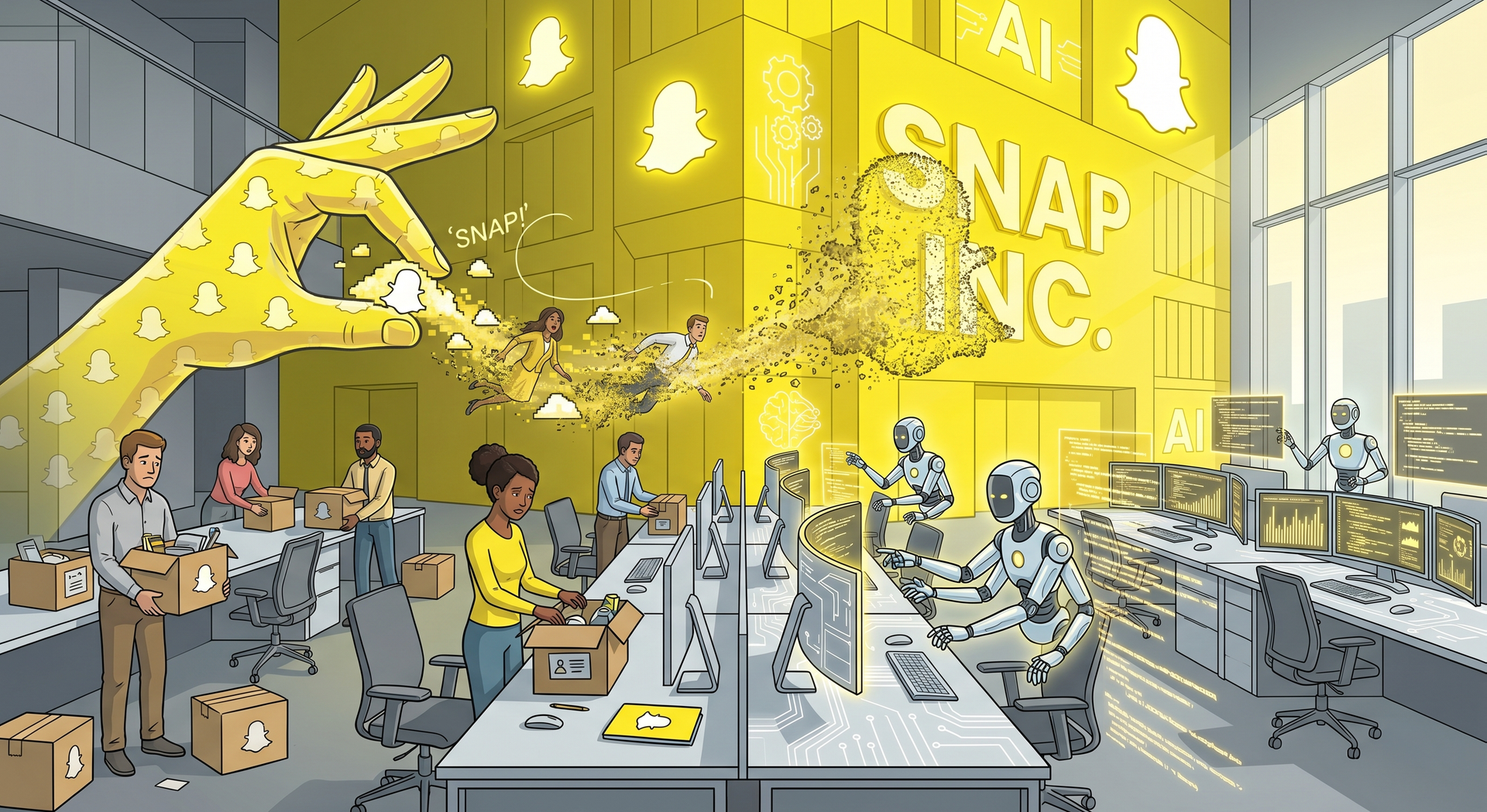
Snapchat-parent Snap Inc. has swung the layoff hammer again, pink-slipping about 1,000 employees (roughly 16% of its workforce) and freezing 300 open roles.
In a Wednesday memo, CEO Evan Spiegel recalled his warning last fall that Snap faced a "crucible moment" and said the cuts are aimed at pushing the company toward net-income profitability after years of red ink.
The company's justification: artificial intelligence now does much of the heavy lifting. Snap says AI agents generate 65% of new code, field more than a million support queries a month, and even flag thousands of software bugs. |
Image created with Google's Nano Banana |
By shrinking human headcount and leaning on these tools, Snap expects to trim more than $500 million in annual costs by the second half of 2026, though it will book up to $130 million in severance charges primarily in the second quarter. Investors liked the math: shares closed out Wednesday almost 8% higher on the news.
Activist investor Irenic Capital had recently urged Snap to "course-correct," and the company's latest retrenchment echoes industry peers such as Meta, Oracle, and Amazon, as well as companies like Block, all citing AI as a reason to slim down.
Next on Snap's to-do list: betting big on AR glasses via its Specs subsidiary, despite Irenic demanding they shut the $3.5 billion cash-burning unit down, and a planned $400 million AI integration deal with Perplexity recently collapsing.
At this rate, even your dancing Bitmoji may soon be outsourced to an algorithm with better moves. |
|
|
|
Writer at TechnologyAdvice |
Justin Meyers is an investigative writer and editor who draws on over a decade of meticulous hands-on research to deliver the full, trustworthy story behind consumer and enterprise tech, including cybersecurity. |
|
|
Curious about where AI is really headed? |
The Neuron cuts through the noise to bring you smart, hype-free takes on the latest AI trends, tools, and breakthroughs. Join 500,000+ professionals from top companies like Microsoft, Apple, Salesforce and more.
|
|
|
Advertise in Daily Tech Insider! Daily Tech Insider is a TechnologyAdvice business.
© 2026 TechnologyAdvice, LLC. All rights reserved. TechnologyAdvice, 3343 Perimeter Hill Dr., Suite 215, Nashville, TN 37211, USA. |
|
|
|