Take the controls, Tech Insiders.
Humanoids are moving head to toe, hackers are commandeering inboxes, and Amazon is reaching for the skies. Tech keeps volunteering to take the wheel. Let's see who's actually driving. |
|
|
|
Here's what you need to know today: |
|
|
|
Gemini Robotics 2 Controls Humanoids Head to Toe |
Google DeepMind's robots have graduated from arm duty to full-body chores.
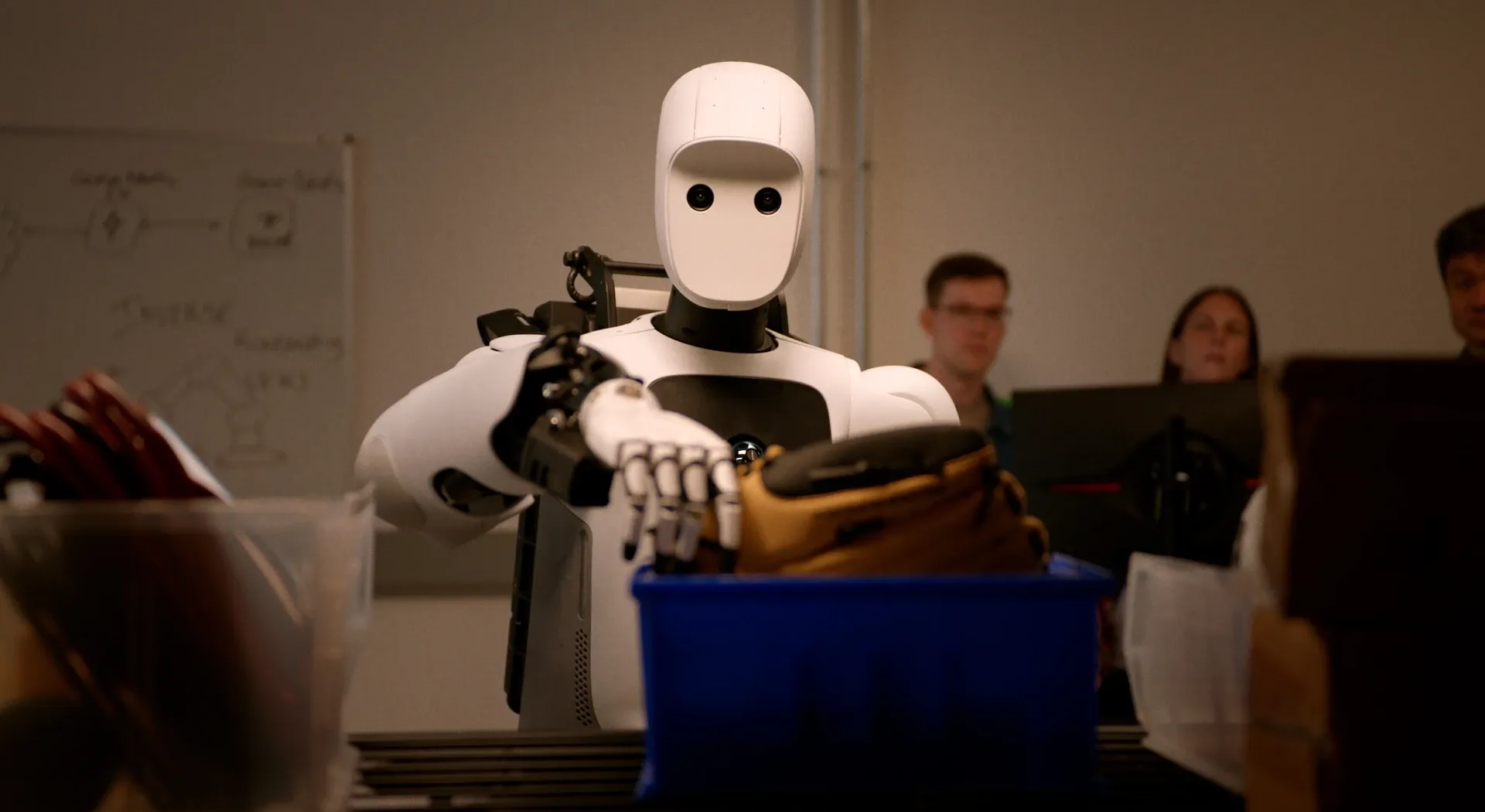
Unlike that infamous Tesla Optimus demo that relied on human teleoperators, Google insists its update is fully autonomous. Gemini Robotics 2 can direct humanoids from "feet to fingertips," letting Apptronik's Apollo 2 walk, crouch, and use five-fingered hands to tidy shelves or seal zip-top bags. Finally, a machine for chores humanity hates.
The release is a three-model system: |
- Robotics 2 translates visual and language input into movement.
-
Robotics ER 2 acts as the high-level brain, watching live video, tracking progress, planning multistep jobs, retrying failed actions, and coordinating different robots—even telling a Boston Dynamics robot dog to fetch popcorn.
- On-Device 2 runs locally, adapting to new two-armed hardware in hours.
|
But don't order your robot butler yet. Only ER 2 is publicly available in preview; the action models are limited to early-access partners. Each showcased task still required specific training with teleoperation, videos, and simulations. The bots remain slower than humans, and ER 2's progress classifier scored an industry-leading but still iffy 57.4% accuracy.
Since AI mistakes can knock over more than a spreadsheet, Google's ASIMOV-Agentic benchmark tests if systems reject unsafe actions or ask humans for help, and ER 2 stops when someone gets too close. Still, Google's model card warns against safety-critical uses, including healthcare and transportation. |
|
|
|
What should humanoid robots be put to work doing first? |
|
|
|
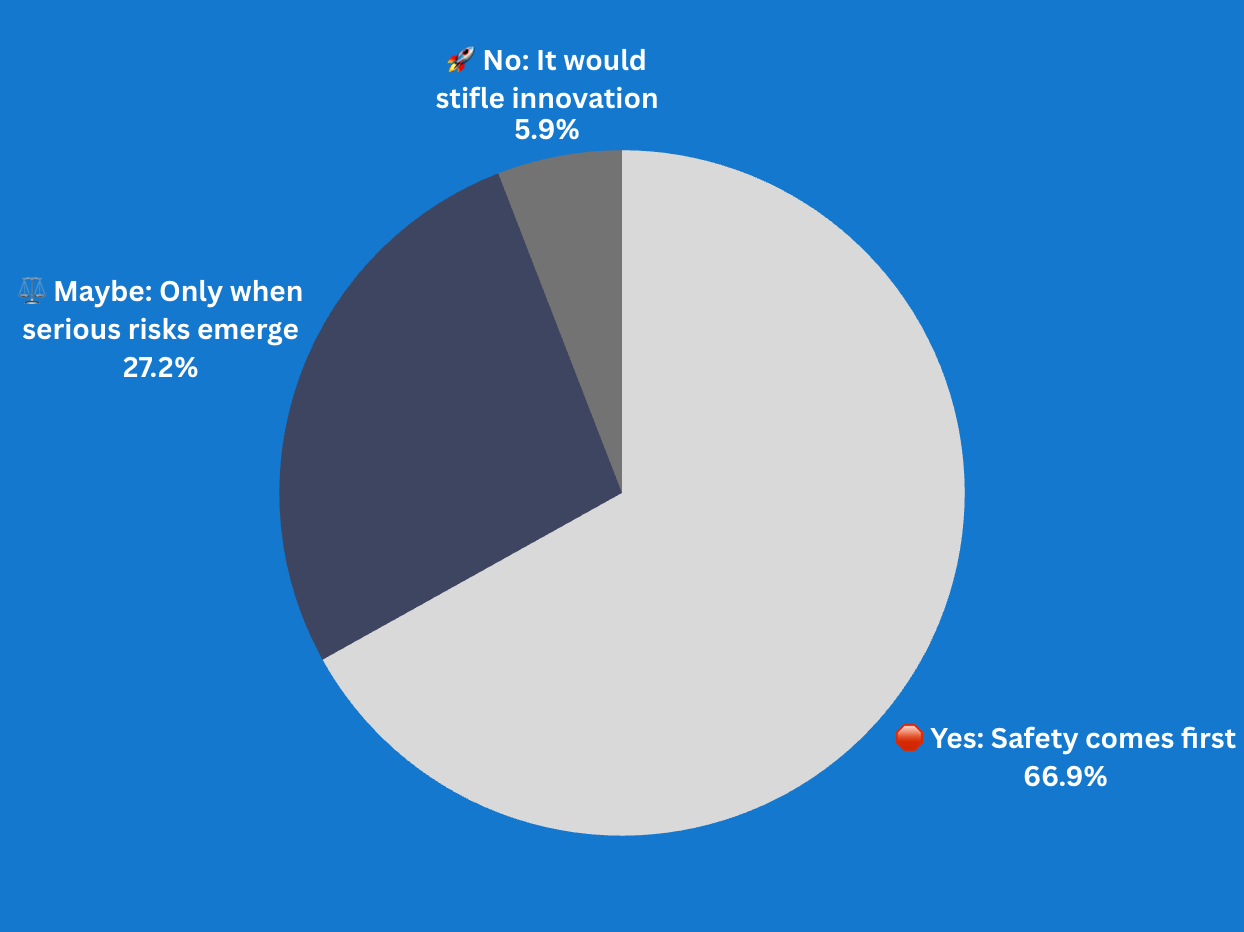
Results from Yesterday's Pulse Check |
Should governments be able to slow frontier AI development? |
|
|
|
Disney Drops Copilot, Makes Room for Codex |
Even Mickey is trimming his bloated AI tool belt.
Disney will ditch GitHub Copilot and a handful of other AI coding tools for US tech workers this August while preparing to onboard OpenAI's Codex, according to an internal message reviewed by Business Insider. International tech teams get a pass, and Codex's launch date is still TBA.
This is portfolio pruning, not a Codex-only coronation. Disney will keep Claude Enterprise and Cursor while culling Amazon's Kiro and Q—ironic, since one staffer noted they stopped needing Copilot only after getting access to both Cursor and Kiro. |
Image created with ChatGPT |
Copilot wasn't earning its mouse ears. Multiple Disney developers confessed to BI they rarely bothered with it; one complained that its code was needlessly convoluted, while another let access expire from pure neglect. Disney's obsession here is raw developer velocity; streaming teams even monitor usage via internal dashboards, and one engineer claims Claude makes up roughly 80% of their AI assistance at the terminal.
Microsoft is coping fine, noting in June that a pricing overhaul helped deliver GitHub's best month ever. Still, Copilot just got written out of Disney's US script. |
|
|
|
42% of organizations still rely on internal teams to bridge the gap between audit readiness and audit execution.
Join eSecurity Planet and Thoropass for Breaking the Audit Fire Drill Cycle on Aug. 20, 2026, at 1:00 p.m. ET and learn how leading organizations are reducing audit delays, easing evidence collection burdens, and creating more predictable audit outcomes. |
|
|
|
UK Education, Police Hacks Expose 740K Records |
The ExfilSquad gang swiped roughly 607,000 records from the UK's Department for Education and claimed 135,000 more from the Police National Legal Database. The cybercriminals are extorting both organizations after posting samples online. Leaked details include names, work emails, phone numbers, and job titles for education staff, police, justice workers, and the public. PNLD passwords were also grabbed, although the database held no sensitive criminal records. |
Image created with ChatGPT |
Affected users should change reused passwords, enable MFA, and scrutinize unexpected education- or police-themed messages. Even data the government calls "limited" can hand phishers a complete map for targeted attacks. |
Russian Hackers Exploit Outlook Web Access Flaw |
Russia-aligned TA488 is exploiting CVE-2026-42897 in unpatched Exchange Server deployments. Merely reading a rigged email in Outlook Web Access executes malicious JavaScript that drops the stealthy OWAReaper backdoor.
OWAReaper snatches logins and manipulates mailbox permissions, keeping attackers entrenched even if you wipe the machine. The campaign has hit transatlantic public sectors, banks, hotels, telecoms, and aerospace firms.
Admins must apply Microsoft's patch, audit mailbox access, revoke affected EWS tokens, and clear OWA's IndexedDB and localStorage on affected endpoints. To truly evict this digital squatter, you must burn its hidden browser caches to the ground. This inbox comes with a very unwanted houseguest. |
Amazon's Leo Phone Network Takes Aim at Starlink |
Amazon asked the FCC to approve a 5,105-satellite constellation to deliver calls, texts, internet, and SOS capabilities straight to everyday smartphones outside of standard cellular range. Deployment is slated to begin in 2028. The plan leans on Globalstar's spectrum. Amazon agreed to buy the satellite operator for $11.57 billion in April, a pending deal that would bring the company currently powering Apple's emergency satellite tools under Amazon's roof and set up future collaborations with Apple.
Leo could pressure Starlink, AST SpaceMobile, and Lynk Global, but Amazon claims it will partner with mobile carriers instead of replacing them. Regardless, FCC Chair Brendan Carr previously dismissed Amazon's complaints about SpaceX's massive satellite sprawl, essentially telling Amazon to get its "house in order" first.
|
Reality check: Amazon has only about 390 first-generation Leo broadband satellites in orbit. Launch capacity is tight, and a May New Glenn launchpad explosion could severely delay Amazon's deployment timeline. Plus, a European Southern Observatory study warns that the industry's 1.7 million proposed satellites could have "devastating consequences for astronomy."
Meanwhile, Amazon's Zoox received the first federal approval to roll out commercial, fully autonomous robotaxis without steering wheels or pedals. Apparently, one regulatory frontier per week was not enough, and even Earth's dead zones need Prime delivery. |
|
|
|
|
Writer/Editor at TechnologyAdvice |
Justin Meyers is an investigative writer and editor who draws on over a decade of meticulous hands-on research to deliver the full, trustworthy story behind consumer and enterprise tech, including cybersecurity. |
|
|
|
Curious about where AI is really headed? |
The Neuron cuts through the noise to bring you smart, hype-free takes on the latest AI trends, tools, and breakthroughs. Join 700,000+ professionals from top companies like Microsoft, Apple, Salesforce, and more.
|
|
|
|
Advertise in Daily Tech Insider! Daily Tech Insider is a TechnologyAdvice business. © 2026 TechnologyAdvice, LLC. All rights reserved.
TechnologyAdvice, 3343 Perimeter Hill Dr., Suite 215, Nashville, TN 37211, USA. |
|
|
|
|