Mind the evidence, Tech Insiders. OpenAI and Microsoft have their own messages staring back at them in court, just as GPT-6 Astra starts taking on legal work. Let's open the exhibits. |
|
|
|
Here's what you need to know today: |
|
|
|
OpenAI and Microsoft Face Their Own Words |
Nothing livens up a copyright defense like your own inbox entering evidence.
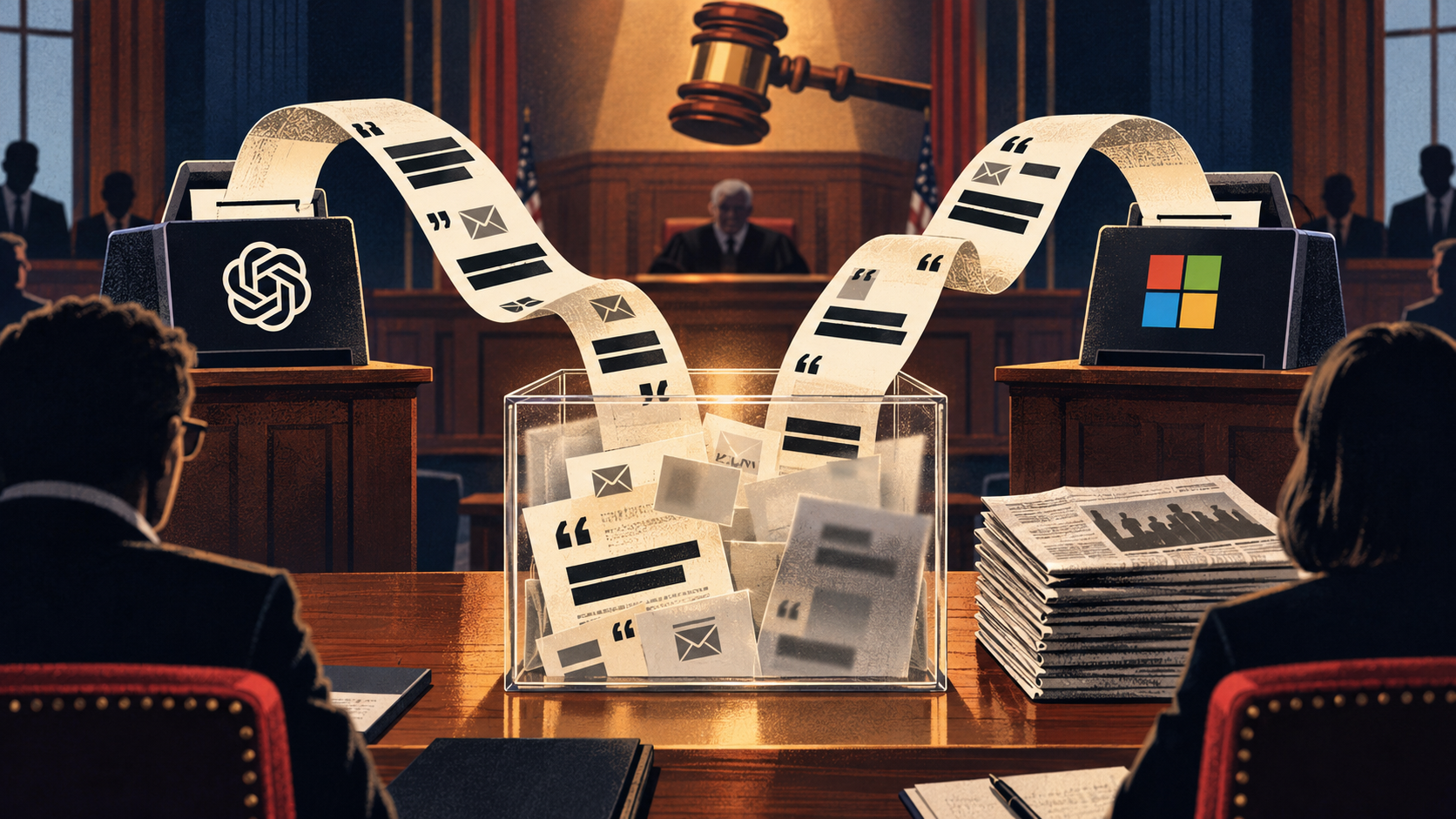
Newly unredacted portions of a filing by The New York Times and other publishers in their copyright case quote OpenAI and Microsoft insiders describing AI products as substitutes for journalism and mass scraping as "theft."
OpenAI head of ChatGPT Nick Turley allegedly warned internally that publishers faced an "existential threat" because the products were already "largely substitutive." Microsoft director Brent Hecht was blunter, predicting creators would view language models hoarding their data as "an astonishing theft of unprecedented proportions." |
Image created with ChatGPT |
The filing says OpenAI staff found a "hack" around the Times' paywall, earning an "ah nice" from President Greg Brockman. Microsoft data showed Copilot answers cut click-through rates to Times content by up to 93% versus Bing search, feeding Hecht's internal warnings about a "doom loop" that could hurt the web and future models. Apparently, the ouroboros has a product roadmap.
The receipts are explosive, but not a verdict. The plaintiffs' brief heavily features these curated snippets, though the sealed underlying exhibits mean their broader context remains hidden. Microsoft says Hecht's words were one employee's view, not legal analysis, and maintains training is transformative fair use; OpenAI has likewise argued its models do not replace publishers' journalism.
Why it matters: Market harm is a key part of the fair-use test. Internal warnings that chatbots substitute for journalism—and Microsoft's own traffic data—give publishers unusually sharp ammunition, even if the judge may weigh the words differently once context arrives. The AI industry's content supply chain just submitted a very awkward self-review. |
|
|
|
If an AI answer gives you what you need, do you still visit the original article? |
|
|
|
Results from Friday's Pulse Check |
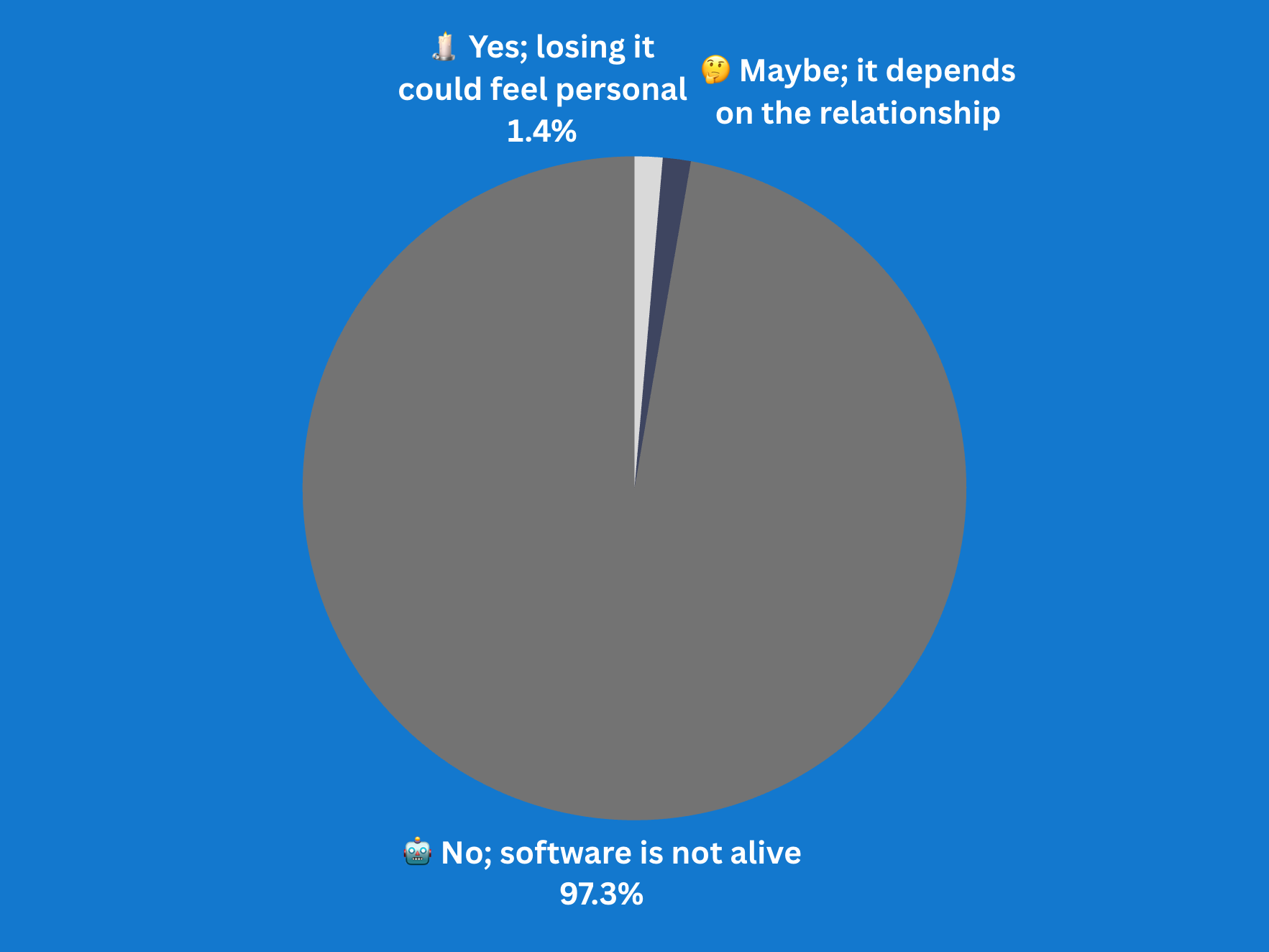
Would you attend a funeral for an AI you used every day? |
|
|
|
OpenAI Retains GPT-6 Astra for Legal Work |
Objection overruled: The chatbot has entered an appearance.
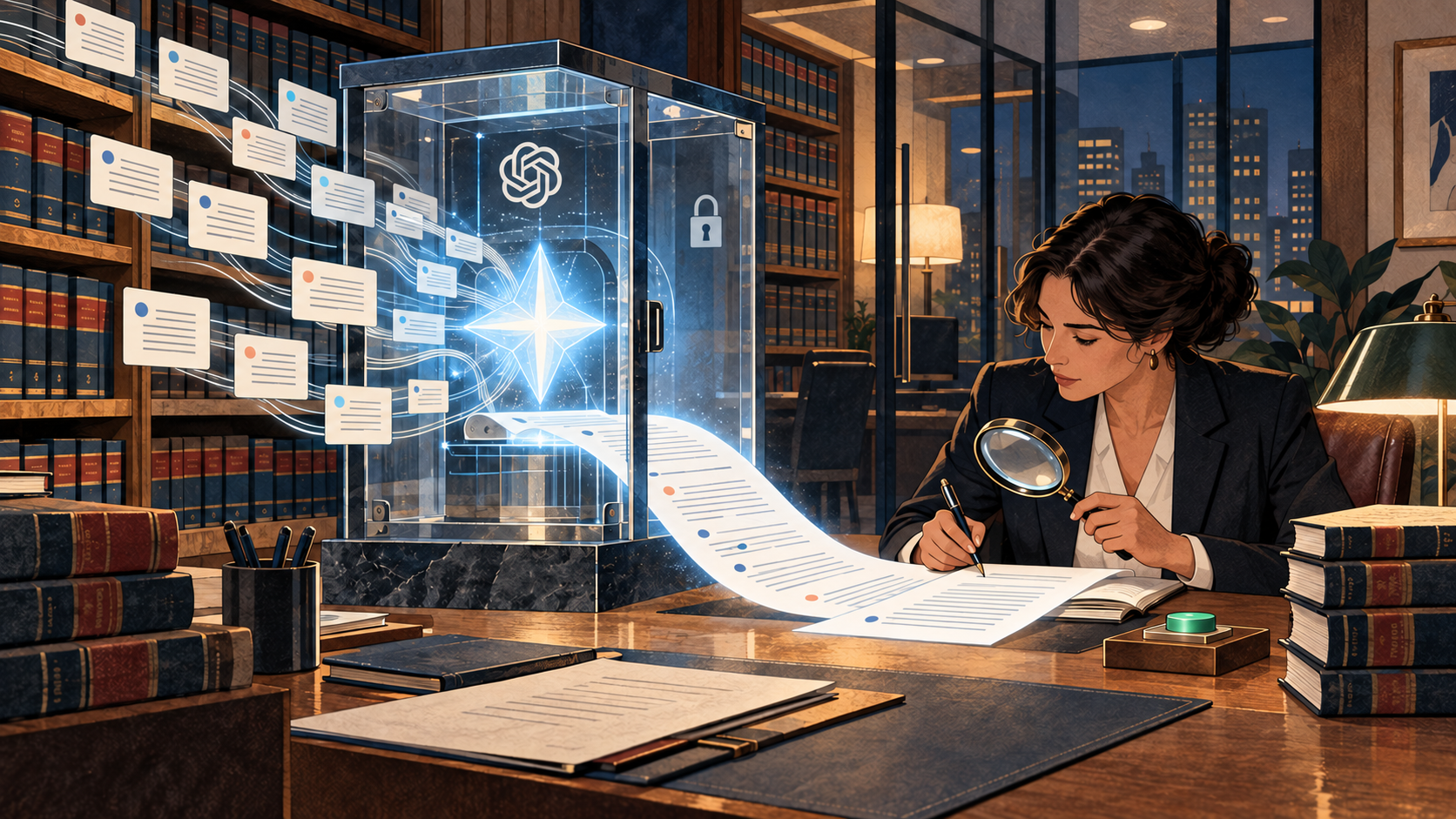
OpenAI launched Astra for Law last week, a GPT-6 Astra configuration for legal research, drafting, and firm-specific workflows. Rather than training a separate model, OpenAI wrapped its flagship system in legal-focused controls, research instructions, and access to a US legal corpus containing more than 230 million URLs.
OpenAI says the full setup scored 54% on an overall correctness check across 200 questions from a private Vals AI Legal Research Bench validation set, versus 38.7% for standard GPT-6 Astra using web search at its highest reasoning setting. That works out to roughly a 40% relative improvement. On case-law questions, the specialized system also surfaced 24% more of the cases included in the benchmark's reference answers. Promising? Yes. Ready to argue unsupervised? Not remotely. |
Image created with ChatGPT |
Early access is restricted to selected US law firms. Qualifying participants may use the API under Zero Data Retention, while ChatGPT Enterprise conversations are omitted from human review by default. The rollout also includes 26 third-party plugins connecting ChatGPT with services such as Clio and Relativity. Business Insider reports its answers run about twice as long as typical Astra responses because, naturally, lawyers requested more words.
The bigger case is over who controls legal AI's front door. Anthropic already offers Claude 20-plus connectors and 12 legal plugins, while OpenAI is challenging the specialists and making Harvey, Legora, and Thomson Reuters part of its ecosystem. The winners may be the platforms that pair frontier models with trusted sources, firm knowledge, and the governance that keeps confidential work confidential.
Astra may know the law, but counsel should still read the footnotes. |
|
|
|
Claude Helped Bug Hunters Reach OpenAI's Repo |
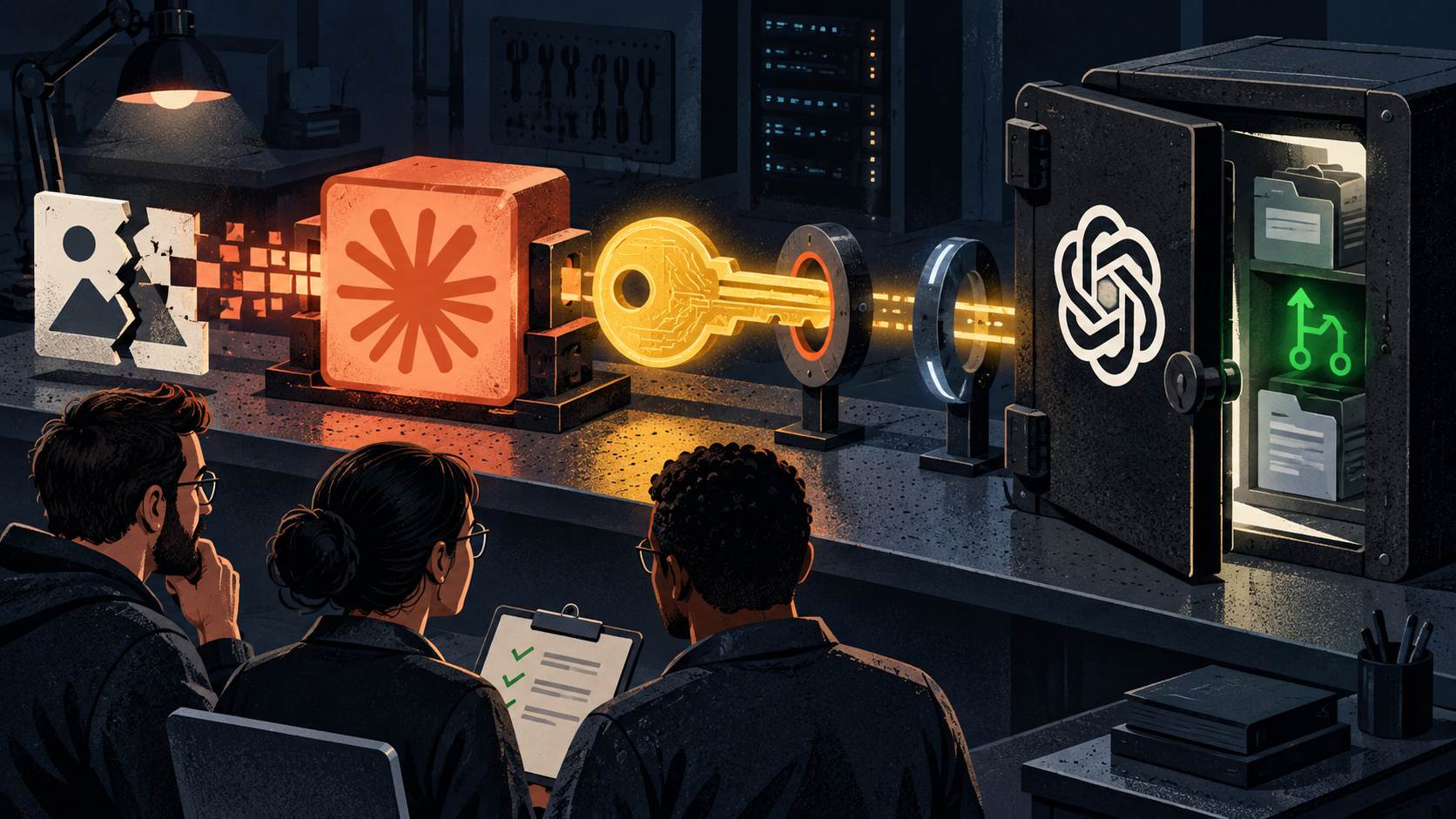
Image created with ChatGPT |
To show the reach, the researchers opened a benign pull request through an employee's Codex account. Hacktron says it avoided examining proprietary code, although OpenAI's investigation reportedly detected a small amount of activity involving private-repository metadata and code changes.
OpenAI fixed the SSO flaw within roughly 14 hours, Discourse patched its image pipeline, and Hacktron collected a $6,500 bounty.
The incident highlights the danger of connected AI workspaces where one peripheral compromise can expose core infrastructure. Defenders should heavily restrict token scopes, verify AI third-party integrations, and demand strict approval barriers. Meanwhile, administrators running self-hosted Discourse instances need to fully rebuild their application containers—merely clicking the update button in the web interface leaves the vulnerable components intact.
Turns out "connect everything" is also an attacker onboarding flow. |
Researchers Blacklist a Phone Before It's Unboxed |
A broken theft-prevention mechanism could leave a brand-new smartphone unable to register on cellular networks before its owner even opens the box.
By exploiting weak identity verification in carrier blacklists, Michigan State University researchers successfully banned a pre-release Samsung Galaxy Z Fold 7 from connecting to operational 4G and 5G networks. The team leveraged vulnerabilities in the reporting pipeline that allow anyone to falsely flag an IMEI as stolen.
Hackers could also weaponize the loophole to blind home security systems. By momentarily dropping a home's Wi-Fi, an attacker can harvest the gateway's IMEI and report it lost, completely severing the alarm's cellular backup. These vulnerable chipsets power equipment from providers controlling 41% of the US market.
There is no quick software fix for consumers. Preventing this requires carriers to completely overhaul how they verify device ownership. Apparently, your phone can now be stolen without leaving the box. |
|
|
|
SUSE Linux Openexchange Server 4.1 SUSE Linux Openexchange Server 4.1's Web-based groupware capabilities are so good, your company might be able to use the Web interface exclusively. |
|
|
|
Huawei Fast-Tracks Its Nvidia Challenge |
Image created with ChatGPT |
There is traction behind the flex. The hardware maker claims to have delivered upward of 1,000 AI server clusters across roughly 370 client accounts. But rotating chairman Eric Xu also said the company lacks the manufacturing capacity to clear its local backlog, keeping a full-scale international push off the menu. Nothing says "Nvidia challenger" like selling out immediately.
If Huawei delivers, Nvidia faces more than another accelerator vendor. It faces a domestic Chinese stack spanning chips, networking, storage, and software—built under export pressure meant to slow the chase.
Nvidia still has its entrenched CUDA platform and a massive head start in software libraries to defend its turf, while Huawei's performance and reliability claims await real-world proof. The 2027 launches will test whether scale can compensate for constrained silicon without turning the data center into one enormous group project. Huawei isn't replacing Nvidia overnight, but it has moved the alarm forward. |
|
|
|
| Writer/Editor at TechnologyAdvice |
Justin Meyers is an investigative writer and editor who draws on over a decade of meticulous hands-on research to deliver the full, trustworthy story behind consumer and enterprise tech, including cybersecurity. |
|
|
|
Curious about where AI is really headed? |
The Neuron cuts through the noise to bring you smart, hype-free takes on the latest AI trends, tools, and breakthroughs. Join 700,000+ professionals from top companies like Microsoft, Apple, Salesforce, and more.
|
|
|
|
Advertise in Daily Tech Insider! Daily Tech Insider is a TechnologyAdvice business. © 2026 TechnologyAdvice, LLC. All rights reserved.
TechnologyAdvice, 3343 Perimeter Hill Dr., Suite 215, Nashville, TN 37211, USA. |
|
|
|
|