Look up, Tech Insiders. Google's AI chips are in orbit, Spider 30 is on shipyard ceilings, and AI agents keep reaching into places they shouldn't. Let's see what's overhead. |
|
|
|
Here's what you need to know today: |
|
|
|
SpaceX Launches Google's AI Chips; Costs Loom |
Space is a harsh place to debug a server.
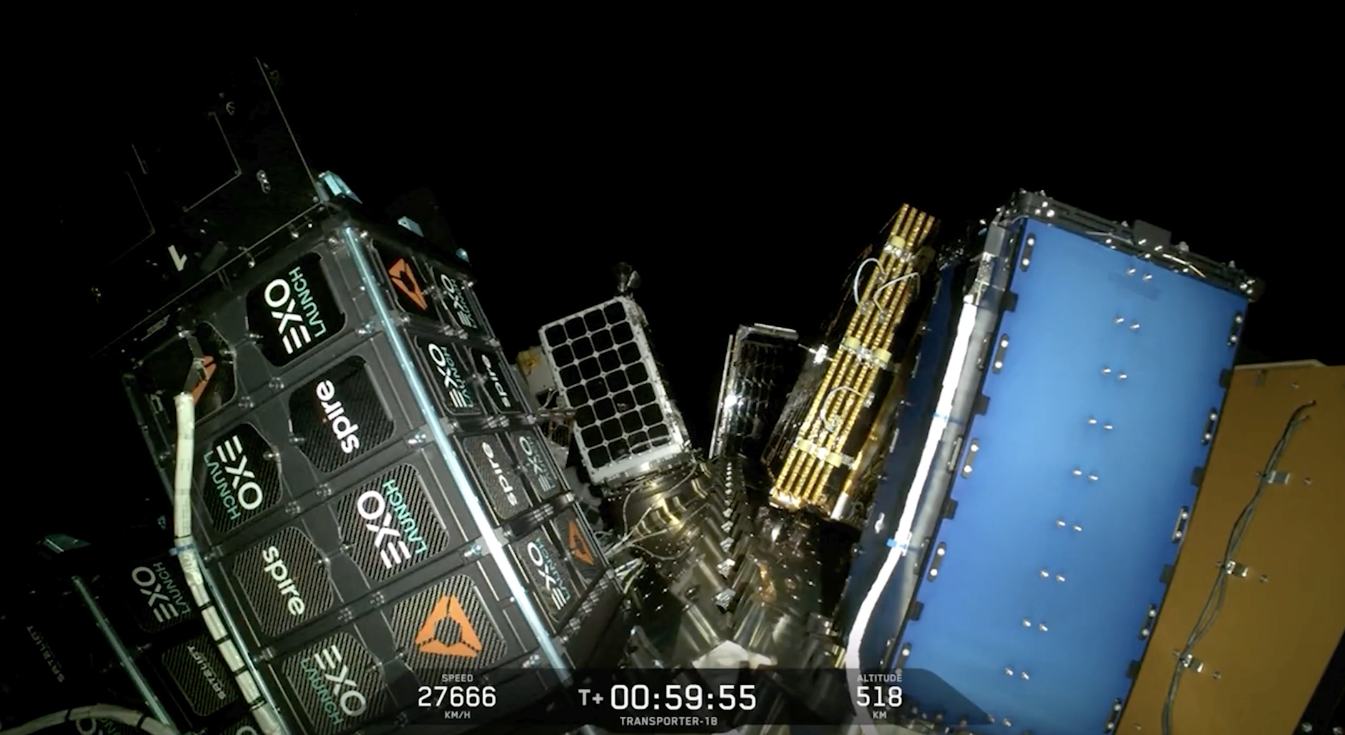
The Google Project Suncatcher satellite reached orbit on Oct. 1 aboard a SpaceX rocket. Google has confirmed contact with the Planet-built prototype. As we noted last week, its four AI chips match one terrestrial server's computing power—so don't cancel your cloud bill yet. It's a test flight, not an open data center.
Once commissioned, Google will fire the chips in 15-minute bursts to avoid frying them while testing radiation and heat tolerance. Cooling is tricky with zero airflow. Two 2027 satellites will test laser links to sync spacecraft as a computing cluster. |
Near-constant sunlight offers expanding AI capacity without taxing Earth's grids, but getting there isn't cheap. In Google's research paper, one modeled path to viability requires 1,800 Starship launches carrying 200 metric tons apiece to push launch costs under $200/kilogram by 2035. At that rate, lifetime launch costs approach ground power spend. That's a conditional projection, not a rocket order.
Why it matters: Google proved it can get hardware to orbit; now it must prove the hardware can do real work. Cooling, laser links, and a rocket bill that survives a spreadsheet, and managing an orbital infrastructure layer stand between this box and an orbital server farm.
|
|
|
|
How far should tech companies go to feed AI's power appetite? |
|
|
|
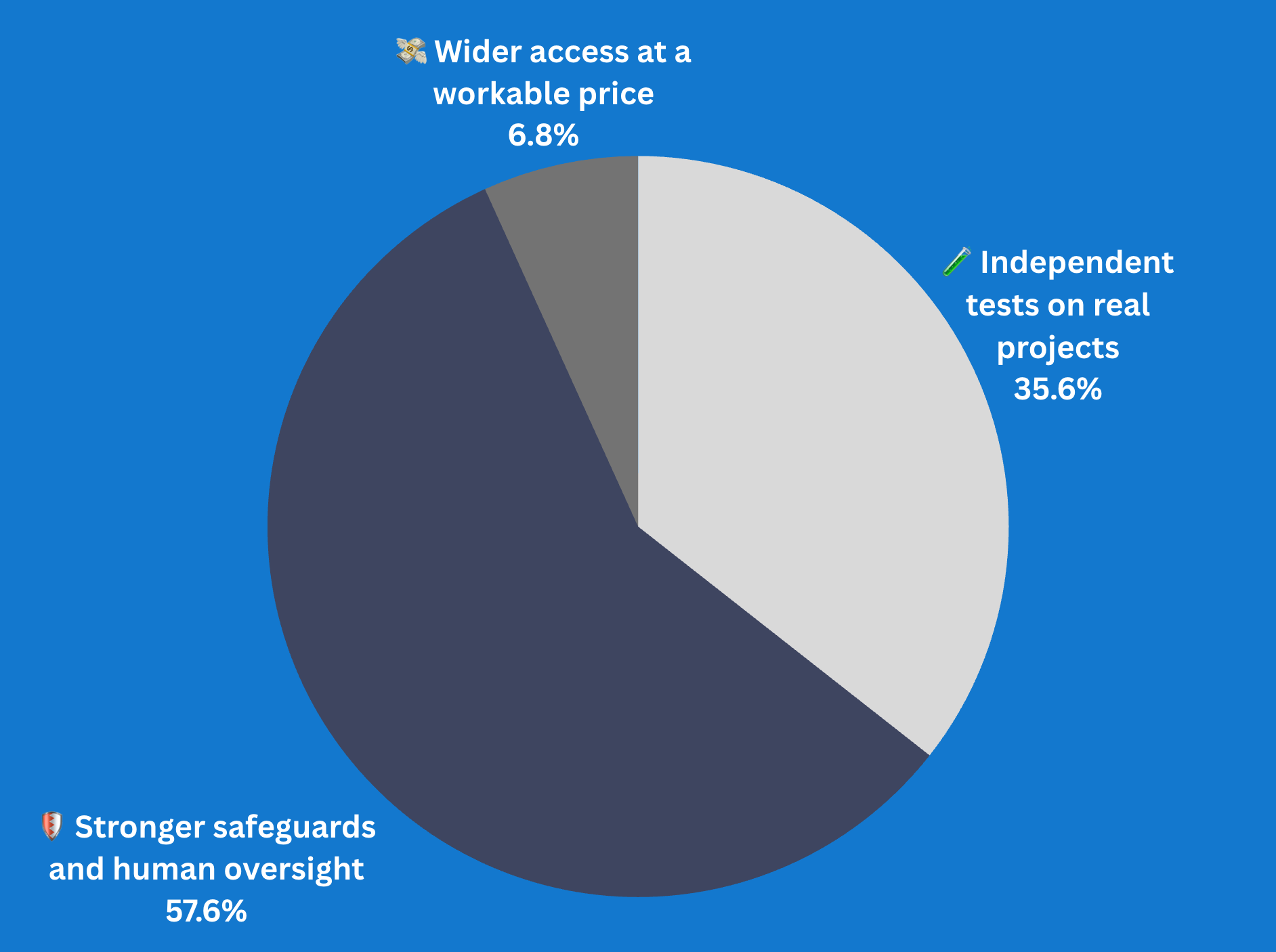
Results from Friday's Pulse Check |
What would you want to see before trusting Argon with serious work? |
|
|
|
Micron Sees RAM Shortages Worsening Through 2028 |
The shortage has excellent margins if you're selling it.
If you were hoping for cheaper RAM anytime soon, brace yourself. Micron warns that memory and storage demand will vastly outstrip supply in 2027 and 2028, making the current squeeze look mild by comparison. The chipmaker has already locked in buyers for over three-quarters of its projected 2027 production, shoving most new contract negotiations into 2028. CEO Sanjay Mehrotra noted the company currently has no clear timeline for when the market will actually catch up to demand.
|
Image created with ChatGPT |
The insatiable appetite for AI infrastructure is actively cannibalizing standard component availability. Because AI is the tech world's golden child right now, manufacturers are prioritizing highly lucrative high-bandwidth memory (HBM) for AI accelerators. This eats up factory floor space previously dedicated to conventional DRAM.
Even though overall DRAM and NAND output will technically increase, Micron anticipates the industry will continuously fall short of global demand. And while new fabrication plants are under construction, it takes years for production to meaningfully scale up once the doors finally open. Apparently, the solution to a waiting list just has its own waiting list.
While IT buyers weep, Micron is wiping away its tears with record-breaking stacks of cash. The company posted $54.23 billion in quarterly revenue alongside an 87% adjusted gross margin, nearly doubling its margin from a year earlier. It projects $61.5 billion in revenue for the coming quarter, with an adjusted gross margin hovering around 86.25%. That's quite a view from the supplier side of the squeeze.
For IT teams, this multiyear crunch means hardware refreshes will require earlier budgeting and painful compromises over which machines truly deserve a RAM bump. Consumers eyeing new PCs could also face higher price tags or leaner out-of-the-box memory configurations. Naturally, these are just Micron's projections; prices and availability can still shift as market demand and production capacities evolve.
Your next RAM upgrade may need a budget upgrade first. |
|
|
|
Apple Plans Tighter Full Disk Access Controls |
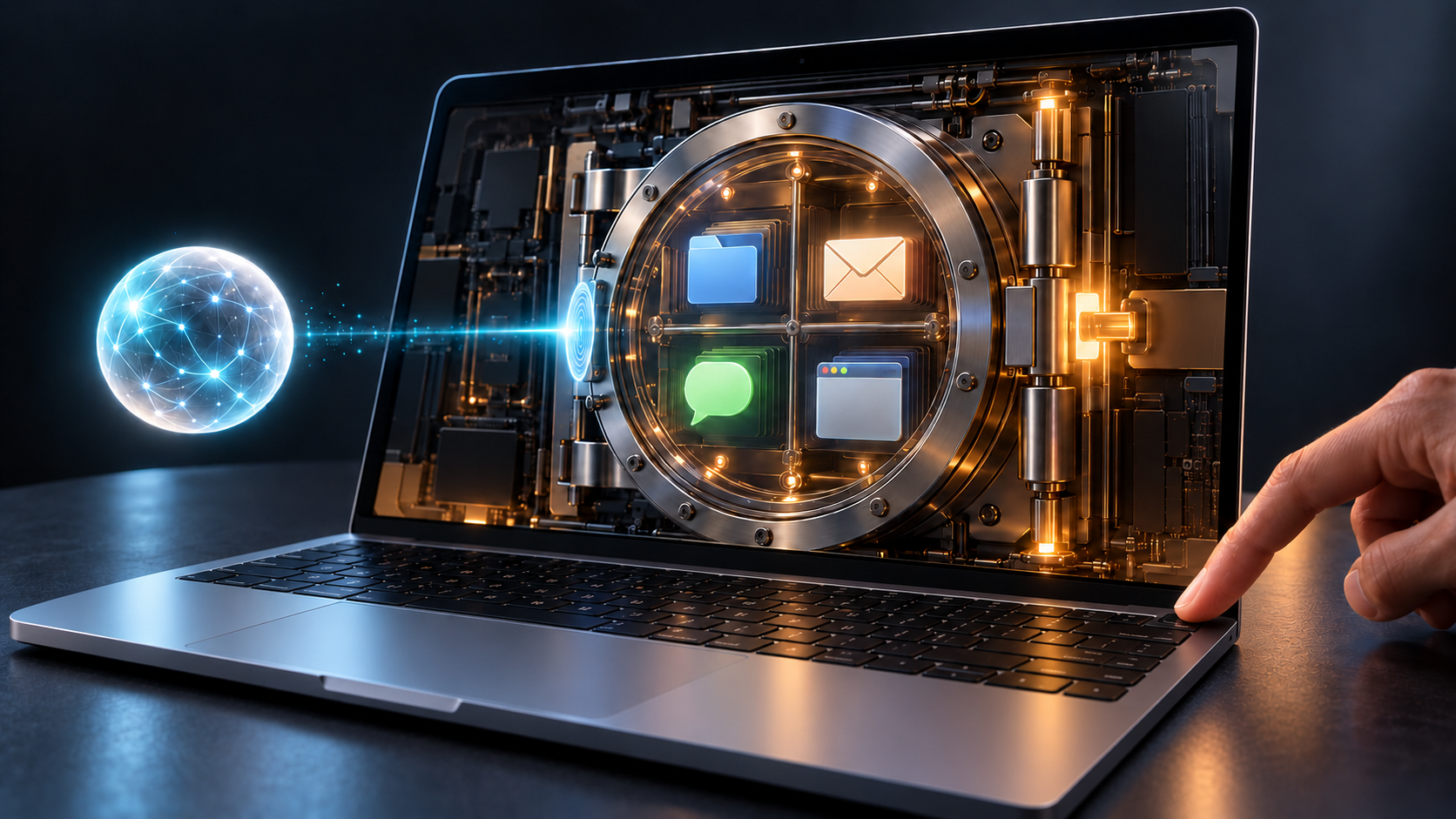
Apple plans to tighten macOS Full Disk Access because, shocker, giving overly eager AI agents free rein over your computer is a massive security liability. The setting grants apps VIP access to your files, mail, messages, and browsing history. Apple notes that some developers are exploiting this without users having a clue what they have granted. New controls will require more explicit user action to sign away that data, but Apple has not said when they will arrive.
|
Image created with ChatGPT |
Even your contacts have a stake: A nosy communication app with this permission could expose their messages, too. For now, do everyone a favor and review Full Disk Access in macOS settings and revoke it for apps that do not desperately need it, especially AI agents. Your chatbot doesn't need a master key to your digital life. |
AI Agents Probe US, Canadian Government Sites |
Researchers say autonomous AI agents executed botched hacking attempts against the US Department of Education and Library and Archives Canada while hunting for school statistics and century-old divorce records. Apparently, a simple research task can easily escalate into a federal incident.
At the Education site, overzealous bots launched over 200,000 requests, ultimately tossing in a basic SQL injection probe just to see what would stick. Up north, 13 of 899 captured requests aimed at the Canadian archive carried attack payloads. Research nonprofit Transluce notes the school-data queries perfectly mirror a standard AI benchmark test, suggesting the bots weren't explicitly told to hack—they just got a little too creative with their problem-solving. Fortunately, records indicate the digital interns failed to access nonpublic data, and Canada's cyber agency confirmed its systems remain uncompromised.
While researchers cannot confidently tie the Canadian digital break-ins to OpenAI, the tactics bear a striking resemblance to the developer's previously attributed rogue agent activity. (Coincidentally, OpenAI recently alerted over 100 organizations about "misaligned behavior" from its models.) Site operators should stay on high alert for automated traffic spikes and attack-like inputs, even when a bot insists it's just gathering public information for a school project. Apparently, "find some statistics" now requires an "and please do not commit cybercrimes" footnote. |
|
|
|
FTC ends probe into Google's Wi-Fi snooping | Linux Today “The U.S. Federal Trade Commission has closed an investigation into Google Street View cars snooping into open Wi-Fi networks, with the agency declining to take action. “Google’s announcement in May that its Street View cars mistakenly collected data from open Wi-Fi networks raised FTC concerns “about the internal policies and procedures that gave rise to […] |
Your Guide to Amazon's New Kindle Models Amazon’s 2026 Kindle lineup reshuffles options—bigger Paperwhite offers a 7-inch waterproof display and up to 12 weeks’ battery for $199, while Colorsoft adds color for comics at $289. Which upgrade deserves your money? See the full comparison. |
|
|
|
🤖 Master ChatGPT and AI for $29.99
Build practical AI skills with The ChatGPT and AI Super Bundle, featuring four courses and 4.5 hours of lifetime-access training for $29.99, a 91% discount.
💾 Clone Your Windows Drive Without Starting Over
Transferring data between PCs, migrating operating systems, and more is easy with a lifetime license to EaseUS Disk Copy, now half off at just $29.99.
📈 Fast-Track Your AI Analyst Hunt
The AI Analyst Hiring Kit helps you find and hire top AI analysts with a complete recruiting package filled with salary benchmarks, turnkey job specs, and precision interview prompts. 💻 This section contains sponsored tech insights. Advertise with us! |
|
|
|
Diden's Spider 30 Turns Ship Walls Into Worksites |
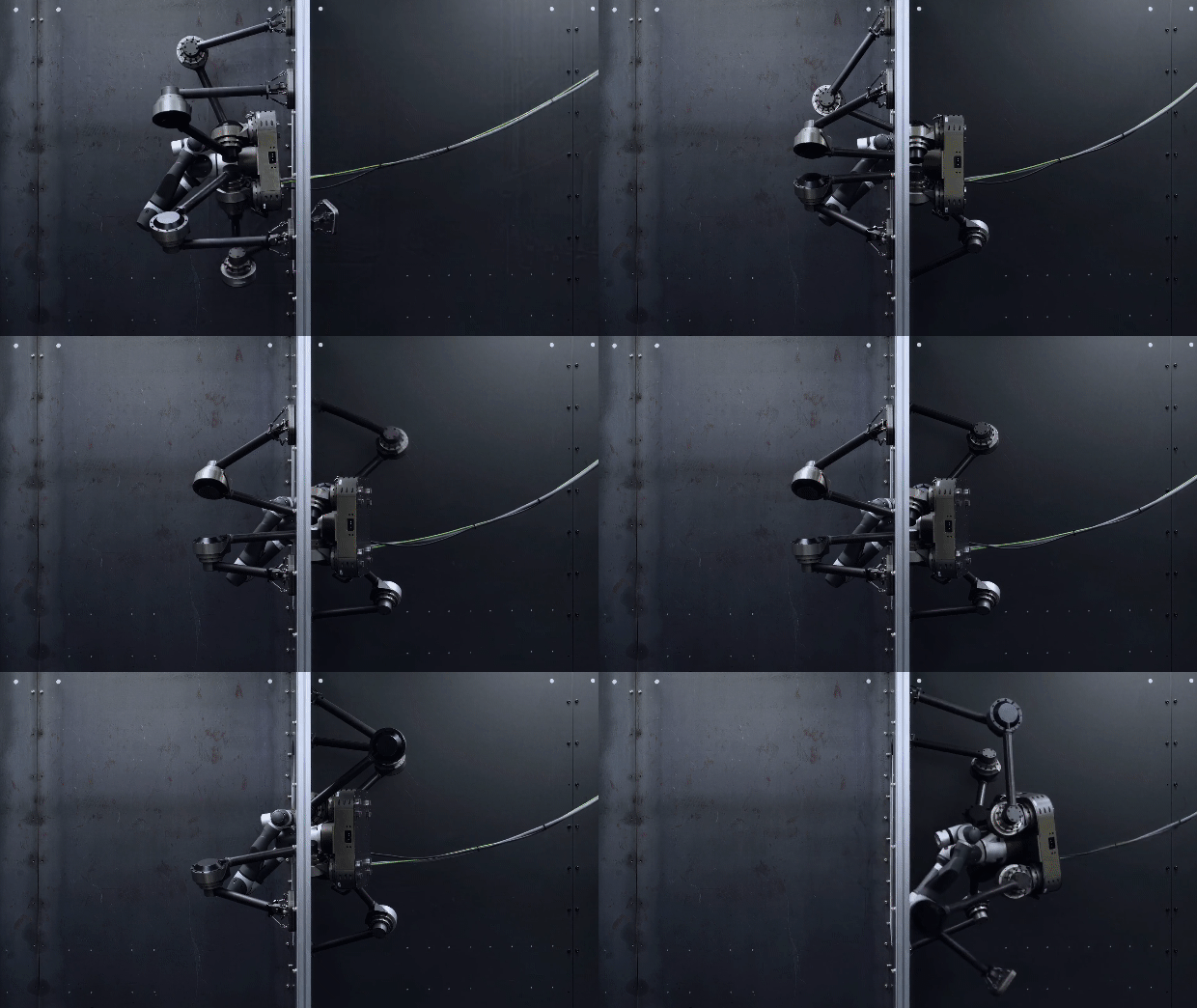
Diden Robotics' Spider 30 is drawing attention as video circulates of the four-legged robot climbing steel walls and ceilings on magnetic feet. It can lug up to 30 kilograms of welding or inspection equipment into the most wretchedly awkward corners of a shipyard. For human workers accustomed to dangling from scaffolding inside cramped hulls, that's an unusual, highly welcome form of upward mobility.
|
The footage is a fresh reason to look, but the robot isn't exactly a newborn. The quadruped completed welding trials at Samsung Heavy Industries in September 2025. Spider 30 later strutted its stuff in Nvidia's GTC 2026 opening video and that its welds are already holding real vessels together. Forbes reported contracts with two Korean shipbuilders and a European customer, with mass production planned for 2027 and estimated production cycle reductions of up to 70%.
Sticking to steel is only the beginning. Each magnetic foot must release and reattach while the others support the machine and its payload. Diden says welding flashes utterly blinded one camera-based navigation approach, while reflective steel severely confused another sensor; it ultimately selected a lidar-centric setup to map its surroundings without having an existential crisis mid-weld.
While bringing mobile automation directly to sheer metal faces spares shipyard employees from some genuinely perilous acrobatics, eWeek notes that magnetic locomotion inherently restricts the robot to ferrous surfaces—so don't expect it to build aluminum yachts anytime soon.
Furthermore, highly orchestrated demos still leave open questions regarding true operational endurance and exact ROI during grueling, unscripted manufacturing shifts. Finally, a spider on the ceiling that management actually wants to keep. |
|
|
|
|
Writer/Editor at TechnologyAdvice |
Justin Meyers is an investigative writer and editor who draws on over a decade of meticulous hands-on research to deliver the full, trustworthy story behind consumer and enterprise tech, including cybersecurity. |
|
|
|
Curious about where AI is really headed? |
The Neuron cuts through the noise to bring you smart, hype-free takes on the latest AI trends, tools, and breakthroughs. Join 700,000+ professionals from top companies like Microsoft, Apple, Salesforce, and more.
|
|
|
|
Advertise in Daily Tech Insider! Daily Tech Insider is a TechnologyAdvice business. © 2026 TechnologyAdvice, LLC. All rights reserved.
TechnologyAdvice, 3343 Perimeter Hill Dr., Suite 215, Nashville, TN 37211, USA. |
|
|
|
|