








- 10 Ways to Get the Most Out of Big Data
- Storing Data Isn’t Using Data
- Context Is Gold
- Classification Tree Analysis
- Regression Analysis
- Sentiment Analysis
- Machine Learning
- Cognitive Computing and Associative Memory
- The Best Solutions for Your Business
- Getting Frontline Adoption
- Big Data Moving Into the Front Lines
10 Ways to Get the Most Out of Big Data

by Chris Preimesberger
Storing Data Isn’t Using Data
Structured and unstructured data is collected from both inside and outside the enterprise every day; these vaults keep getting bigger as more smart devices, machines and equipment collect, record and transmit data back to the business. However, without a big data plan, most of that data goes to waste. Businesses often try to mine data or do data exploration with ad hoc tools and consultants to see if they can find anything interesting or useful; this often brings mixed results.
Context Is Gold
Big data sitting in silos untapped is of little use. To get full value, enterprises should employ an anticipatory (not just predictive) analytics solution to reveal new pattern associations, expose causal relationships and anticipate what will happen next. This new form of intelligence, now available because of big data, brings insights and new context to inform business decisions, increase revenue opportunities and improve efficiencies.
Classification Tree Analysis
Statistical classification is a method where data is identified as belonging to a category of similar data by using predefined models. In order for this method to be effective, it must be “trained” to correctly identify observations using historical data that has been captured. For example, statistical classification can be used to automatically assign documents by type to specific file locations for easy reference but does not provide predictive insights to improve business operations.
Regression Analysis
Regression analysis involves manipulating an independent variable to understand how the change will influence another dependent variable. For example, a business could analyze how changes in a store’s background music affects how much time a consumer spends in a store. For this method to be effective, continuous quantitative data such as weight, speed or age must be used to obtain measurable results.
Sentiment Analysis
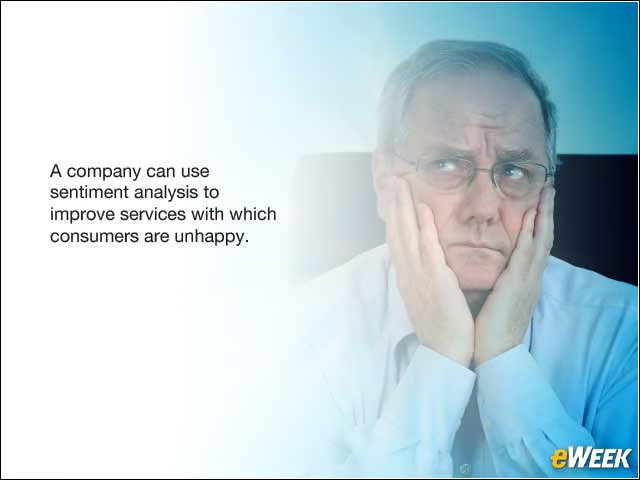
Sentiment analysis is when businesses analyze online and social data to better understand the public’s opinion about a specific topic (product, service, news, etc). A company can use sentiment analysis to improve services with which consumers are unhappy—such as product support, for example. However, this method cannot tell a business what effect any changes made will have on consumer sentiment in the future.
Machine Learning
Machine learning is a form of artificial intelligence where the system takes a set of algorithms and applies them to the data to “learn” as new data is ingested to solve a specific problem repeatedly. For example, the system can be used to identify spam versus non-spam emails. However, it will not tell you about things you haven’t asked it to specifically look for.
Cognitive Computing and Associative Memory
Cognitive computing and associative memory approaches bring brainlike thinking to big data. Cognitive computing platforms learn from past experiences and outcomes, identifying similarities and patterns over time to make predictions about what may unfold. For example, in manufacturing, a cognitive computing platform can increase operators’ efficiency by highlighting similar maintenance issues, letting operators quickly apply a solution that was efficient in the past to a current problem. This anticipation or anticipatory reasoning is the future of predictive intelligence.
The Best Solutions for Your Business
There are many predictive analytics solutions available on the market, but not all of them will suit your business needs. How do you know which is right for your organization? The key is to first identify a use case for your business and define clear goals. Is it a macro issue, such as the Internet of things and managing an increased number of devices? Or is it a more specific issue, such as identifying new emergent fraud patterns or creating personalized maintenance schedules for industrial equipment?
Getting Frontline Adoption
Data collected from disparate sources needs to be both unified and classified at the entity level to deliver agility for the user. Cognitive platforms have the ability to not only see but explain the cause behind patterns and adapt to changes in priorities based on real-time data. For example, a global manufacturer of rotorcraft uses a cognitive platform to unify data from aircraft sensors, mechanic records and pilot records after flight and repair performances. It then classifies this data and finds patterns and similarities to optimize performance and maintenance.
Big Data Moving Into the Front Lines
It’s important that big data and predictive analytics move out of the exclusive domain of data scientists and into the front lines for decision-making, such as product design, the manufacturing process, quality control, product delivery, service and customer support. Cognitive platforms not only help users see what’s important in their data, but they also have the ability to give clear recommendations based on past outcomes and real-time patterns.