








AI governance tools help organizations manage how AI systems are built, deployed, and used. They support responsible AI practices by helping teams monitor performance, manage risk, enforce policies, and stay aligned with internal standards and external regulations.
As more organizations move AI projects into production, these tools are becoming more important for keeping AI systems visible, accountable, and easier to audit. I compared the best AI governance software based on features, pricing, strengths, and weaknesses to help you choose the right tool for your business.
Here are my picks for the best AI governance tools in 2026:
- IBM Cloud Pak for Data: Best for end-to-end governance capabilities
- Amazon SageMaker: Best for building and governing ML models on AWS
- Azure Machine Learning: Best for responsible AI applications in ML
- Credo AI: Best for AI-powered enterprise use
- Holistic AI: Best for AI risk management and auditing
- Datatron MLOps Platform: Best for risk management and compliance
- Top AI Governance Software Comparison
- IBM Cloud Pak for Data
- Amazon SageMaker
- Azure Machine Learning
- Credo AI
- Holistic AI
- Datatron MLOps Platform
- How to choose the best AI governance software for your business
- How I evaluated the best AI governance solution
- Frequently asked questions (FAQs)
- Bottom line: Best AI governance solutions
Top AI Governance Software Comparison
See the high-level feature and pricing comparison of the top-rated artificial intelligence (AI) governance tools and software to help you determine the best solution for your business.
Key features | Free trial | Starting price | |
AI governance, risk, and compliance controls through watsonx.governance | 60 days | Contact for pricing | |
Production model monitoring for data quality, bias, drift, and feature attribution | 60 days | Pay as you go | |
Responsible AI dashboard for fairness, error analysis, and interpretability | 12 months | Pay as you go for Azure resources used | |
AI registry, risk management, and regulation automation | No | Available upon request | |
AI discovery, risk monitoring, and compliance reporting | No | Available upon request | |
Production model health, drift, and anomaly monitoring | No (Demo, hands-on trial) | Available upon request |
Overall, I picked IBM Cloud Pak for Data as the best AI governance tool. Continue reading to learn more about the use cases, pricing, and key features of each AI governance platform, or skip ahead to see my scoring logic.
IBM Cloud Pak for Data is an integrated data and AI platform that helps organizations collect, organize, analyze, and govern data across hybrid and multicloud environments. It supports data integration, governance, analytics, and AI lifecycle management in one platform, making it a strong option for enterprises that need broad oversight across data and AI projects.
Its governance capabilities are strengthened by IBM watsonx.governance, which adds AI governance, risk, and compliance controls for teams that need visibility, accountability, and audit-ready oversight across AI systems.
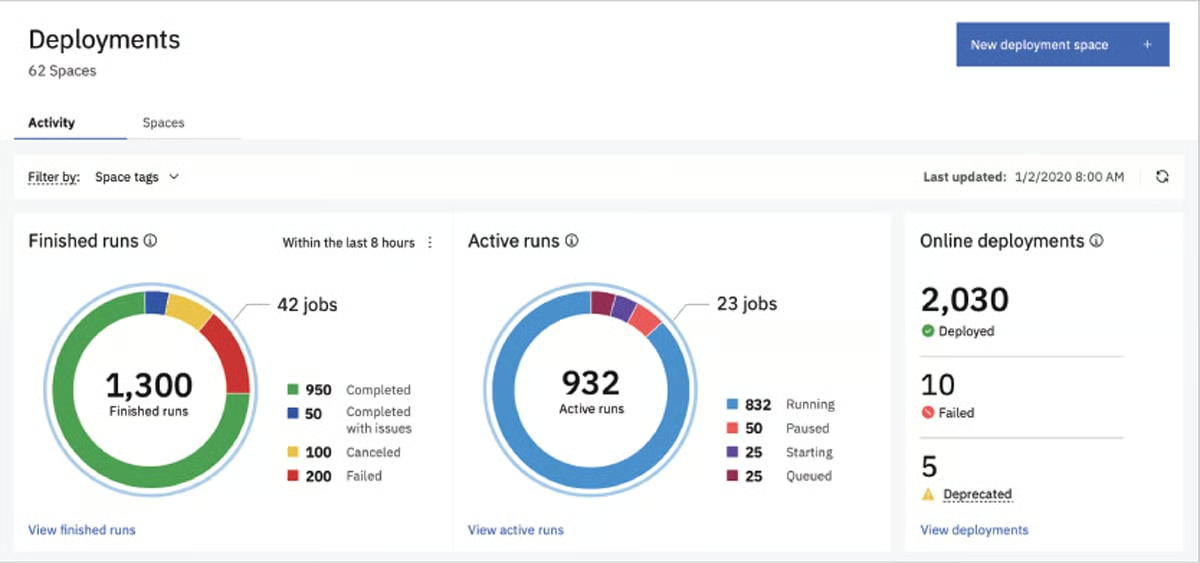
IBM Cloud Pak for Data as a Service deployments dashboard.
Product design
IBM Cloud Pak for Data’s interface uses intuitive color coding and visual charts to provide an overview of machine learning deployments and data processing jobs. Its main dashboard shows a clean layout with three key sections that show finished runs, active runs, and online deployments. You can also easily find the data you need with its advanced filtering and real-time monitoring features, essential for enterprise-scale operations.
Why I picked IBM Cloud Pak for Data
IBM Cloud Pak for Data stands out as a top choice for governance capabilities in AI projects because of its comprehensive approach to managing data and AI lifecycle processes. The platform includes a wide array of governance features, including data cataloging, data lineage, data quality monitoring, and compliance management. IBM’s end-to-end governance capabilities allow organizations to govern their AI projects by addressing key concerns such as data privacy, security, compliance, and model explainability.
Pricing
- Contact sales for a quote or register for a 60-day trial license
Features
- Data integration and observability
- AI governance, risk, and compliance controls through watsonx.governance
- Advanced data discovery and 360-degree views of enterprise data
- Self-hosted or managed deployment on IBM Cloud
Amazon SageMaker is AWS’s fully managed machine learning platform for building, training, deploying, and monitoring ML models. It is a strong fit for organizations already using AWS that want model development, deployment, monitoring, and governance tools in the same cloud environment.
For AI governance, SageMaker’s strongest value is production model monitoring. SageMaker Model Monitor can track data quality, model quality, bias drift, and feature attribution drift, helping teams spot issues as models run in production.
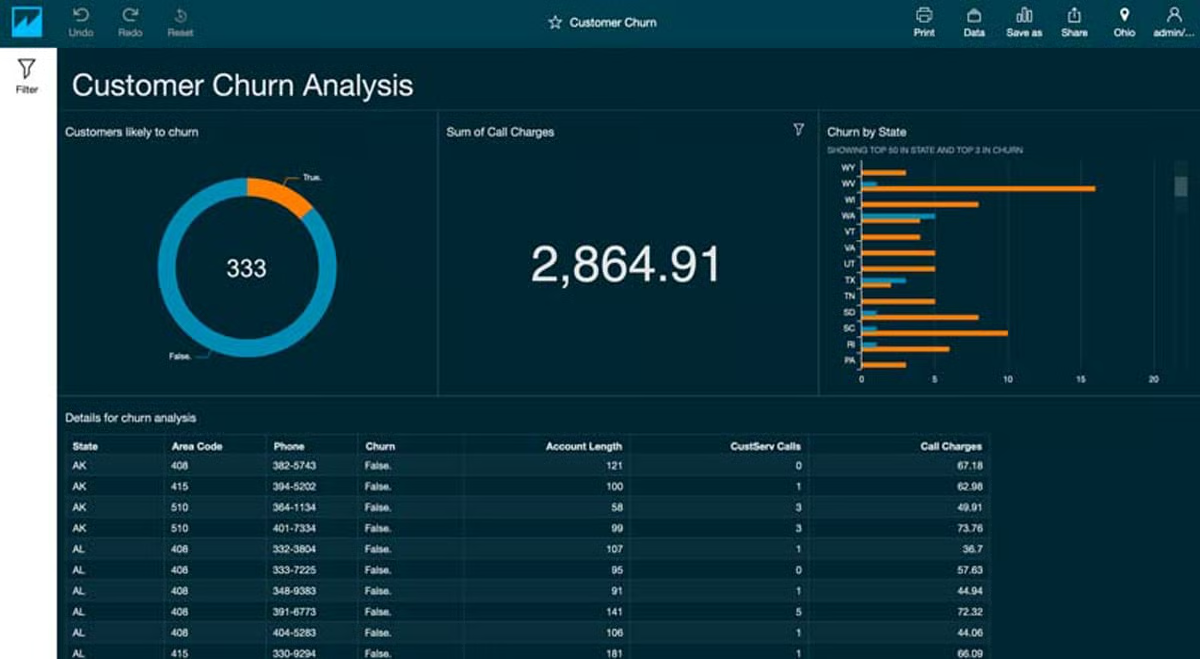
Visualizing Amazon SageMaker machine learning predictions with Amazon QuickSight.
Product design
Amazon SageMaker has a process-centric design built around the ML development cycle. Its menu categories follow a typical workflow, from preparing data to building, training, deploying, and monitoring models. The interface gives teams a central place to manage model activity, review performance signals, and support governance workflows as models move from development into production.
Why I picked Amazon SageMaker
I picked Amazon SageMaker because it provides AWS-focused teams with a broad set of tools for building, training, deploying, and monitoring ML models. It supports the full ML workflow, from experimentation to production, while giving teams monitoring capabilities that help them maintain visibility into model behavior after deployment.
SageMaker is especially relevant for organizations that want model oversight to fit into existing AWS and MLOps workflows. Teams can use it to monitor production models for quality, bias, and drift without moving that work into a separate governance environment.
Pricing
- Amazon SageMaker uses pay-as-you-go pricing. A free trial is available through the AWS Free Tier, and costs vary by usage.
Features
- Model building, training, deployment, and monitoring
- SageMaker Model Monitor for data quality, model quality, bias drift, and feature attribution drift
- Alerts for deviations in model quality
- Integration with AWS services and MLOps workflows

Azure Machine Learning is a robust cloud service for building, training, and deploying machine learning models. The platform supports AI governance by providing tools, services, and frameworks to streamline the machine learning process, from data preparation and model training to deployment and monitoring, enabling data scientists and developers to build, train, and deploy machine learning models at scale.
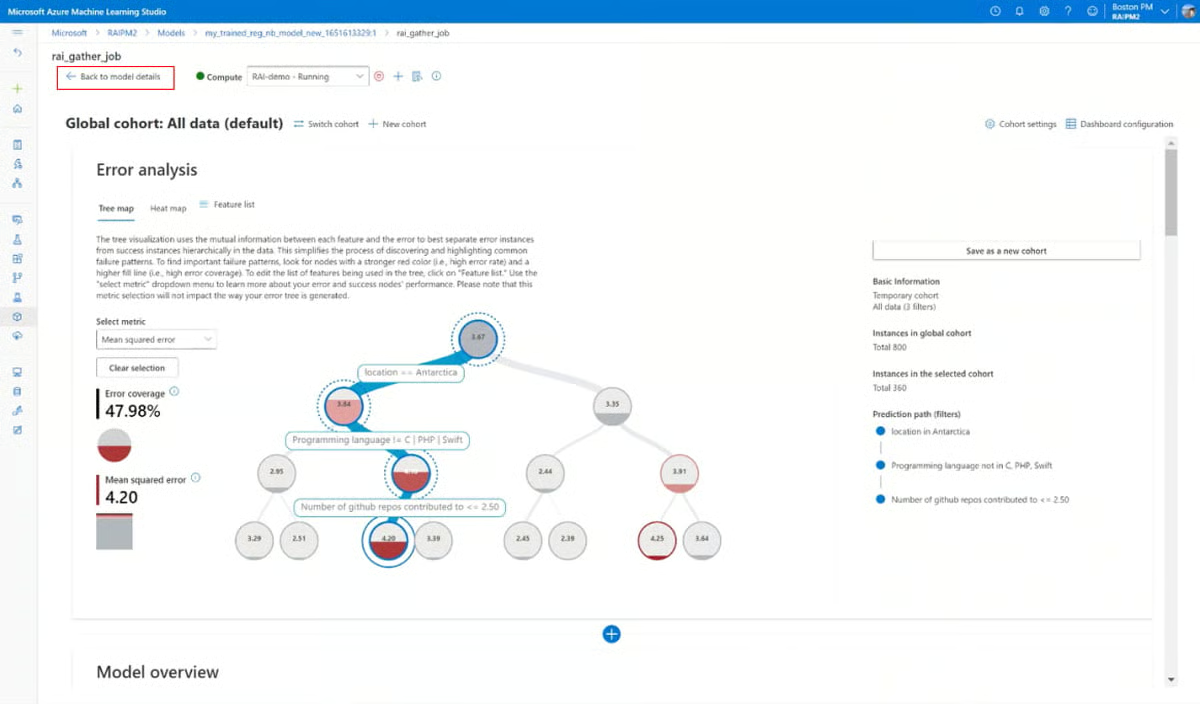
Responsible AI dashboard in Azure ML studio.
Product design
Azure Machine Learning provides tools and features that enable users to implement responsible AI practices in their machine learning projects. This includes features such as model interpretability, fairness, and transparency that help data scientists and developers understand and mitigate potential biases, ensure the ethical use of their models, and maintain transparency in the decision-making process.
Why I picked Azure Machine Learning
I recommend this platform for users looking for an AI governance tool ideal for building responsible and ethical AI applications in machine learning. Microsoft’s Responsible AI Standard is embedded into the platform, which operationalizes six key principles that guide every stage of the ML process. Azure Machine Learning also offers a suite of integrated tools that make responsible AI more actionable in terms of fairness, inclusiveness, reliability, safety, and more.
Pricing
- Azure Machine Learning uses pay-as-you-go pricing for Azure resources used. New Azure customers can start with a free account that includes $200 in Azure credits for the first 30 days.
Features
- Responsible AI dashboard for fairness and interpretability
- Support for Scikit-learn, PyTorch, TensorFlow, and Keras
- Drag-and-drop interface for building ML workflows
- Built-in governance, security, and compliance controls
The Credo AI governance platform caters to the needs of AI-powered enterprises by offering features such as a centralized repository of AI metadata, a risk center for visualizing AI risk and value, and automated governance reports for building trust with stakeholders. It also offers an AI registry for tracking AI initiatives and an AI governance workspace for collaboration on AI use cases.
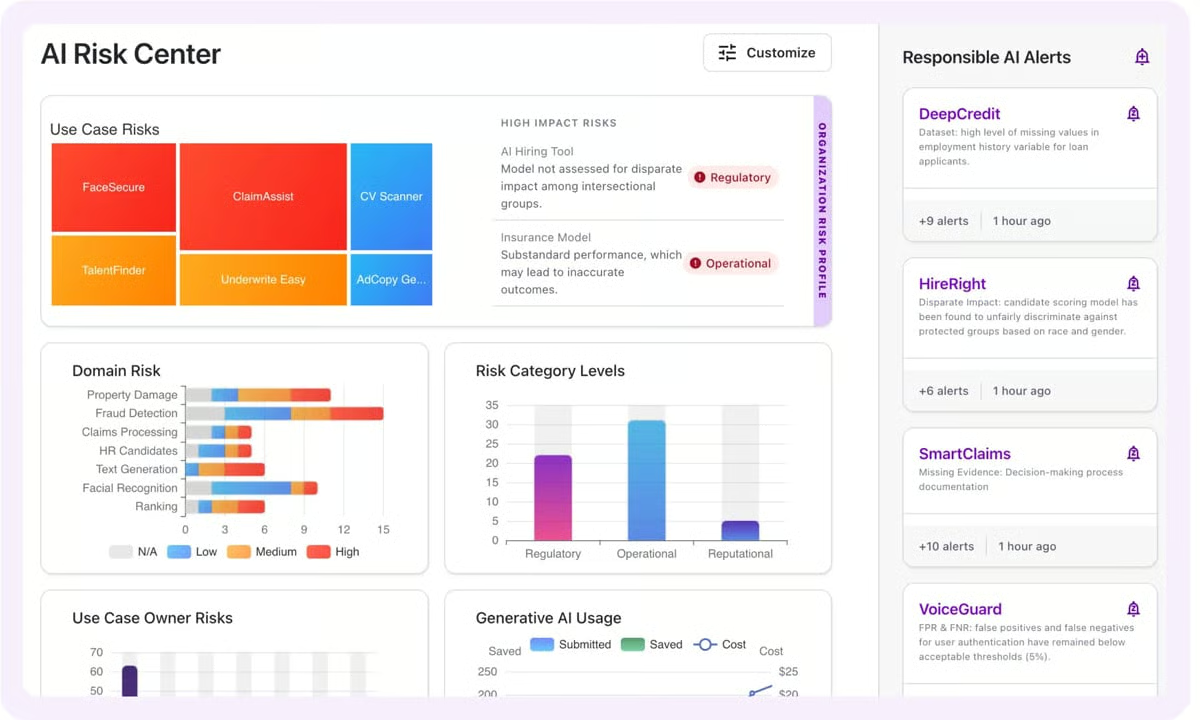
Credo AI risk center.
Product design
Credo AI features a clean, intuitive, and enterprise-focused user interface. The platform is organized around AI risk management workflows, which allow you to navigate different risk categories and impact levels easily. It also features a color-coded design to communicate risk severity, enabling teams to assess the situation immediately. Additionally, the dashboard includes an alert system and timestamp indicator, making it easier to monitor risk in real time.
Why I picked Credo AI
Credo AI generates automated governance reports, including model cards, impact assessments, reports, and dashboards, which can be shared with executives, board members, customers, and regulators to build trust and transparency around AI initiatives. The company’s AI registry feature provides visibility into the risk and value of all AI projects by registering them and capturing metadata to prioritize projects based on revenue potential, impact, and risk.
Pricing
- Contact sales for a quote
Features
- AI registry and risk management
- Automated governance reports
- Generative AI guardrails
- Vendor risk assessment
Holistic AI’s Governance Platform offers a range of features and functionalities to address the various aspects of AI governance, including risk management and compliance. The platform enables organizations to conduct comprehensive audits of their AI systems and generates detailed audit reports documenting the system’s performance, vulnerabilities, and areas requiring improvement.
The reporting functionality also includes context-specific impact analysis to understand the implications of AI systems on business processes and stakeholders.
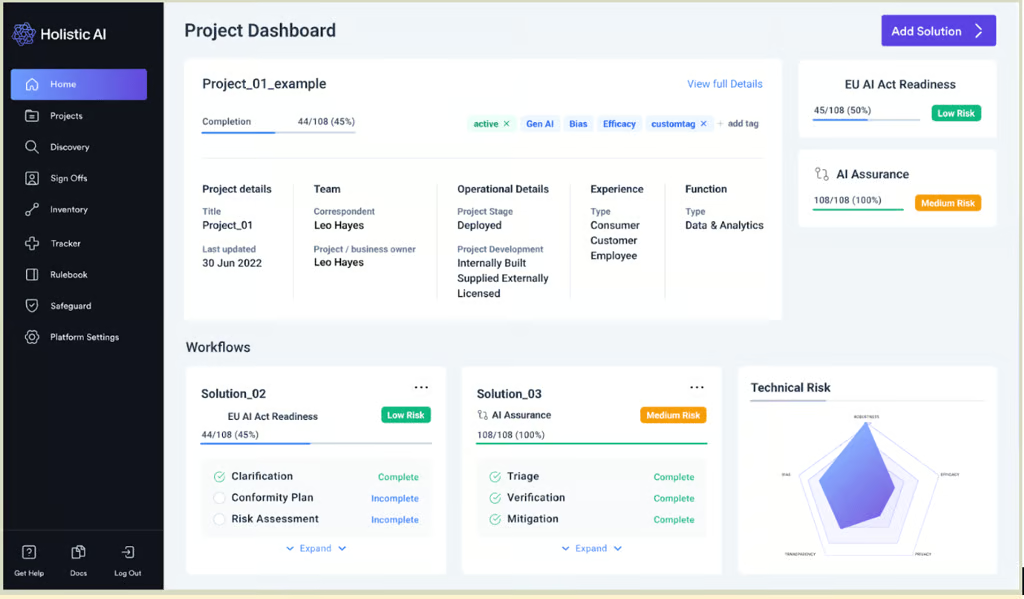
Figure 1-Holistic AI
Product design
Holistic AI features a sophisticated yet clean design for managing AI compliance and risk assessment workflows. The platform has a project-based layout and organizes individual AI projects, allowing teams to take a more granular approach to AI compliance. Additionally, its interface allows you to monitor compliance workflows more effectively, including clear task tracking, structured project phases, project indicators, and detailed sections.
Why I picked Holistic AI
Holistic AI supports regulation-specific assessments, ensuring your AI systems comply with relevant laws and regulations. It helps you map, mitigate, and monitor risks associated with specific rules, enabling you to comply with industry standards and regulatory requirements. The platform also identifies and assesses both technical and regulatory risks early in the AI development process, so your organization can address them before they escalate.
Pricing
- Contact sales for a quote
Features
- AI risk monitoring and reporting
- AI third-party vendor management
- AI conformity assessment
- AI bias assessment
Datatron MLOps offers an AI model monitoring and governance platform that helps organizations manage production models. The platform provides monitoring and tracking features to help ensure models perform as expected and meet compliance standards, including real-time model performance monitoring, data drift identification, and alerts for anomalies or deviations.
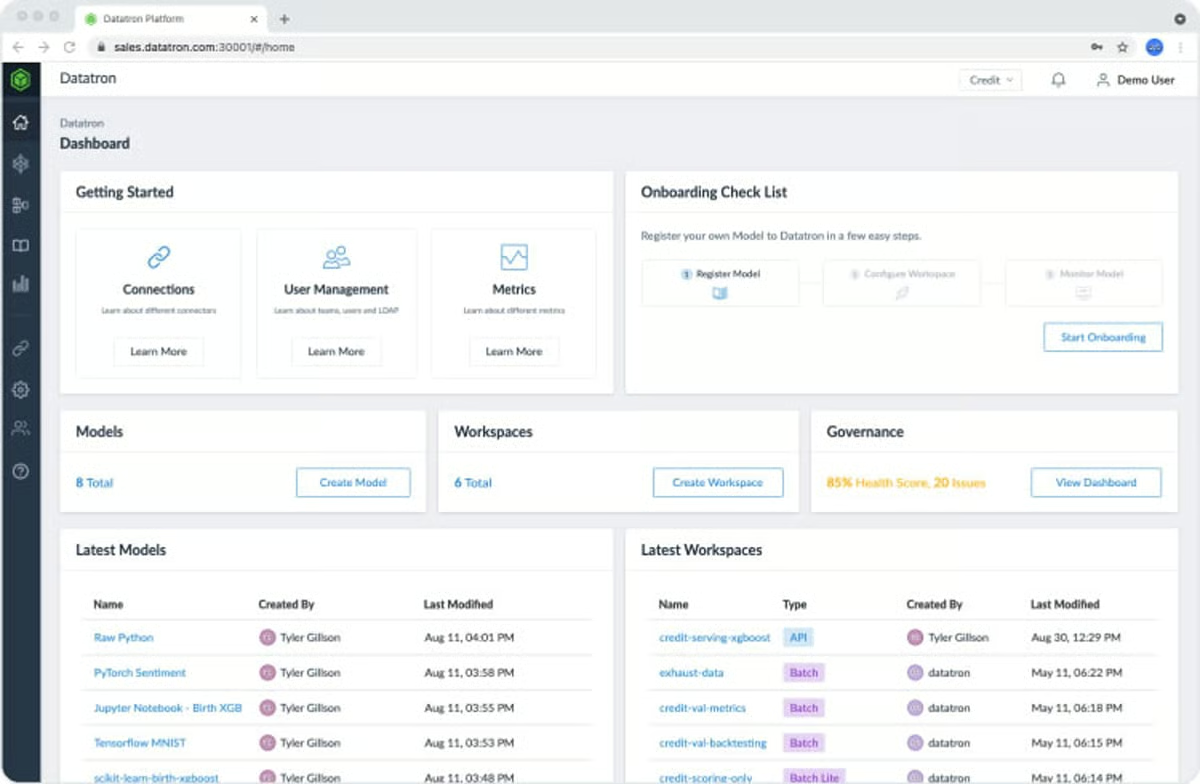
The Datatron platform dashboard.
Product design
The platform provides a unified dashboard to monitor the performance and health of deployed models in real time, allowing organizations to identify and address issues proactively. Datatron’s explainability capability plays a critical role in risk management and compliance. It provides insights into how AI models make decisions, enabling organizations to understand and evaluate the potential biases or risks associated with these judgments.
Why I picked Datatron MLOps
I recommend Datatron MLOps for users looking for an AI governance tool excelling in risk management and compliance. It provides real-time and production-grade monitoring that alerts you to bias, drift, and anomalies.
Unlike other AI governance tools that also focus on risk management, Datatron is ideal for operational risk management and compliance at scale. This means that the tool will help you deliver actionable, real-time insights and controls for models that are already in production. This helps businesses ensure fairness, transparency, and accountability in their AI systems — particularly important in regulated industries.
Pricing
- Contact sales for a quote
Features
- Provides model health metrics across deployed models
- Detects bias, drift, performance issues, and anomalies
- Monitoring and reporting can be set up based on custom metrics
- Includes activity logs and audit trails
How to choose the best AI governance software for your business
The best AI governance software depends on your organization’s compliance requirements, risk profile, technical environment, and budget. Some platforms focus on privacy and regulatory controls, while others are stronger in model monitoring, policy enforcement, or risk assessment.
A strong AI governance solution should support data governance, model management, compliance automation, access controls, and monitoring. As AI projects move into production, governance should also extend to the workflows, open-source dependencies, and deployment processes teams use to build and scale AI systems.
You may also need industry-specific features, such as HIPAA support for healthcare or fraud detection, audit trails, and risk assessment for financial services.
How I evaluated the best AI governance solution
To assess the best AI governance platform, I conducted a structured evaluation of each tool across four categories: pricing, feature set, ease of use, and customer support. Each category was further divided into weighted subcriteria, and I assigned an overall score out of five to identify the top performer in each category.
- Feature set (35%): The AI governance software's feature set was a significant factor in my evaluation. I reviewed the breadth and depth of features, including AI ethics, security, model documentation, reporting tools, monitoring capabilities, and risk management. I also assessed whether each platform allowed customization to align with the unique needs of different organizations.
Criteria winners: IBM Cloud Pak for Data and Amazon SageMaker
- Pricing (25%): I looked at the cost of the software and whether it provides value for the price. Tools that offer free trials and transparent pricing earned higher marks in this category.
Criteria winner: Azure Machine Learning
- Ease of use (25%): I assessed the software’s user interface and user experience to determine how easy it is for users to navigate, set up, and use the software. I prioritized intuitive workflows and adaptable settings that would support users with varying technical backgrounds.
Criteria winners: Multiple winners
- Customer support (15%): I evaluated the level of customer support the software provider offers, including availability, responsiveness, and expertise. I looked at support channels, documentation, training resources, and user communities.
Criteria winners: IBM Cloud Pak for Data and Amazon SageMaker
Frequently asked questions (FAQs)
How do AI governance practices align with ethical considerations?
AI governance practices align with ethical AI by creating policies and review processes that support fairness, transparency, accountability, and privacy. They also help organizations document decisions, monitor model behavior, and reduce risks such as bias, misuse, or lack of oversight.
Which industries are leading in the adoption of AI governance?
Financial services, healthcare, and technology are leading AI governance adoption because they handle sensitive data, face strict regulatory requirements, and use AI in high-impact decisions. These industries often need stronger controls for privacy, security, auditability, and risk management.
How can businesses benefit from effective AI governance in the current landscape?
Businesses can benefit from effective AI governance by improving trust, strengthening compliance, protecting sensitive data, and reducing risks tied to bias, privacy, and security. AI governance also gives teams clearer oversight as AI systems move from experimentation into production.
Bottom line: Best AI governance solutions
The best AI governance solutions help organizations monitor AI systems, enforce policies, manage risk, and maintain compliance as AI projects move into production. The right platform should support how your organization builds, deploys, monitors, and manages AI systems across the full AI workflow.
As AI adoption grows, governance should not be an afterthought. Strong AI governance tools can help reduce risks tied to bias, privacy, security, and compliance while giving teams better visibility into model performance and decision-making.
For a full portrait of the AI vendors serving a wide array of business needs, read our in-depth guide: 150+ Top AI Companies.